“You might as well try to move a stone wall.” Jimmy Callahan

Okay troops, let’s recap a bit. Looking over the 1912 Boston Red Sox, we have met the entire pitching staff, the spectacular outfield of Lewis, Speaker and Hooper and the manager and first baseman, Jake Stahl. Well now let’s move into the infield and start with the man behind the dish, William Francis “Rough” Carrigan.
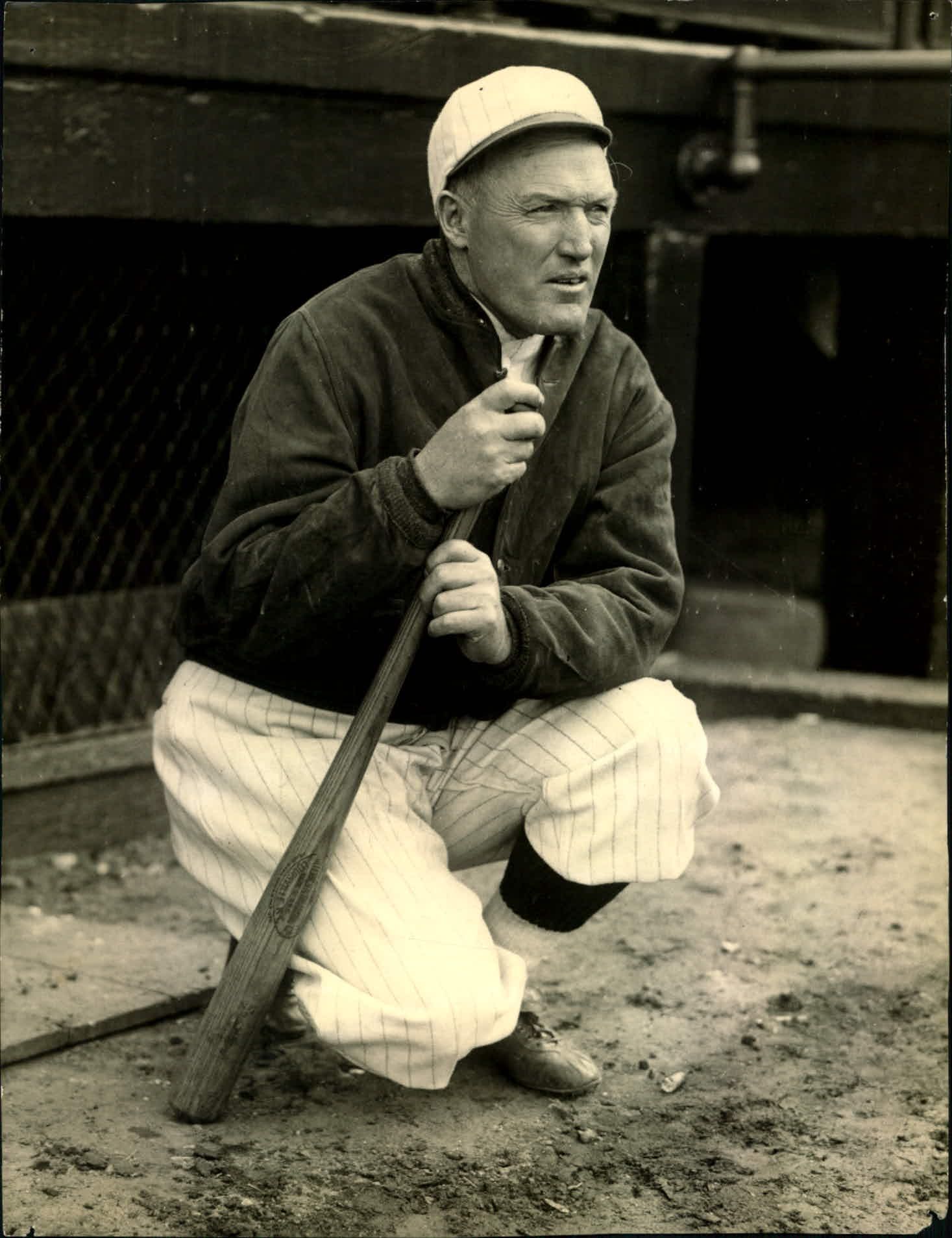
Any idea why they called him “Rough”?

Bill Carrigan was 28 years old and in his sixth season with the Boston Red Sox when Fenway Park opened her doors in 1912. Born and bred in Lewiston Maine, he was a first generation Irish Catholic immigrant whose parents immigrated before the Civil War. He attended college at Holy Cross where he played football and baseball. And it was there where he learned the trade of catching.
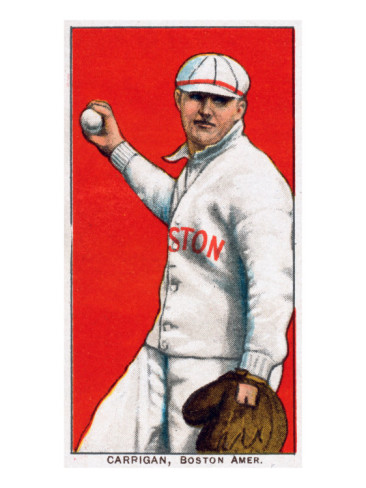
Known as an outstanding defensive catcher, with a pretty good stick, it was his toughness and refusal to back down that was his trademark.  An excellent receiver and handler of pitchers, he was steadfast and relentless when guarding the plate and it was in that capacity where his reputation for toughness grew. He was involved with several confrontations which were simply “witnessed” by teammates, similar to a hockey fight, as he never backed down and never lost.

He did the bulk of the catching for the 1912 Red Sox sharing it with three others along the way and it was old “Rough” who was behind the plate in Fenway Park’s first ever World Series game on October 9, 1912. Carrigan’s greatest impact on Fenway Park and the Red Sox came from 1914-1916. Following their record-setting, World Championship year of 1912, the Red Sox took a dive in 1913. The team was torn, believe it or not, with religious divisions between the catholics and the protestants. Carrigan was named the player-manager half way through the 1913 season and it was the respect that the players had for him that went a long way toward righting the Red Sox ship.
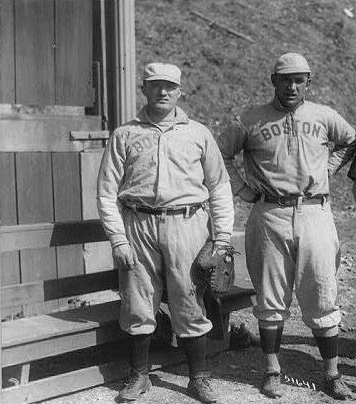
Carrigan (L) with Jake Stahl, the man he replaced as manager.

In 1914, Carrigan played a role in bringing Babe Ruth to Fenway Park and as the player-manager he led the Red Sox to back to back World Series wins in 1915 and 1916. He was the first and, until Terry Francona in 2004 and “07”, only Red Sox manager to capture successive World Championships.

Babe Ruth (L) said that Bill Carrigan was the best manager for whom he ever played.

Wanting to spend more time with his family, Carrigan retired from baseball following the 1916 season. He returned to his beloved Lewiston Maine and entered the banking industry where he enjoyed a very successful career. In 1968, a year before he died, he was inducted into the Holy Cross University hall of fame.

               And so it was at this time in Fenway Park history, 1912-1916, 

                                              “Rough” Carrigan’s time.


Unknown's avatar

About fenwaypark100

Hello and welcome, my name is Raymond Sinibaldi. A retired history teacher, after 26 years in the classroom, a baseball fan for three score and five, I have authored 13 books. Eight about baseball and her glorious history; most recently Yankees in the Hall of Fame and Dodgers in the Hall of Fame. An aficionado of the Kennedy Administration, I have written four books in that realm and also co-authored a book of motivational stories for coaches. The first, The Babe in Red Stockings which was co-authored with Kerry Keene and David Hickey and released in 1997. It is a chronicle of Babe's days with the Red Sox. We also penned a screenplay about Babe's Red Sox days so if any of you are Hollywood inclined or would like to represent us in forwarding that effort feel free to contact me. In 2012 we three amigos published Images of Fenway Park in honor of the 100th birthday of Fenway Park. That led to the creation of this blog. The following year, 2013 came my first solo venture, Spring Training in Bradenton and Sarasota. This is a pictorial history of spring training in those two Florida cities. The spring of 2014 brought forth the 1967 Red Sox, The Impossible Dream Season. The title speaks for itself, and it also is a pictorial history. Many of the photos in this book were never published before. The spring of 2015 brought 1975 Red Sox, American League Champions. Another pictorial effort, this will be about the Red Sox championship season of 1975 and the World Series that restored baseball in America. The spring of 2016 brought 61 Motivational Stories for Every Coach of Every Sport. My first JFK effort was in 2017 with John F Kennedy in New England, which was followed by JFK From Florida to the Moon (2019) and JFK At Rest in Arlington (2020). Jackie's Newport came about in 2019 and in 2023 came both Yankees in the Hall of Fame and Dodgers in the Hall of Fame. I was fortunate enough to consult with sculptor Franc Talarico on the “Jimmy Fund” statue of Ted Williams which stands outside both Fenway Park and Jet Blue Park Fenway South, in Fort Myers Florida. That story is contained in the near 300 posts which are contained herein. Throughout the years this blog has morphed from an exclusive Red Sox focus, to a broader baseball perspective to a blog about life, with baseball a large portion of it. This year, 2024, I have reactivated this blog which lay dormant for quite some time. Welcome aboard, pass the word and feel free to contact me about anything you read or ideas you may have for a topic. Email me at fenwaypark100@gmail.com.
This entry was posted in Fenway Park Baseball and tagged , , , , , , . Bookmark the permalink.

1 Response to “You might as well try to move a stone wall.” Jimmy Callahan

  1. toosoxy's avatar toosoxy says:

    Awesome read! Thanks for sharing. Happy 100!

Leave a comment