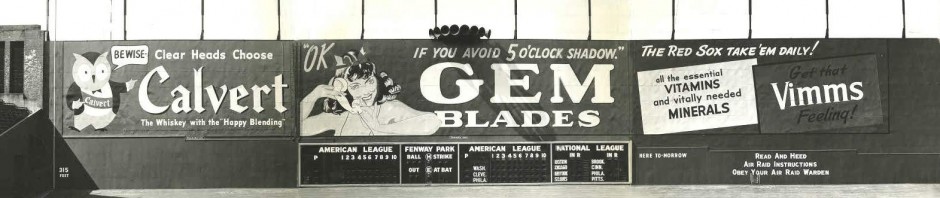
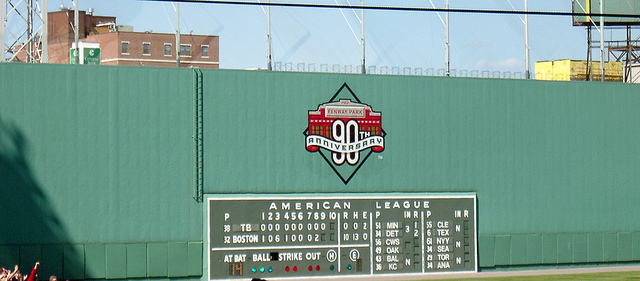
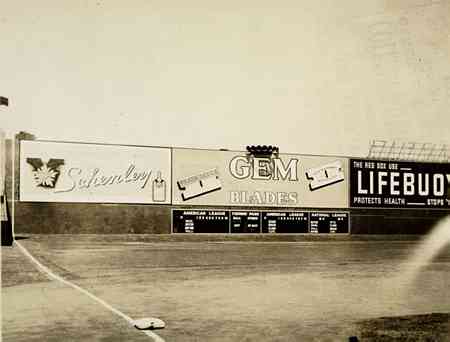
The signature of Fenway Park is without a doubt the “Green Monster” or “Monstah” as the locals say. Constructed during Fenway’s renovation in 1934, it may well be the most recognizable feature of any sports venue in American history.
Well even before the “Monstah”, the left field wall was the signature of the ball park; however, not because of the 25 foot wooden fence, but the 10 foot rising incline before it, which came to be known as “Duffy’s Cliff”.
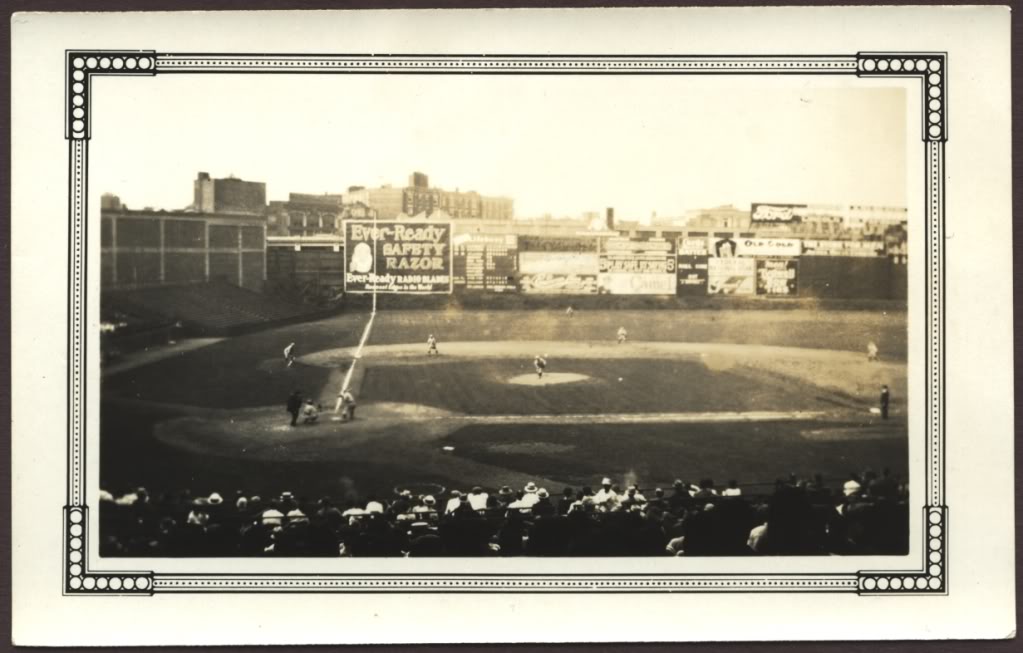
Fenway Park 1925
Duffy’s Cliff named after this man,
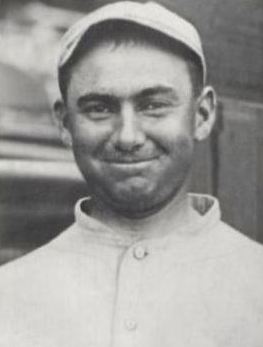
George Edward Lewis.
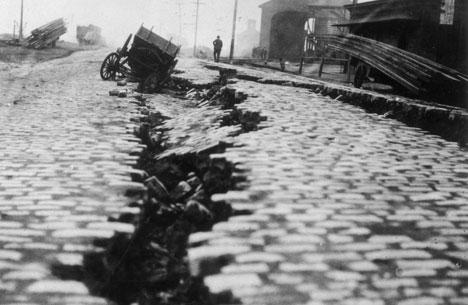
Born in San Francisco “Duffy” garnered his nickname from his mother’s maiden name. He celebrated his 18th birthday in San Francisco which happened to be the same day the famous earthquake of 1906 hit and virtually destroyed the entire city. Duffy said, “I thought the world was coming to an end.” Actually, his world was about to open up.
He played one year of college baseball at St. Mary’s before being signed by Red Sox owner John I Taylor and the spring of 1910 found him in Hot Springs Arkansas with the Boston Red Sox.
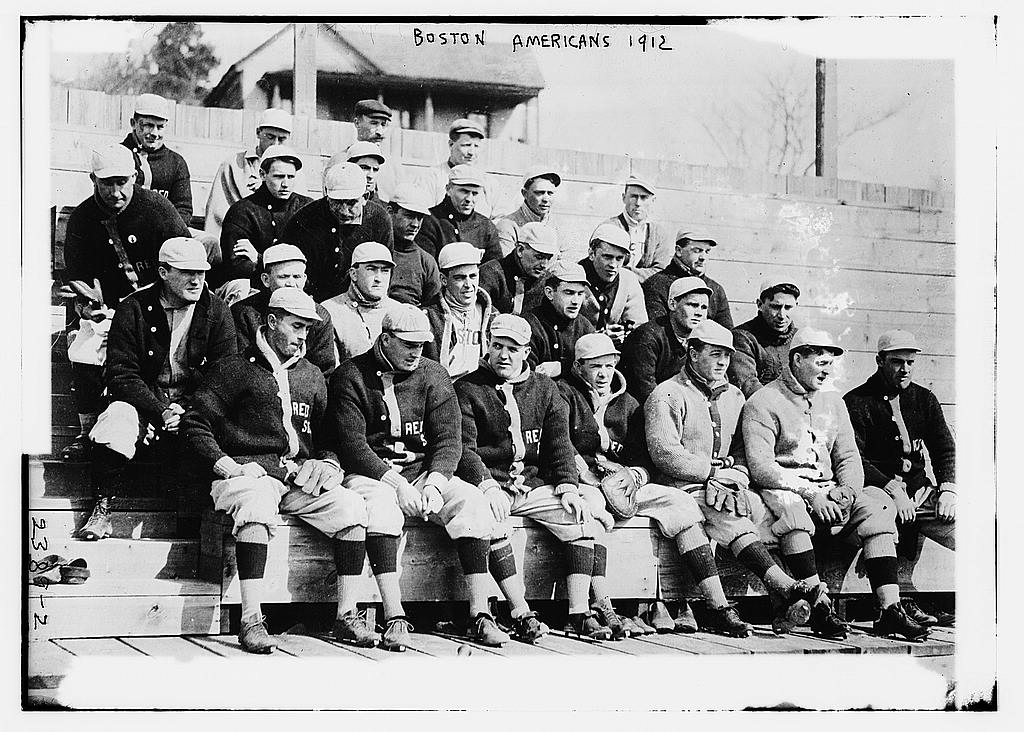
Duffy Lewis, 2nd from the right, second row from the top.
Brash, confident and outspoken, Duffy did not endear himself to the veterans on the squad, particularly Tris Speaker. He refused to adhere to the “rookie rules” regarding less time in the batting cages and he shunned the custom of deferring to the veterans.
Lewis worked tirelessly at mastering the “cliff”. He was always looking for someone to hit him fly balls so he could practice catching them running up the hill. He actually said the most difficult aspect of it all was throwing the ball in from off the cliff.
He never bridged his rift with Speaker, but it never interfered with their play on the field. They contained their fighting to the clubhouse and for decades the Red Sox outfield of Lewis, Speaker and Hooper was referred to as the best outfield in history.
Lewis played with the Red Sox through the 1917 season and in fact in the 1915 World Series he had what Boston Globe sportswriter Tom Murnane said was a series that “had never been equalled.” He hit .444 and drove in five of the Red Sox 13 runs on their way to the World Championship against the Phillies.
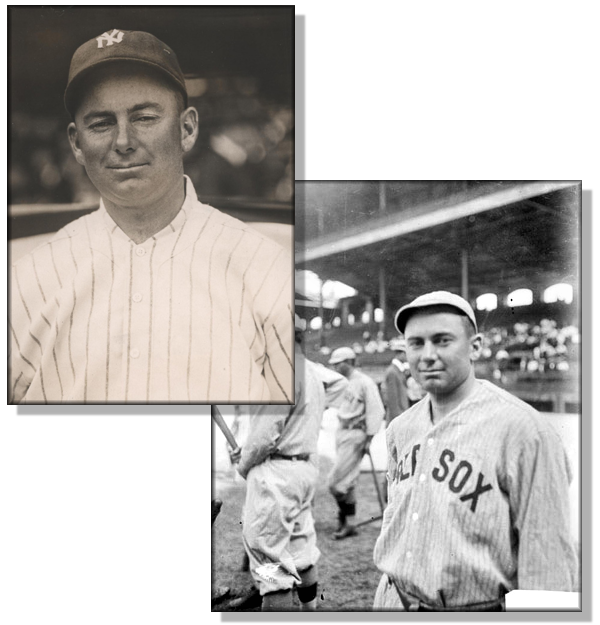
He served in the Navy in 1918, missing the baseball season and during that winter was traded to the Yankees. A friendly and generous man, he was known as a big tipper even after the stock market crash of 1929 wiped out his life savings. He coached for the Boston Braves from 1931 -1935 and in that capacity, he witnessed Babe Ruth’s 714th and last home run. He also saw his first at the Polo Grounds in May of 1915.
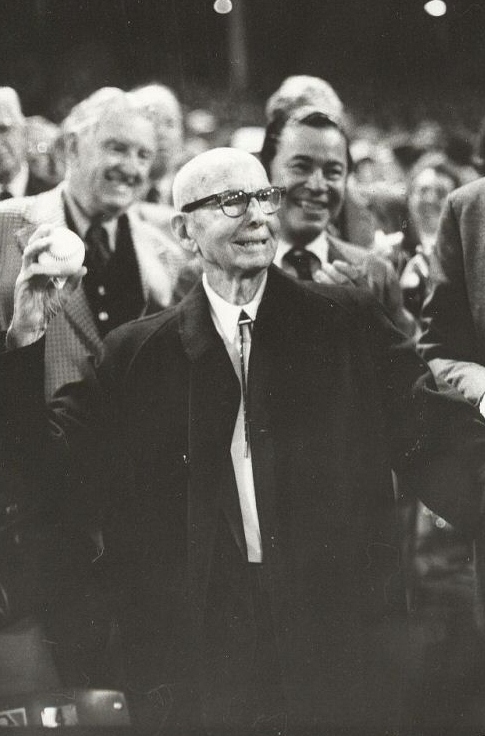
Duffy, 87 years old, throws out the first pitch of game six of the 1975 World series at Fenway Park.
Duffy Lewis spent the later years of his life in Salem New Hampshire, visiting Fenway often. A frequent visitor to the Rockingham Park horse track, he died in 1979, three years after his wife Eleanor. He left no known living relatives and no money and he was buried in an unmarked grave in Holy Cross cemetary in Londonderry New Hampshire.

That situation was rectified in 2001, through the generosity of many who made private donations to honor the memory of “Duffy” Lewis.
And so it was at this time in Fenway Park history 1912-1917, Duffy’s time.

 fenwaypark100