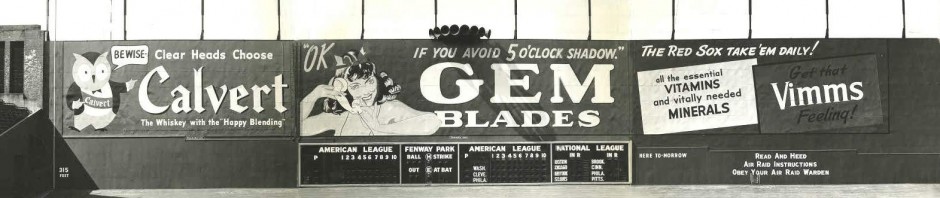
The Red Sox team of 1911 were 78-75 and finished in third place 24 games behind Connie Mack’s World Champion Philadelphia Athletics. They were the youngest team in the league and if they were going to have a legitimate shot at the 1912 pennant, they were going to have to catch some this,
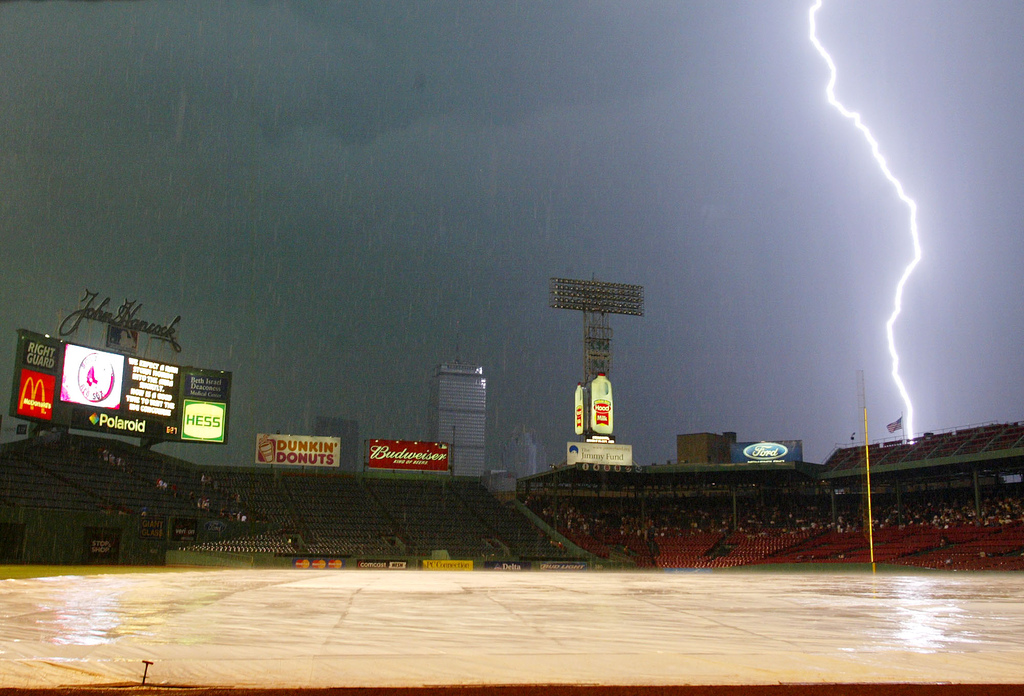
And put it in this,

Well as luck would have it, they caught it alright, but not only once, but twice! That’s right twice. The first was with a guy named Hugh Bedient and the second with Thomas Joseph “Buck” O’Brien.
First, “Buck” O’Brien. A local kid from Brockton Mass a city about 30 miles southwest of Fenway Park, O’Brien had sparkled in the minor leagues winning, 18, 20 and 26 games in successive years. He was 5-1 with the Red Sox in 1911 and when he arrived for spring training in Hot Springs Arkansas in 1912, he was 30 years old and the oldest member of the pitching staff.

Some of the 1912 Red Sox in Hot Springs in, left to right, Olaf Hendrickson, Larry Gardner, “Buck” O’Brien, Heinie Wagner, Steve Yerkes and Hugh Bradley.
O’Brien’s lightning came in the form of a “spitball” of which he had great command and what “Buck” did in the 1912 season was go 20-13 with a 2.58 ERA. He threw 275 innings and 25 complete games and when Fenway Park was finally opened on April 20, 1912, it was “Buck” who was on the mound.
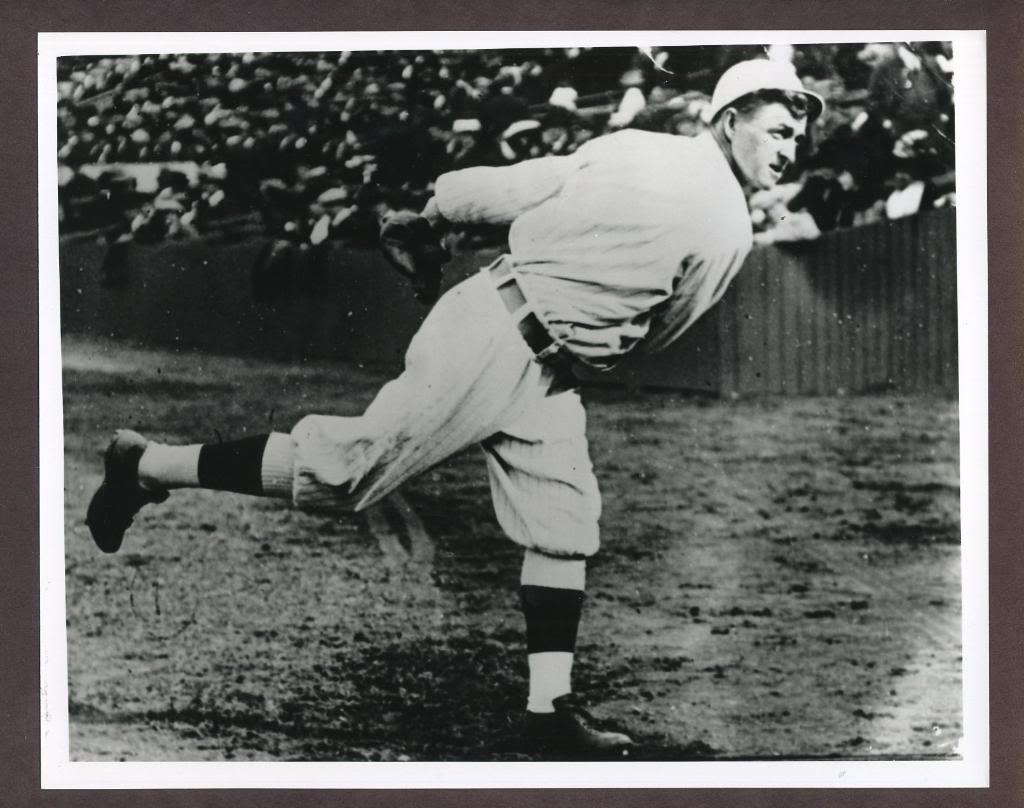 History will forever record that it was Thomas Joseph “Buck” O’Brien of Brockton Massachusetts who threw the first pitch in the history of Fenway Park.
Hugh Carpenter Bedient was a rookie in 1912. He had gained some notoriety when on July 25, 1908 while pitching for the Falconers a semi-pro team in New York, he struck out 42 men in a 23 inning complete game win.
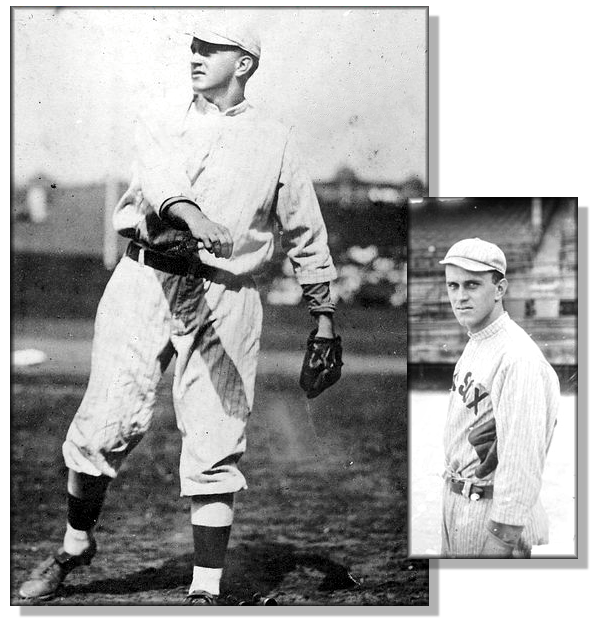
Bedient went 20-9 for the Red Sox as a rookie, a record that becomes even more impressive when you take into account the fact that he did not make his first start until May 4th of 1912.
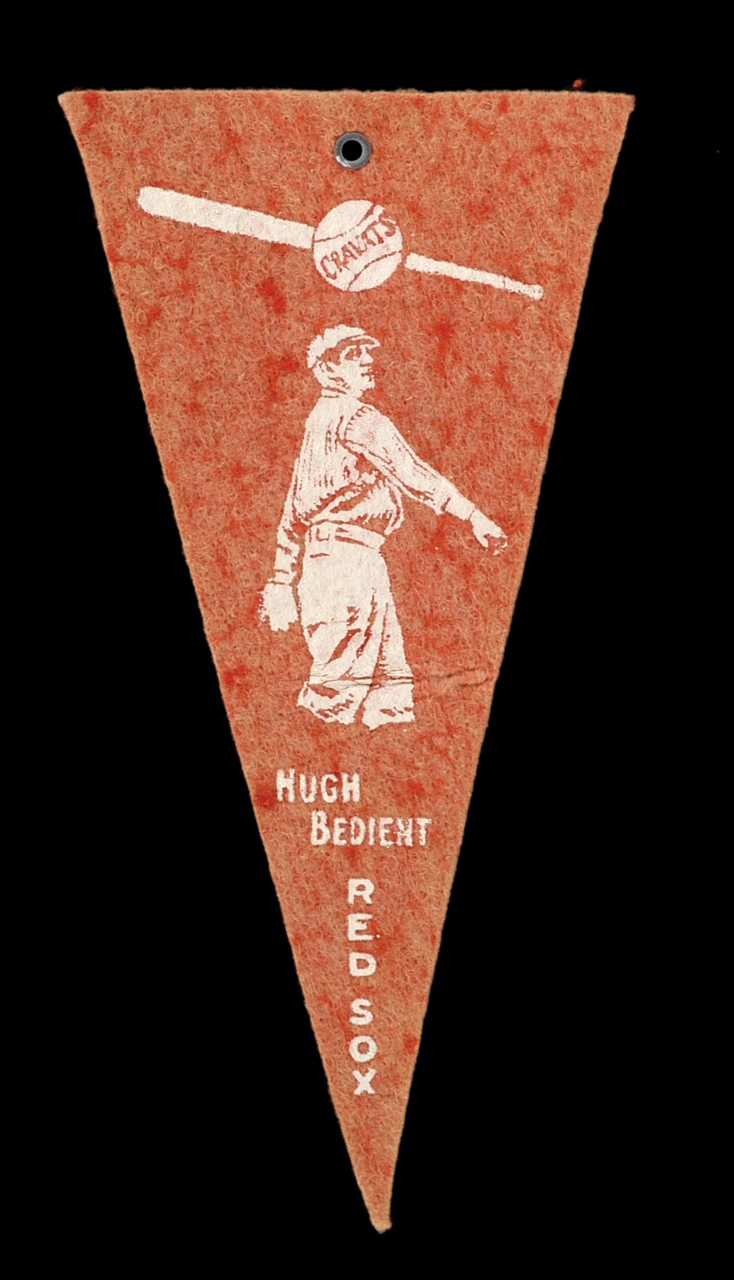
The 22-year-old rookie was the pitching star of the World Series going 1-0 with a 0.50 ERA in 18 innings pitched. He outdueled Christy Mathewson for a 2-1 win in game five and in the deciding match-up he battled “Matty” again and stayed with him for seven innings in a game eventually won by the Red Sox.
Both O’Brien and Bedient would be out of baseball by the end of the 1915 season. O’Brien’s lightning dissipated as the league simply figured out his spitter, for Bedient the end came in the form of a shoulder injury. However, the pages of Fenway Park history will forever tell the tales of two pitchers who in the inaugural year of “America’s Most Beloved Ballpark”, caught lightning in a bottle and used it to help propel the Red Sox to their greatest season in their history!

And so it was at this time in Fenway Park history, winter 1912.

 fenwaypark100