“It’s not the price, it’s not the game, it’s not the score, it’s not the fame, whatever road looks way too far, it’s not what you have, it’s who you are.” AJ Michalka

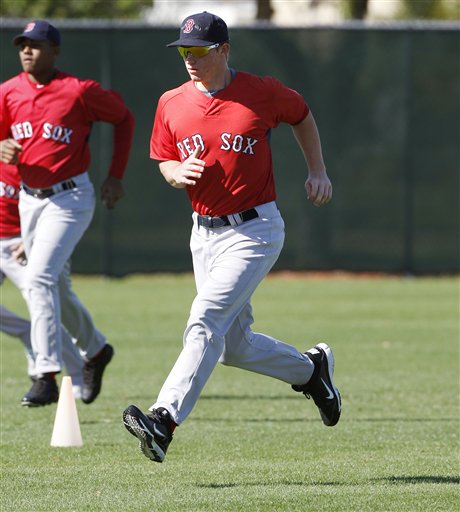
On Thursday and Friday this week, Red Sox minor leaguer Ryan Westmoreland had five at bats in the Instructional League in the Dominican Republic. He grounded out twice, walked, struck out and was hit by a pitch. But he won, and he won big!

 At about the same time Albert Pujols agreed to a 10 year contract with the Los Angeles Angels of Anaheim or is it the California Angels of Los Angeles? Whichever, one of them will be paying Mr. Pujols a reported $254,000,000 dollars! He won pretty big too.

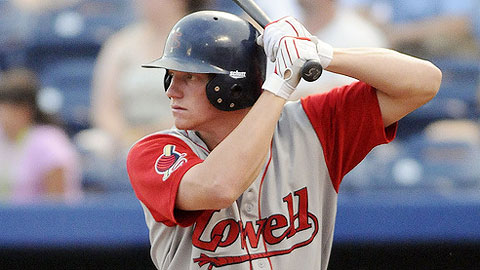
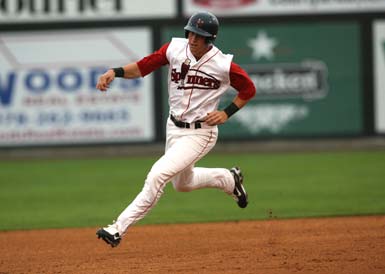
In 2008 Ryan Westmoreland was the Red Sox fifth draft pick out of Portsmouth Rhode Island High School. He was twice the state of Rhode Island Gatorade Player of the Year! Foregoing a full scholarship to Vanderbilt, Ryan signed with the Red Sox for 1.6 million dollars. In 2009, he played with the Lowell Spinners of the New York Penn League and he hit .296 with 7 homers and 35 RBI in 60 games.

Unless you’ve been under a rock for 10 years, you know all about Albert Pujols. The staggering numbers, the sublime consistency, the majestic swing, the simple fact that for offensive production, his first ten years in baseball have been unmatched in the history of the game. His adoration in St. Louis was reminiscent of Stan “The Man” Musial, elite company indeed.

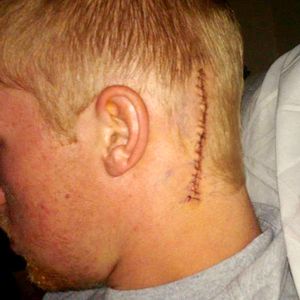
In March of 2010, doctors found a cavernous malformation in the area of Ryan’s brainstem. This condition which afflicts 1/2 of one percent of the population is a vascular abnormality of the Central Nervous System. Although some people can remain asymptomatic with this condition, Ryan required immediate surgery with the hopeful outcome that Ryan would simply survive and be “normal”.

On Friday Albert Pujols took out an ad in a St. Louis newspaper and in it wrote a letter to Cardinal fans. He thanked “each and every one of you sincerely from the bottom of my heart for the love and support you have shown to me and my family”. He stated that the community had “reached out and embraced me and for that I am truly humbled and grateful.” heartfelt sentiments to be sure but the majority of comments from the readers of the St. Louis Dispatch are doubting they are genuine.

The scouting report on Ryan Westmoreland reads, “patient and selective – waits for his pitch. Above average power potential with a terrific approach. Hits to all fields. Elite speed with excellent base-running skills. Strong arm with excellent outfield range. Very intelligent.” And in 2010, Baseball America projected him as a potential 30/30 player!

With all the love and support the good Cardinal fans showed Albert Pujols and his family, it was not enough to overcome the 254 mil the Angels waved at him. After all the Cardinals could only muster up a paltry 220 mil. Now, far be it from me to pooh-pooh three and a half million dollars a year but it does leave one wondering, how much is enough? I mean is all that love and support worth 3.5 million a year? Guess not! And now the Angels will join the Yankees, Red Sox and Phillies as one of those “big market, rich” teams that people love to hate and root against!

In the spring of 2010, Ryan Westmoreland set a goal to take a live at bat by the end of 2011.  Ryan Westmoreland had five live at bats this week and although his baseball future remains very much in doubt every baseball fan in America will be rooting for him! Ryan Westmoreland had five live at bats this week, he’s already won! He’s won big!

 And so it is this week in Fenway Park history, December 2011.

Posted in Fenway Park Baseball | Tagged , , , | 2 Comments

Three Threads Weave Historic Tapestry

It has been said that it is the winners who write history and in baseball it is the superstars whose bronze plaques hang in repose in the inner sanctum of Cooperstown. It is they who pass the standards of excellence down from generation to generation. However the true beauty of baseball is that woven within it are countless stories of the common man. The average and sometimes below average player who one day finds himself standing on the crossroad of history. And so it was for

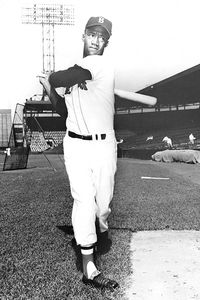
Elijah “Pumpsie” Green

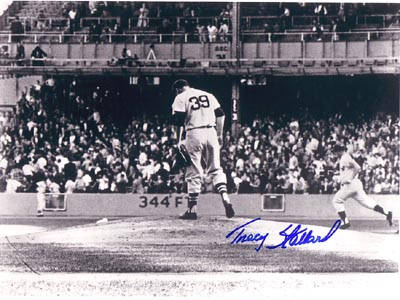
Tracy Stallard

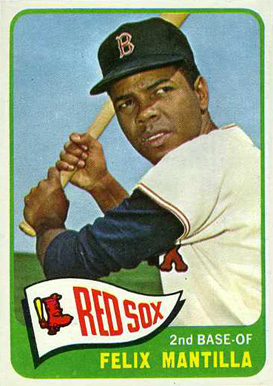
and Felix Mantilla. (pronounced Man Tee Ya)

On December 11, 1962, the Red Sox made a trade with the brand new New York Metropolitans (Mets), sending infielder “Pumpsie” Green and pitcher Tracy Stallard to New York in exchange for infielder Felix Mantilla.

Green had spent four years with the Red Sox predominantly as a back up infielder and he never hit above .260. However he forever etched his name in Fenway Park history by simply joining the team in July of 1959 and finally integrating the Boston Red Sox. And when he took the field at second base on August 4th that same year, it marked the first time that a black man played for the Red Sox at Fenway Park!

Tracy Stallard was a prospect who had thrown in 48 games in three seasons with the Red Sox with an overall record of 2-7. However, one of those games happened to be October 1, 1961 at Yankee Stadium. It was the best outing the young right-hander had in his tenure with the Red Sox, he pitched seven innings, struck out five, only gave up one run but lost the game 1-0. Oh, and the run, a fourth inning home run to Roger Maris, his 61st of the season.

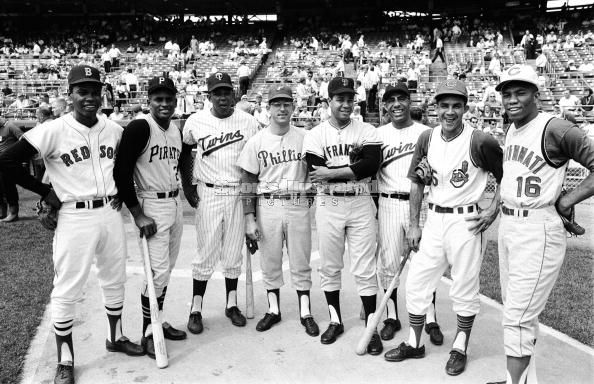
Originally signed by the Boston Braves in 1952, Puerto Rican born Felix Mantilla made it to the big club in Milwaukee in 1956. He too was predominantly a back up infielder with the Braves and he was part of their World Series teams in 1957 and 1958, seeing action in both Series’.  Drafted by the Mets in the 1961 expansion draft, he was the regular third-baseman on their inaugural 1962 team. He played three seasons with the Red Sox. In 1964 he became a force when as a utility player seeing action at first, second, left and center in a total of 133 games, he hit 30 home runs. In 1965 he hit 18 homers and knocked in a team leading 92 runs and was chosen as the second baseman on the American League All Star team, becoming the first black man from the Boston Red Sox to make the All Star team.

Eight Latinos at the 1965 All Star Game in Minnesota: Mantilla, Clemente, Oliva, Rojas, Marichal, Versalles, Davalillo and Cardenas.

         And so it was on this date in Fenway Park history, December 11, 1962. 


Posted in Fenway Park Baseball | Tagged , , , | Leave a comment

“Jimmie Foxx with all those muscles, hitting drives that sounded like gunfire. Crraack. A hell of a lot louder than mine sounded.” Ted Williams

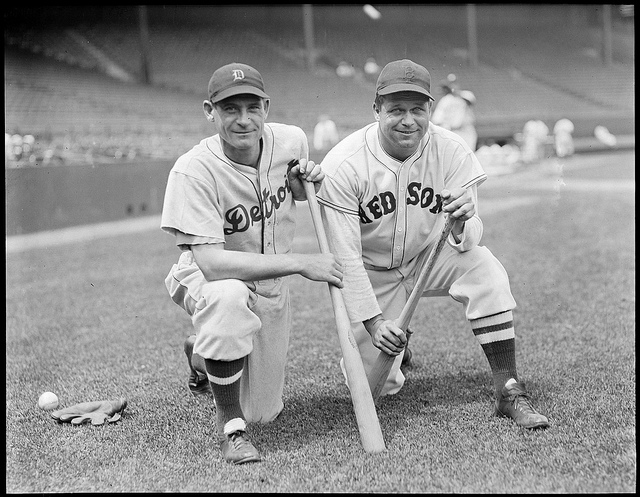
They called him The Beast! Standing six feet even, he was 195 lbs of solid muscle and he could hit!

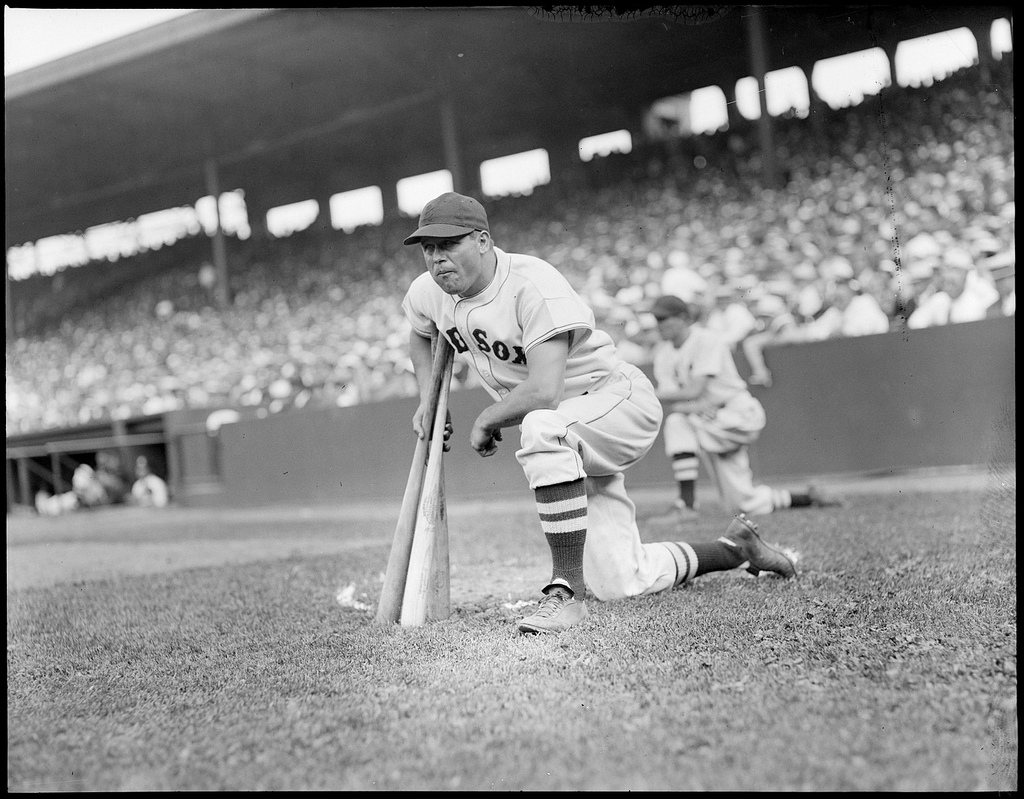
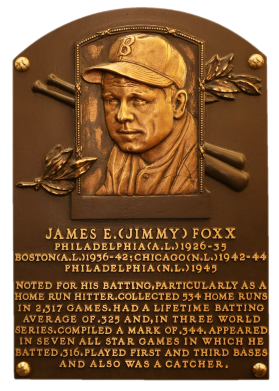
James Emory “Jimmie” Foxx made his major league debut as a catcher with the Philadelphia Athletics in 1925. He was 17 years old. He joined the Red Sox in 1936 and by that time he had: graced the cover of Time magazine (1929), become the first player in baseball history to win back to back MVP Awards (32 and 33), won the Triple Crown (1933), set the major league record for home runs in a season by a right-handed hitter (58 in 1932), was the games all time leading right-handed home run hitter and was second to Babe Ruth on the all time home run list with 302 homers.

When Tom Yawkey purchased the team in 1933, he began immediately to spend his inherited millions and he did so by investing in Fenway Park and his Boston Red Sox. Fenway had been virtually unchanged since its opening in 1912, save for the scarred left-field grandstands left charred by a fire. The Red Sox had sunk to the depths of the American League and had not had a winning season since the days of Babe Ruth.

Moving to change all that Yawkey began to spend his money acquiring talent and a big piece of that puzzle was the acquisition of Jimmie Foxx on December 10, 1935.  Foxx and Johnny Marcum came from Philadelphia for a journeyman pitcher, a minor leaguer and oh yeah, $150,000 of Mr. Yawkey’s new-found millions.

Foxx played with the Red Sox from 1936-1942. He was claimed off waivers by the Chicago Cubs in June of 1942. 

 His assault on the American League and the record books continued with the Red Sox and at Fenway Park. In his six full season with the Red Sox he averaged 36 home runs and 129 RBI per season while hitting .322! In 1938 he won his third MVP Award hitting .349 with 50 homers and an astonishing 175 RBI. His RBI total remains a team record and until David Ortiz hit 54 home runs in 2006, he was the only Red Sox player to crack the 50 home run barrier. His lifetime batting average at Fenway Park was .339.

Good natured, generous and kind, Foxx fell on tough financial times following his playing days. Investments went bad and drinking seemed to be getting the best of him. He managed in the All American Girls Baseball League in the early fifties. Tom Hanks character in the movie A League of their Own is loosely based on Jimmie Foxx.

http://www.youtube.com/watch?feature=fvwp&v=ndL7y0MIRE4&NR=1

When word got out, that Foxx was experiencing financial difficulties, he began to receive job offers and donations, the donations he turned over to the Jimmy Fund.

Foxx was elected to the Hall of Fame in 1951.

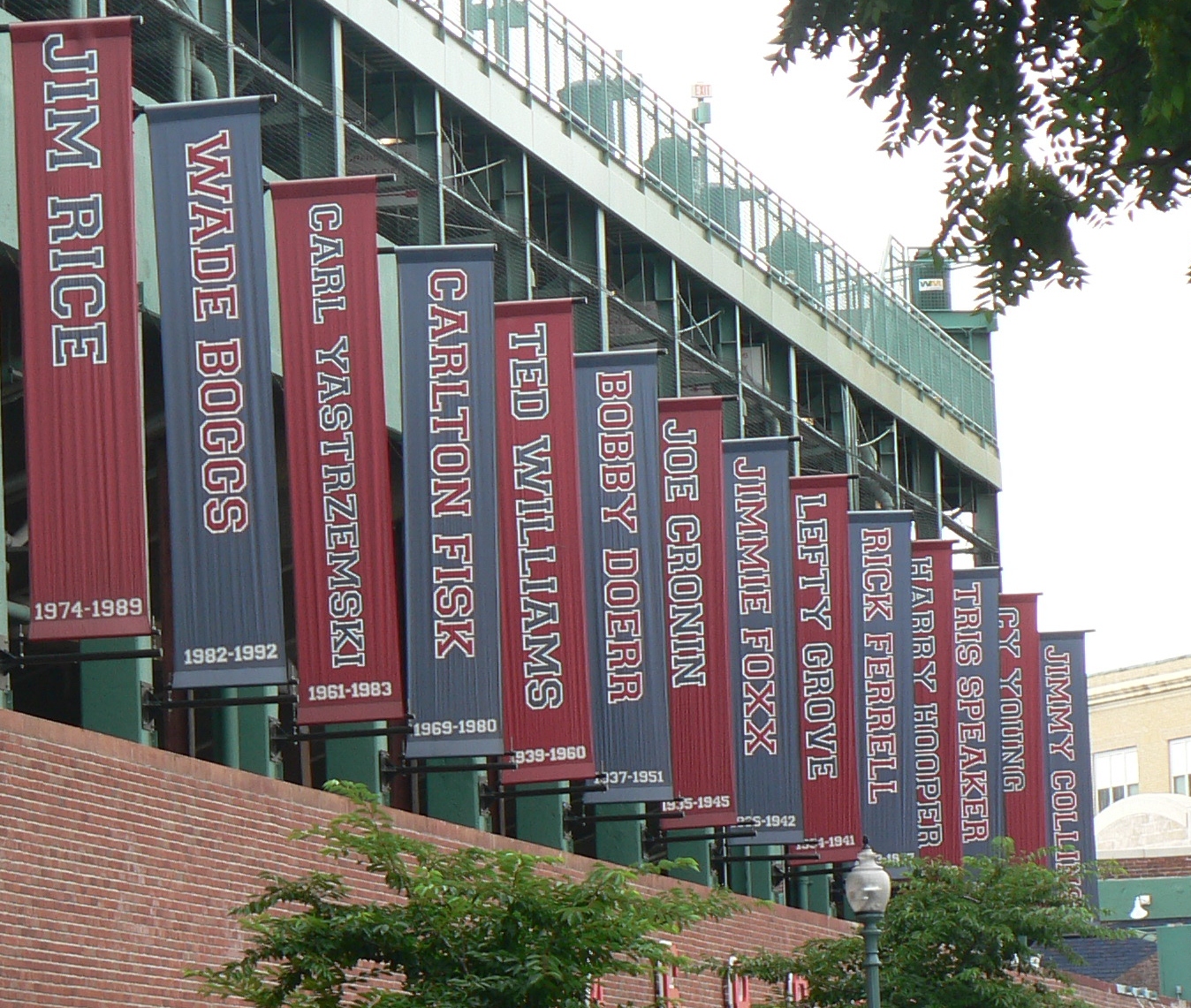
With the steroid fueled power explosion of the 1990s and early 2000s, an interest was rekindled in the career of Jimmie Foxx. This resurgence has solidified his place in baseball history. He was a charter member of the Boston Red Sox Hall of Fame in 1995 and his flag of immortality waves outside Fenway’s hallowed grounds.

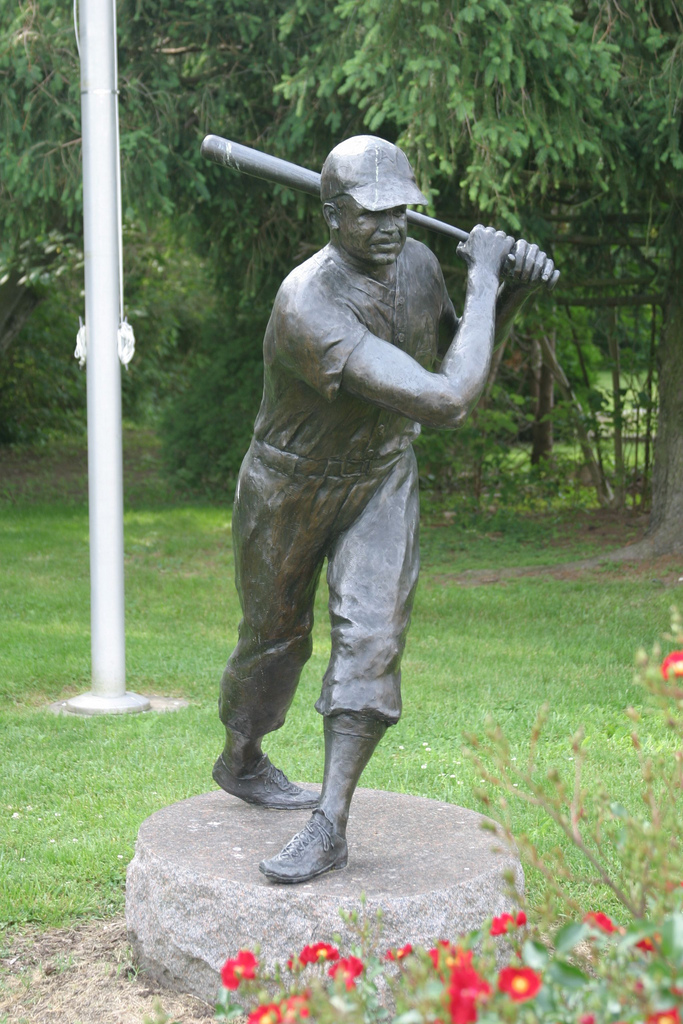
In 1997, after a ten-year campaign to raise money, a bronze statue of Double X was unveiled in downtown Suldersville Maryland, Foxx’s hometown.

Who said you can never go home again?

And so it was on this day in Fenway Park history, December 10, 1935.

Posted in Fenway Park Baseball | Tagged , , , , | 3 Comments

“Right field in Boston is a bitch, the sun field, and few play it well. Jackie Jensen was the best I saw at it.” — Ted Williams

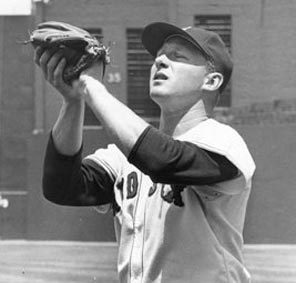
It is quite possible that the best all around athlete that Fenway Park has ever seen was none other than Jack Eugene Jensen!

    Jensen played seven seasons with the Red Sox.  

The Red Sox acquired the “Golden Boy” on December 8, 1953 from the Washington Senators for pitcher Mickey McDermott and center-fielder Tommy Umphlett. My dad was not a big fan of Mr. Umphlett. You see he was the guy who replaced Dom DiMaggio and in my dads words, “he couldn’t carry Dominic’s jock strap”! I’m not sure if Dad knew that for a fact, but you get the point.

Jensen, made his debut in 1950 with the New York Yankees as Joe DiMaggio’s (Dom’s brother) back up. Some saw him as the heir apparent to Mr. DiMaggio however the arrival of some kid named Mickey Mantle in 1952 made Jensen expendable and he was shipped off to the nation’s capital.

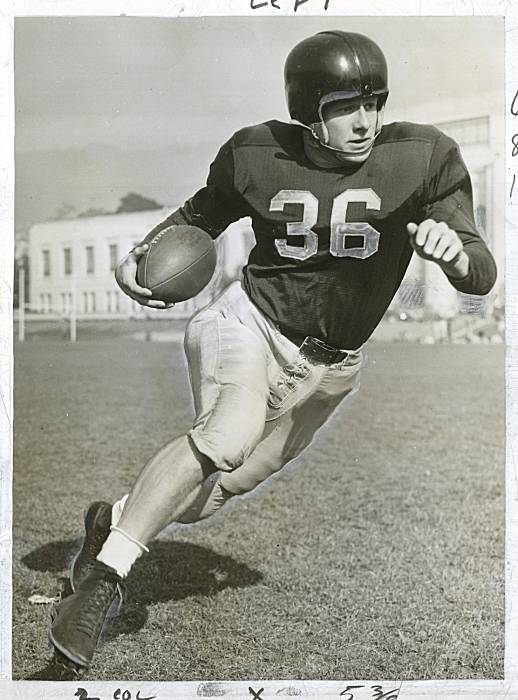
Following his graduation from high school in 1945, he spent two years in the Navy before attending the University of California at Berkeley, where he excelled at football and baseball!

  In 1948 he was a first team All American running back for the Golden Bears as he became Cal’s first ever 1000 yard rusher. The following year he led them to the Rose Bowl where he had a 67 yard touchdown run in a 20-14 loss to Northwestern. In his three years at Cal, he averaged six yards per carry! Come spring, he exchanged the pigskin for horsehide and was twice named to the All American baseball team. In 1947 he was instrumental in the Golden Bears winning the College World Series as he pitched them to a victory over Yale on their way to the title. The Yale team had a left-handed first baseman named George Bush who went on to do some other things unrelated to baseball. Jensen was the first man to play in both the Rose Bowl and the College World Series! And when he made an appearance in the 1950 World Series with the Yankees, he became the first man to play in the Rose Bowl, the College World Series and the World Series.

Williams, Piersall and Jensen comprised the best outfield in the American League for several years in the 1950s. 

From 1954-1959, Jensen was an anchor in the Red Sox lineup. Usually hitting fourth or fifth, he hit .285 and averaged 26 homers and 95 RBI per season while playing stellar defense in right field. He led the American League in RBI three times, triples once and stolen bases. In 1958 he was voted the MVP becoming only the fourth Red Sox player to garner that honor and in 1959 he added a Gold Glove to his laurels.

As baseball headed west and air travel replaced the trains, a paralyzing fear of flying grounded the career of Jackie Jensen. He retired following the 59 season, sat out a year and returned in 1961. It proved too much for Jackie and following the 61 campaign he called it quits for good.

In May of 1982 he returned to Fenway for its first Old Timers game in decades. He was warmly welcomed by the Fenway Faithful and as it turned out, they were saying goodbye to the Golden Boy. Just two months later he succumbed to a heart attack at the age of 55. In 2000 he was inducted into the Red Sox Hall of Fame!

       And so it was on this day in Fenway Park history, December 8, 1958.


Posted in Fenway Park Baseball | Tagged , , , , , | Leave a comment

” We shall pay any price, bear any burden, meet any hardship, support any friend, oppose any foe, to assure the survival and the success of liberty.” John F Kennedy

Hey folks….I apologize for being absent the past few days. I am working feverishly towards the deadline for my new book scheduled for release in February. It is called simply Spring Training in Bradenton and Sarasota! But more on that later. I have decided that I will repost some of my own particular favorites and I hope you enjoy them. Being that we are between our two political conventions as we move towards choosing our next Commander in Chief, I thought this would be an apporpriate place to start. Thanks for your patience…..

From December 7th!

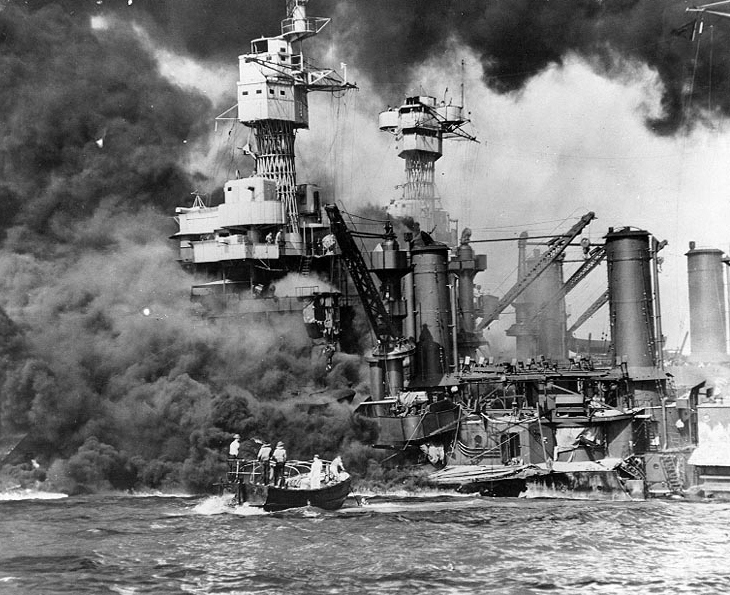
It was 70 years ago today……………………….

In 1918, when the USA was fighting the “war to end all wars” or if you prefer, the Great War, the widely held feeling was that baseball should shut down. It was trivial, it was frivolous. The 1918 season was brought to an end a month early and baseball’s immediate future was in doubt. It was all rendered moot when the war ended two months later.

When America entered World War II, the same question was raised and by none other than baseball’s Commissioner, Judge Keneshaw Mountain Landis. However, by that time baseball had woven its way into the fabric of America. President Roosevelt, recognizing that, wrote to Landis, “if 300 teams use 5000-6000 players, these players are a definite recreational asset to 20,000,000 of their fellow citizens— and that, in my judgement, is very worthwhile.”  This did not mean however, that professional baseball, at all levels, did not feel the effects. At the minor league level alone, there were 44 leagues in 1940 and 12 by the end of 1942.

Through enlistment or the draft countless players answered the call, as star and bench jockey alike were willing to bear any burden.  Minor leaguers were willing to meet any hardship and for many of them it meant their chance at the major leagues was gone forever. And then there were those, at every level of baseball, who “gave the last full measure of devotion”…..”to assure the survival and success of liberty”.

                http://www.baseballinwartime.com/in_memoriam/in_memoriam.htm

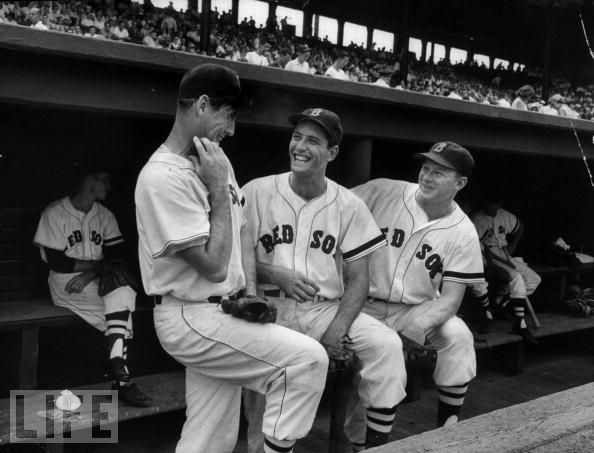
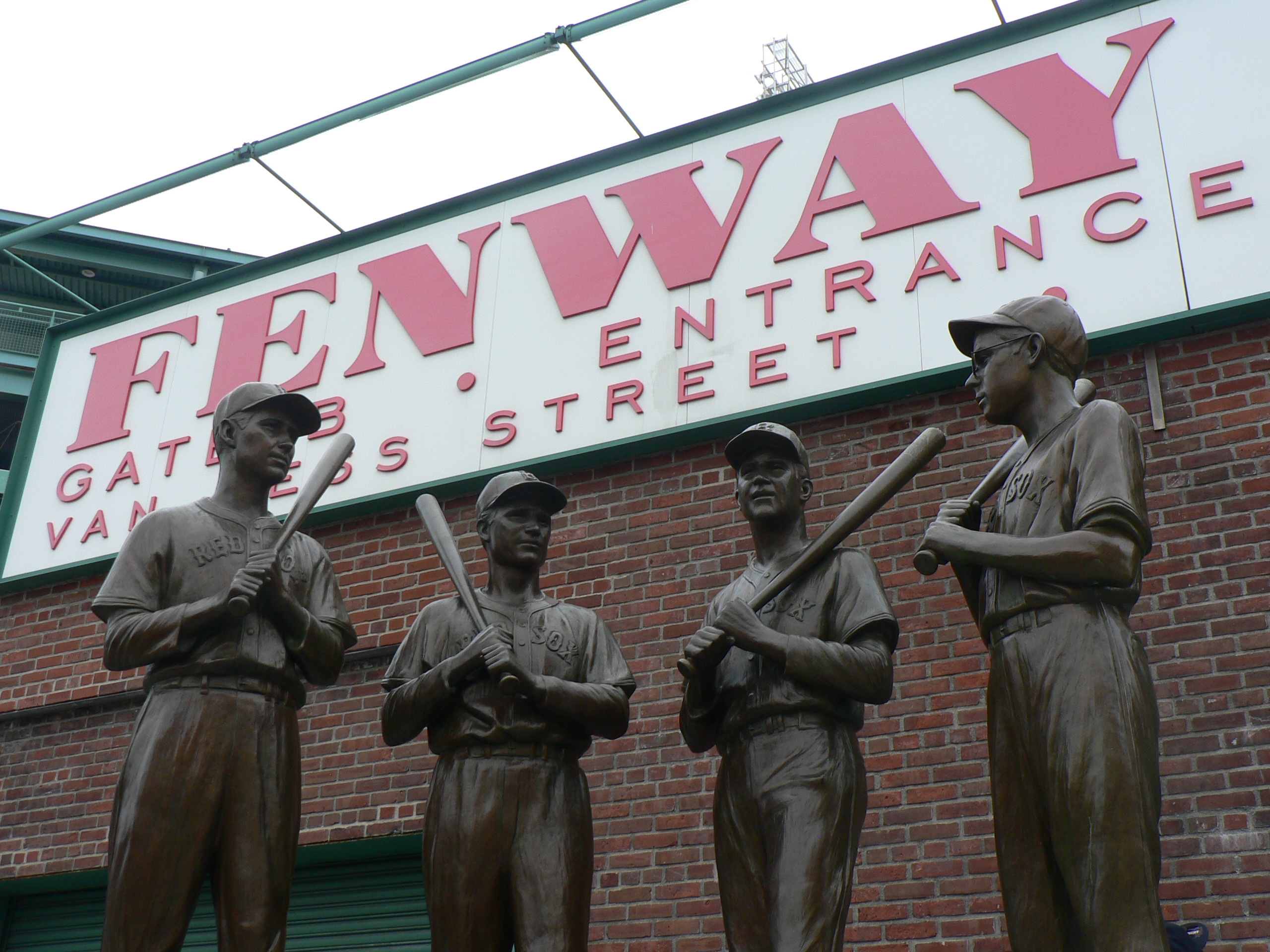
No less than 30 members of the Boston Red Sox organization served in World War II. “The Teammates” (Ted Williams, Bobby Doerr, Johnny Pesky and Dom DiMaggio) are immortalized in bronze on the streets outside Fenway Park.

Each of them served and each of them have become Red Sox legends. However, I dare say, most Red Sox fans have forgotten or never heard of Earl Johnson.

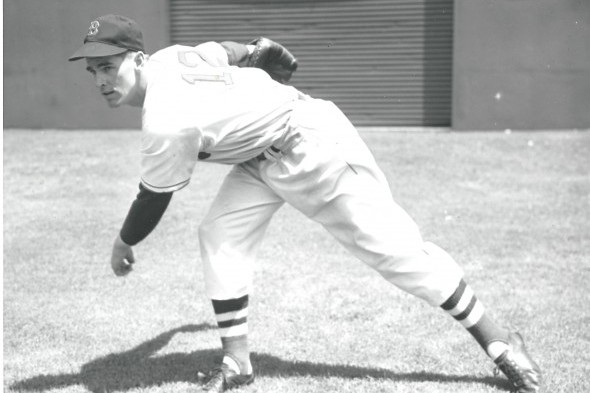
Earl “Lefty” Johnson was a 21-year-old pitcher who showed much promise in 1940, winning six of eight decisions. He alternated between the bullpen and the rotation in 1941 and like so many, was gone for 42, 43, 44 and 45. Returning to the Red Sox in 1946, he went 5-4 and was the winning pitcher in game one of the 1946 World Series throwing two innings of no hit relief in the Red Sox come from behind 10 inning victory at Sportsmans Park in St. Louis.

Drafted into the Army in January of 1942, Johnson served with the 30th Infantry Division. Landing on Normandy Beach, on D-Day plus five in 1944, they spearheaded the St Lo breakthrough. In September of 1944, Johnson was awarded the Bronze Star for keeping vital information from falling into enemy hands. Braving “severe hostile fire” to do so Johnson also received a battlefield promotion to 2nd lieutenant. Three months later fighting in the Battle of the Bulge, he received the Silver Star for bravery and another promotion, to 1st lieutenant.

Johnson pitched seven seasons with the Red Sox going 40-32. His promise as a pitcher was never quite fulfilled as his career was shortened by the four years of service which he gave to his country. He remained working in the Red Sox organization for 44 years and he passed away in 1994.

So today let’s pause; pause and remember. Remember all those who answered the call then, who answered the call before them, who have answered the call since  and who answer the call now. And the next time you’re at the grocery store and you see a rickety old man a bit unsteady on his feet; he may be wearing a cap which identifies him as a World War II vet, pause and remember, extend a hand and say thanks!

           And so it was on this date in Fenway Park history, December 7, 1941 

Posted in Fenway Park Baseball, Fenway Park Other | Tagged , , , , | Leave a comment

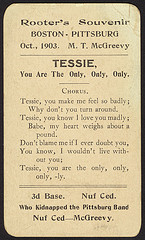
“Tessie, you know I love you madly, Babe, my heart weighs about a pound, don’t blame me if I ever doubt you, you know I wouldn’t live without you, Tessie, you are the only, only, only.” Will R. Anderson

The question for today is, what does a Broadway play, which ran in 1902, have to do with Fenway Park? Ah, the threads of history and why we love it so!

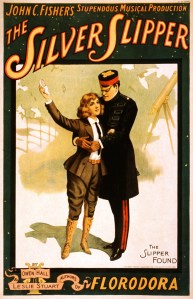
The Silver Slipper opened on Broadway October 27, 1902. It played 168 performances closing March 14, 1903. Yeah so, that’s 10 years before Fenway Park was even an idea. Hold on there, we’re getting there.  This musical comedy featured a song which became very popular in its time and thanks to dear old Mr. Edison (and a few other folks), you can hear it now, have a listen.

                      http://www.youtube.com/watch?v=d8hfFuNaMWU&feature=related

How cool was that? Pleasant little tune, and for some of you it may have a familiar little melody, but still what’s it got to do with Fenway Park?

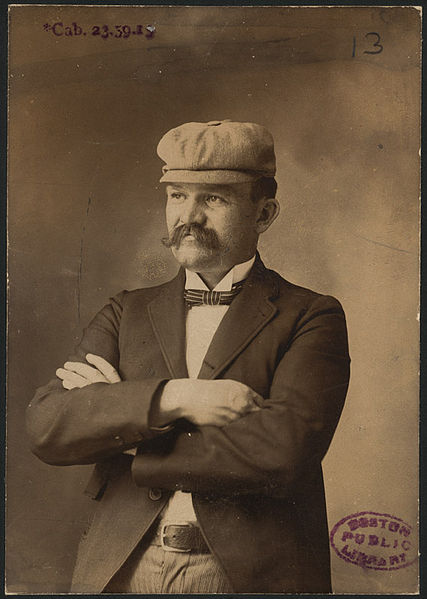
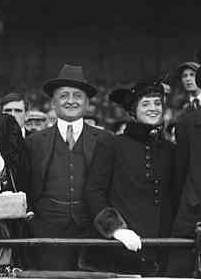
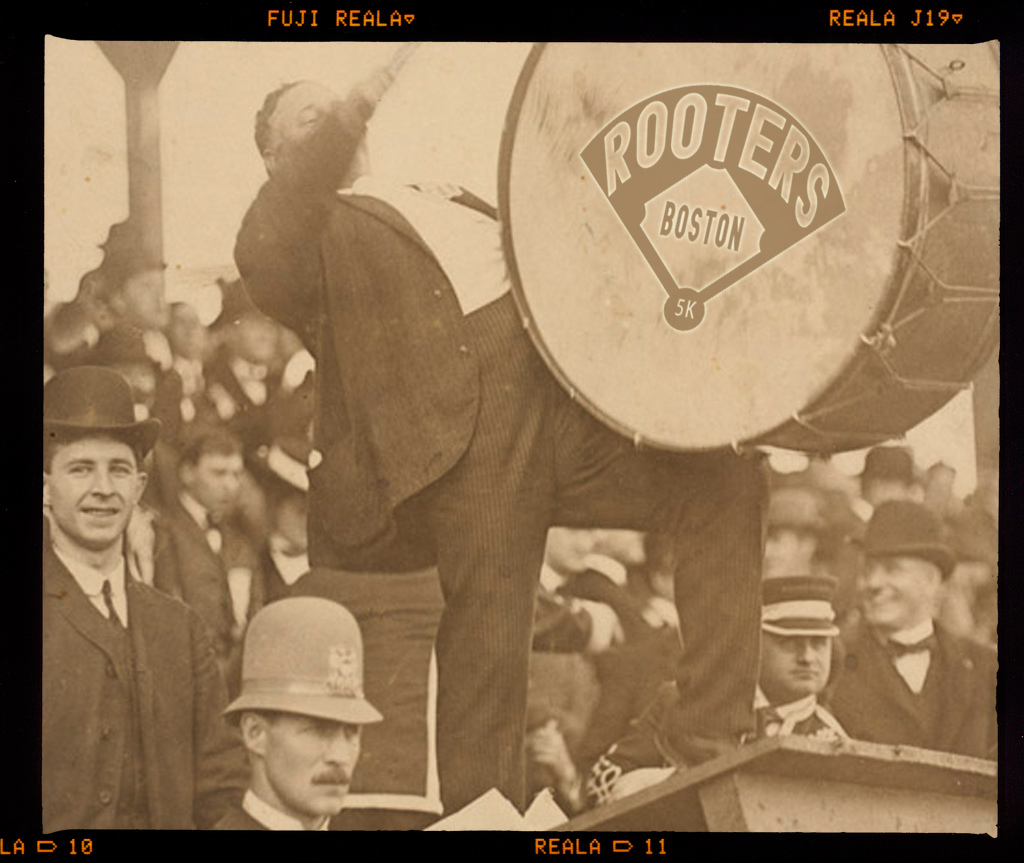
Enter this man,   Michael T. “Nuf Ced” McGreevey. Michael, you see, owned a lovely little establishment called The Third Base Saloon, named as such because, like third base, it was the last stop before home. It was located close to the Huntington Avenue Playing Grounds where the new Boston Americans baseball team played their home games. He settled disputes, usually about the National League Boston Braves and the American League Boston Americans (Red Sox), by simply pounding his fist on his bar and shouting, “Nuf said”! Quite a compelling figure I would say. Michael took a shine to the new American League team and cultivated a band of followers and called them the Royal Rooters. Included among them was this very prominent man.  He is John “Honey Fitz” Fitzgerald and he was the Mayor of Boston. The lovely lady he is with is his daughter Rose, she married Joseph P Kennedy (who looked into buying the Red Sox in 1916). They had a son named John Fitzgerald Kennedy and I understand he did quite well for himself. Sorry, I digress.

Back to the tune. The brand spanking new Boston Americans battled the well established Pittsburgh Pirates in the first ever World Series which took place in 1903. It was a nine game series and the Americans were losing three games to one when they traveled to Pittsburgh. “Nuf Ced” organized the Royal Rooters who made the trek to the Steeltown. They brought with them a band which played the song “Tessie“. The Royal Rooters changed the lyrics to ire and distract the Pittsburgh players. They took special aim at the Pirates great shortstop Honus Wagner. It seemed to work as Wagner had an abysmal series and the Boston team battled back and won the first ever World Series. Ok, but still, what does this have to do with Fenway Park? We’re getting there.

The Rooters led by good old “Nuf Ced” followed the team, now called the Red Sox, to their new home in Fenway Park for its inaugural season of 1912 and Tessie, was now their widely accepted rally cry. The Rooters had taken a liking to the seats in front of the left field wall known as “Duffy’s Cliff”. Well, the 1912 season was one of exceptional greatness for the Red Sox and they battled the New York Giants in the World Series.

 The seventh game of the series was set for Fenway Park. The Red Sox held a three games to two lead in the seven game series (game two was a tie called by darkness) and the Royal Rooters arrived ready to take their customary seats in left field. But noooooo, the seats had been sold. Needless to say old “Nuf Ced” and gang were not very happy and a near riot ensued which required the assistance of Boston’s gendarmes to quell. The altercation caused a delay in the start of the game which led to Red Sox starter Joe Wood’s arm stiffening. The Rooters were relegated to the standing room section and Wood got trounced forcing the deciding game the next day. In protest, the Rooters called for a boycott of the championship game. Only 17,034 fans showed up to watch the Red Sox clinch their second World Series, about half of what the crowds had been. Red Sox owner James McAleer made peace with “Nuf Ced”, “Honey Fitz” and the Rooters before the following season and Tessie reverberated throughout Fenway Park for many more successful years. But wait! There is more!

In early 2004, a Boston-based Irish rock band called The Dropkick Murphy’s did a cover of the 1902 song Tessie. They said it was to recapture the spirit of the Royal Rooters and restore the glory of the early Red Sox to the current team. In October of 2004, the Boston Red Sox won their first World Series since the days of “Nuf Ced”, “Honey Fitz” and the Royal Rooters. Oh and one more thing, in 2008 Dropkick Murphy bassist Ken Casey reopened the tavern and called it McGreevey’s, it is replete with memorabilia, some which once belonged to “Nuf Ced” himself.

“Tessie you are the only, only, only”…..Ah the threads of history and why we love it so!

                 http://www.youtube.com/watch?v=A6EIN3EeE78&feature=related

  And so it was, at that time in Fenway Park history, 1903 to 1912, to 2004…..

Posted in Fenway Park Other | Tagged , , , , , , , | Leave a comment

“So this guy sold Babe Ruth to the Yankees, all he got was money, he didn’t get one player for him just money, can you imagine that?” Remo Sinibaldi to his son trying to explain the unexplainable.

Everybody knows the story. He sold Babe Ruth, that’s right the guy sold Babe Ruth! He’s been vilified, denounced and reviled. He’s been “slandered, libeled, he heard words he never heard in the Bible.” But ya know, he sold Babe Ruth!

Harry Herbert Frazee, that’s him, the guy who, you know. A theatrical producer and a very successful one at that; he purchased the World Champion Boston Red Sox from Joseph Lannin on December 4, 1916. The purchase price varies according to source but it was for somewhere in the $675,000 range.

I’m jumping ahead, but the story goes that Harry wanted to finance this play called “No No Nanette” (sounds pretty sexy doesn’t it?) Well as myth would have it, he needed the cash to do so, so he sold Babe Ruth! YIKES! Thus capturing the capital for this great venture. He received a cool 125K for the “Colossus”, the “Mauler”, the “Burley Baterer”, the “Babe”(all nicknames he garnered with the Red Sox, well not Babe.) But, on top of that old Harry got a nifty $350,000 loan from dear old Mr. Ruppert and guess what he used for collateral? Yup, Fenway Park! Can you imagine, the owner of the freaking Yankees actually owned Fenway Park too. I’m not sure, but I think that might be a mortal sin.

Truth is, there’s way more to the story, way more. Some good things about Mr. Harry Herbert Frazee. First, upon purchasing the Boston Red Sox, one of his first orders of business was to call Mr. Clark Griffith, the owner of the Washington Senators and offer him $60, 000 for Walter Johnson! Sixty K, more than anyone had ever offered anyone else for a baseball player! Griffith said nope, too bad, but a noble try. Another thing he did was proffer the idea that the 1918 World Series should be taken to France and played there so our troops fighting the Great War could be a part of it! Pretty innovative thinking if you ask me.

Anyway, back to the No No Nanette thing. It opened in Chicago in 1924 and never hit Broadway until 1925. Oh and Harry Frazee, sold the Red Sox to Bob Quinn in 1923. Babe was sold in January of 1920. Doesn’t add up does it?

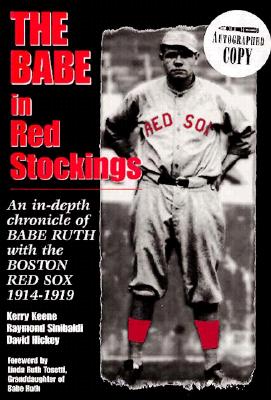
If you want the whole story check out “The Babe in Red Stockings“.

No not that one…………………………………………………………………………

This one………….

           http://www.amazon.com/Babe-Red-Stockings-Chronicle-1914-1919/dp/1571671129

I promise, you’ll get the truth, the whole truth and nothing but the truth on the sale of Babe Ruth to the New York Yankees.

               And so it was on this date in Fenway Park history, December 4, 1916


Posted in Fenway Park Baseball | Tagged , , , , , | Leave a comment

“If a man watches three football games in a row, he should be declared legally dead.” Erma Bombeck

Let’s see if you pay attention. I begin with the essential question which is this; what do the Bulldogs, Shamrocks, Redskins, Bears, Yanks and Patriots have in common? Now before you go off all willy nilly and start thinking this or that, pause, look about and then answer. Very good….Outstanding deductive reasoning will bring you to the correct answer. That’s right, they are all football teams. But more than that they are all professional football teams and even more than that, they are all professional football teams which called Fenway Park their home!

 Fenway… ready for football, 1933.

Fenway Park’s initial foray into pro football came in 1926. It was the first incarnation of the American Football League which was started by Red Grange, (he of galloping ghost fame).  The Boston Bulldogs did not last a season, going 2-4 in six games before disbanding. Their plan was to split home games between Fenway and Braves Field. They played one game at Fenway Park, a 13-0 loss to, the New York Yankees in October, does that seem serendipitous? The Pottsville Maroons (an NFL team) relocated to Boston and played their 1929 season as the Bulldogs, however, their home was Braves Field, not Fenway.

The Boston Redskins of the NFL arrived for their 1933 season. Founded as the Boston Braves in 1932, they played their home games at Braves Field. The move to Fenway brought a name change and the Boston Redskins, under Native American coach “Lone Star” Dietz, called Fenway Park home. The Redskins played in Boston through the 1936 season. Finishing that season as the Eastern Division Champs, they drew only 4,000 fans to Fenway on the next to last game of the season. Owner Preston Marshall was so infuriated at this lack of support, he surrendered home field advantage for the NFL Championship game and played the Packers in New York’s Polo Grounds. They lost 21-6 and Marshall packed up the team for Washington DC where they have thrived for nearly eight decades.

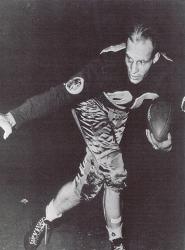
Boston Redskins running back Cliff Battles ran for 215 yards in a 21-10 win over the New York Giants at Fenway Park, October 8, 1933. He was the first NFL player to rush for 200 yards in a game.  Battles played for $175.00 per game.

The departure of the Redskins brought another stab at an AFL team. The Boston Shamrocks who played the 1936 season at Braves Field moved into Fenway Park for 1937. They lasted but one season going 2-5, both wins coming at Fenway. The football team left, but the Shamrock remained, becoming the symbol for the Boston Celtics, the most successful franchise in NBA history. Out with the Shamrocks, in with the Bears, with yet another AFL attempt to corner the Boston market. They lasted a year at Fenway before they also folded.

Despite four failed attempts at pro football in only 14 years, the NFL was not ready to give up on Boston as a home for one of its franchises. The Boston Yanks arrived in 1944. Called the Yanks because team owner Ted Collins was hoping for a Yankee Stadium home, he settled for Fenway Park where his team played for five seasons. Never enjoying a winning season, the Yanks became a casualty and were disbanded following the 1948 season.

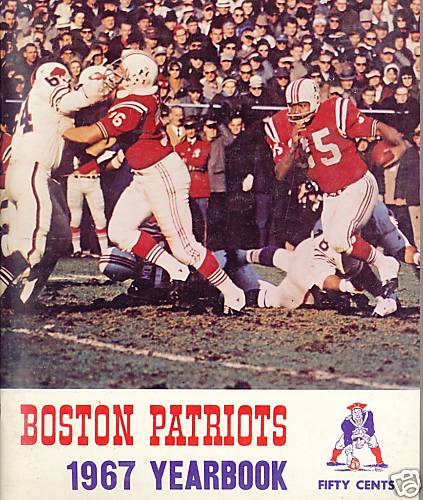
It would be 15 years before pro football would return to Fenway Park with yet another incarnation of the American Football League. The brand new Boston Patriots, owned by Billy Sullivan, played their first two seasons at Boston University’s Nickerson Field (the old Braves Field). In 1963 they moved their home to Fenway Park, where they played until the end of the 1968 season. They won one AFL East title (1963) and in their six seasons of calling Fenway home, they played 39 games there, winning 17 of them. They left Fenway for Alumni Field (Boston College) and Harvard Stadium before settling in Foxboro Massachusetts in 1971 becoming the New England Patriots. Today they thrive as one of the NFL’s most successful franchises of the new millennium.

Fenway Park has not seen a football game of any type since the Boston Patriots defeated the Cincinnati Bengals 33-14 on December 1, 1968. Will Fenway ever again see the pigskin bantered about her lawn? I think that for her one hundredth birthday she should host another football game. For my money, make it a high school game.

          And so it was, pro football throughout Fenway Park history, 1926-1968

Posted in Fenway Park and Football | Tagged , , , , , , , , , , | 1 Comment

“They called me crazy and I was.” Jimmy Piersall

He was an 18 year old kid out of Waterbury Connecticut when James Anthony Piersall signed with the Red Sox in 1948. Two years later he made his major league debut at Fenway Park, pinch running for Ted Williams in a comeback win against the Yankees; and in 1952, he made it to the Red Sox. A tremendous raw talent, the 22 year old rookie played 30 games at shortstop, 21 games in right, threw in a couple in center and even played a game at third base. Taking to calling himself “The Waterbury Wizard”, the brash and cocky kid did not endear himself to the veterans on the squad. However, it didn’t take long to realize that the young Piersall was battling more than just opposing pitchers. By the end of June he had been involved in an on field fight with Billy Martin, a clubhouse fight with teammate Mickey McDermott and had spanked the four year old son of teammate Vern Stephens.

Banished to the minor league Birmingham Barons to mature and find himself, his antics continued until he climed atop the grandstand roof to heckle the home plate umpire. Receiving a three game suspension, he was sent to Westbourough State Hospital in Massachusetts. Diagnosed with “nervous exhaustion”, he spent the remainder of the 1952 season there.

He returned to the Red Sox in 1953 and became their regular rightfielder. Enjoying one of his finest seasons, he finished ninth in the MVP voting. Now entrenched in the Red Sox outfield, he would ultimately move to centerfield where, flanked by Ted Williams in left and Jackie Jensen in right, he was part of the best outfield in the American League. A two time all star with the Red Sox, he was the first centerfield recipient of the Gold Glove Award in 1958.

On December 2, 1958, the Red Sox traded Piersall to the Cleveland Indians for first baseman Vic Wertz and centerfielder Gary Geiger. He played 10 more seasons with the Indians, Senators, Mets before finishing in California with the Angels. And he continued to battle his demons.

Never quite fulfilling his tremendous promise as a baseball player, Jimmy Piersall’s contributions range far beyond the baseball field. His very public battle with manic depression (bi-polar disorder) raised a level of national awareness of mental illness and the courage it takes to endure. His story is chronicled in his book Fear Strikes Out.

http://www.amazon.com/Fear-Strikes-Out-Piersall-Story/dp/0803287615

Piersall became an inspiration to millions of Americans and played a highly significant role in bringing mental illness out of the closet. Embraced by the fans, they often paid the fines that his colorful behavior, at times, incurred.

Following the Red Sox World Series victory in 2004, Piersall was part of the Red Sox contigent which was invited to the White House. “This is a real thrill for a poor kid from Waterbury” he said, “and I’m a 75 year old man, there’s not much left.” In 2010, Jimmy Piersall was elected to the Boston Red Sox Hall of Fame. In November he celebrated his 82nd birthday.

         And so it was on this date in Fenway Park history, December 2, 1958


Posted in Fenway Park Baseball | Tagged , , , , , | Leave a comment

Valentine (noun)…… “a sweetheart chosen or greeted on this day.” Mr. Webster

Pinky Higgins, Rudy York, Billy Jurges, Del Baker, Pinky Higgins (again), Johnny Pesky, Billy Herman, Pete Runnels, Dick Williams, Eddie Popowski, Eddie Kasko, Eddie Popowski (again), Darrell Johnson, Don Zimmer, Johnny Pesky (again), Ralph Houk, John McNamara, Joe Morgan, Butch Hobson, Kevin Kennedy, Jimy Williams, Joe Kerrigan, Grady Little and Terry Fancona; twenty-one names, twenty-four regimes who represent the answer to a very esoteric trivia question. Which is…….Who has managed the Red Sox since 1959? (the year I made my first trip to Fenway) Oh wait and now introducing, drum roll please………

Bobby “Sweetheart Chosen Or Greeted On This Day”

Number 22 is the man chosen to pilot the Red Sox during the historic 100th birthday season of Fenway Park. In a push button poll conducted by the Boston Globe, 60% of the 8000 members of Red Sox Nation who participated, are happy with the choice of “Sweetheart Chosen Or Greeted On This Day.” Boston sports talk shows seem to concur, professing the need to get tough with those of chicken and beer fame and “Sweetheart” is just the guy to do it. Even Hall of Fame pundit Peter Gammons is on board and thinks “Sweetheart” and the Red Sox can work, “as long as it doesn’t become a media show.” Frankly this has me wondering if perhaps the cheese has not slid off of Peter’s cracker, I mean really, not become a media show? This is Boston, this is the Red Sox and this is “Sweetheart Chosen Or Greeted On This Day”, each entity a media show unto itself!

Today at 5:30, the media show will begin as Fenway Park will welcome the man who will be Chosen and Greeted On This Day. Optimism will abound as the excitement of new beginnings will be felt in the Fenway air and I will wonder if the new skipper will use this same gathered media to “call out” any boys who behave badly this season or will he treat them as men? Will the new skipper subjugate the huge letter “I” that seems to permeate his being? And as it all unfolds ponder this, if the Red Sox had won but one more game, one more game, none of this would be happening.

Twenty two men in 53 years and as number twenty two takes the helm he does so amidst the rumor that number twenty one will replace him behind the mike at ESPN. Hey, does that mean it was a trade? Hmmmm, ESPN got the better of the deal! Twenty two men in 53 years, an average of 2. 4 years each. Sorry to say, I think today another era of average leadership begins, but don’t fret for at least in this era, every day will be Valentine’s Day.

 Bye, bye Tito, you’re the best I’ve seen……

And so it is, this day in Fenway Park history, December 1, 2011…..

Posted in Fenway Park Baseball | 1 Comment