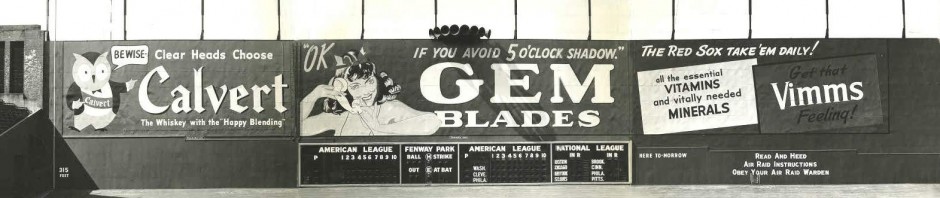
And the Babe played golf…..
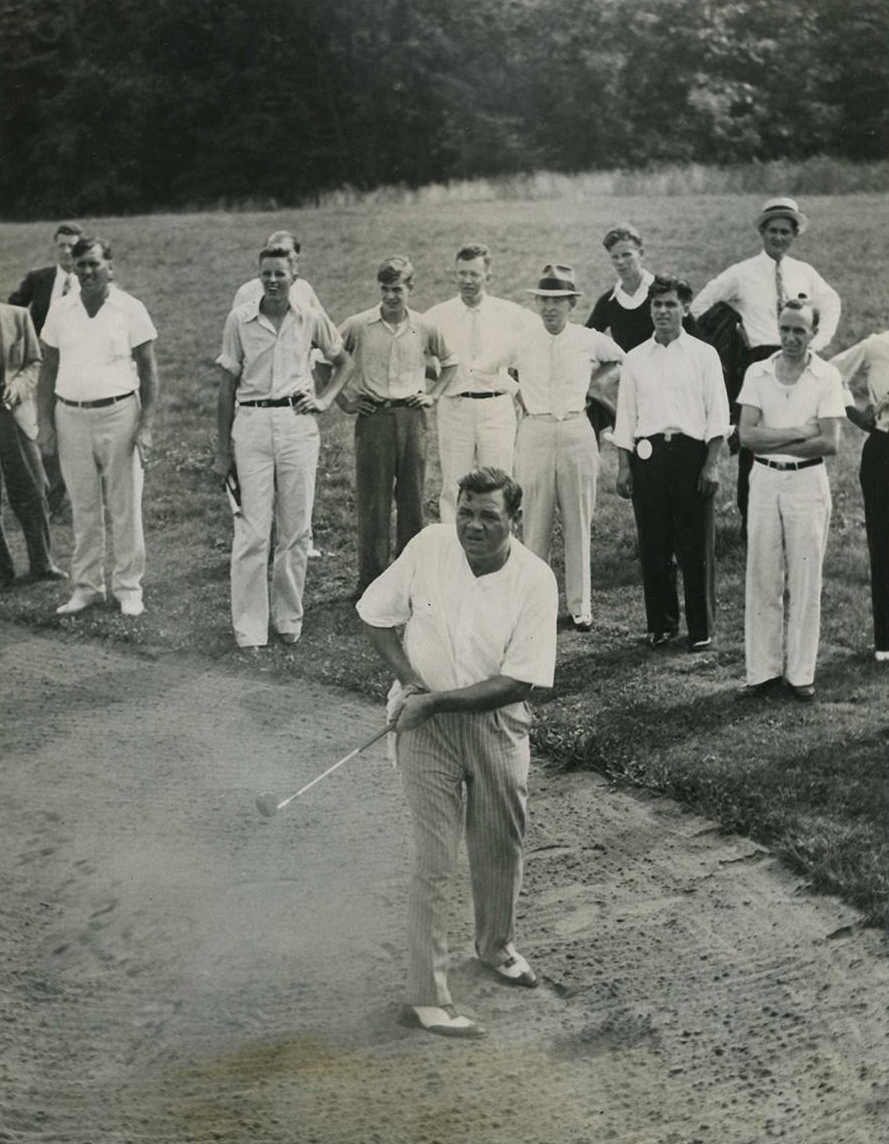 And so did I…..Happy Sunday…..
And so it is on this day in Fenway Park history, March 18, 2012.
And the Babe played golf…..
And so did I…..Happy Sunday…..
And so it is on this day in Fenway Park history, March 18, 2012.
Tom Yawkey purchased the Red Sox in 1933, the year before Babe Ruth’s final year with the Yankees. There is a synchronicity in this ushering out of the old and in with the new; for it was Tom Yawkey who set the Red Sox on the course to regain respectability, and it was the arrival of Ted Williams in 1939 that laid the foundation for the opening acts of the true Red Sox/Yankee rivalry.

So let’s recap, in Babe’s 15 years with the Yankees they won seven pennants and four World Series. Eleven times they won 90 games a more and three times they cracked the 100 win barrier. They had one losing season, 1925 when Babe missed 56 games to injuries.
The Red Sox, on the other hand, never won more than 76 games (that coming in 1934) and they lost 90 or more games 10 times, cracking the 100 loss barrier five times. From 1925-1929, they lost 105, 107, 103, 96 and 96 games respectively! That is an average of 101 losses per season! And in nine of those 15 years they finished in the cellar.
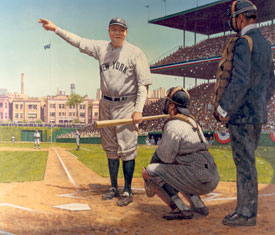
Babe calls his shot in Wrigley Field in game three of the 1932 World Series.
When Babe was playing in his last World Series in 1932, and calling his shot, the Red Sox were setting their own personal paradigm of futility going 43-111 .279 and finishing a robust 64 games behind the Yankees!

Smead Jolley played for the Red Sox in 1932 and 1933. He was one of the few bright spots in the darkness of the 1932 season hitting .309 with 18 home runs and 99 RBI.
Now let’s set the stage, When Babe departed from the Yankees, they slipped a bit in 1935, winning 89 games, five less than the previous season. Then in 1936 a young center fielder from the west coast arrived in New York.
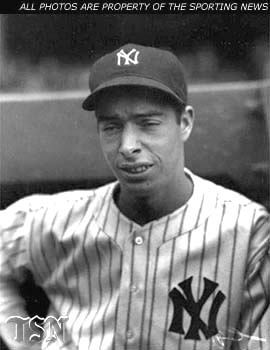
Joe DiMaggio played 13 seasons with the Yankees. The three time MVP played in 10 World Series and New York won nine of them!
The arrival of the man who would come to be known as “The Yankee Clipper”, coincided with a streak of success that was unprecedented in baseball history. It also was the first spoke in the wheel of amping up the Red Sox/Yankee rivalry.
Meanwhile in Boston, Tom Yawkey was anything but idle, as he set to marching the Red Sox back from the abyss. He started by acquiring one of the best pitchers in the game from the Philadelphia A’s.

The trade for Lefty Grove in 1933 included $125,000 going to Philadelphia.
Next came a talented young shortstop from Washington who Yawkey made his player-manager. Cronin would pilot the Red Sox through the 1947 season.
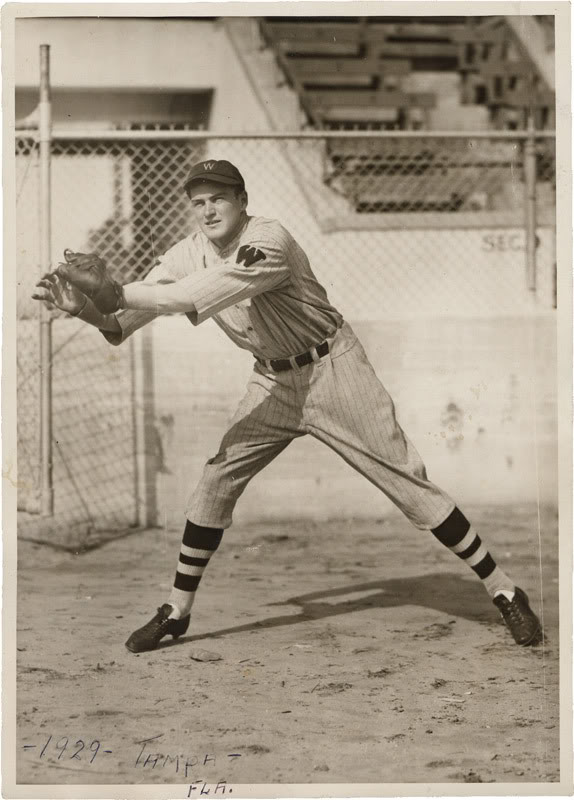
The trade for Joe Cronin in 1934 included $225,000 going to the Senators.
In December of 1935, Yawkey went back to the Philadelphia A’s and acquired a right-handed power hitting first baseman who to this day remains in the discussion of the greatest right-handed hitter in baseball history.
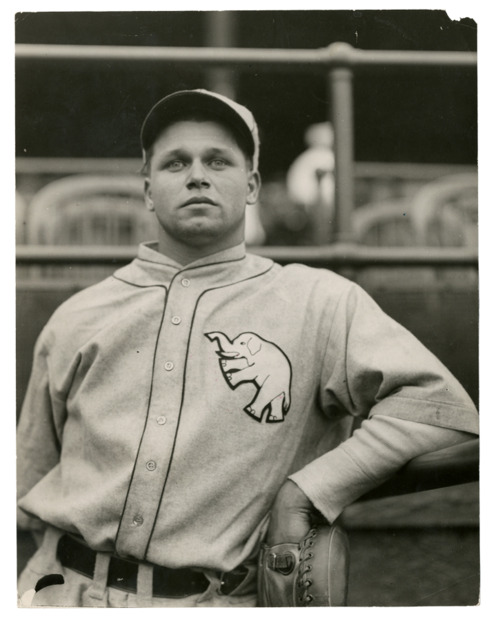
The trade for Jimmie Foxx included $150,000 going to the A’s.
Yawkey was not just acquiring established stars, he also was signing and purchasing some young and very talented ball players.

Bobby Doerr was purchased from the Hollywood team of the Pacific Coast League in 1935 for $75,000. He arrived in Boston in 1937 and in 1939 he became their regular second baseman.
Then in 1936, Red Sox GM Eddie Collins signed a lanky left-handed swinger named Ted Williams off of the roster of the Pacific Coast League San Diego Padres.

Ted Williams, The Kid, The Splendid Splinter, Teddy Ballgame arrived in Boston in 1939 and things would never be the same!
Tom Yawkey’s moves of the 1930s had restored the Boston Red Sox to respectability. They won 88 games in 1938 and 89 the following year. Finishing in second place behind the Yankees both times, they were 9 1/2 games back in 1938 and 17 games back in ’39’.
As respectable as they had become, they were still far behind the Yankees and in reality they had achieved a status that was simply, the best of the rest. As for the rivalry, well still not quite there yet. The spark which would ignite that fuse would take place in 1941 and ironically it would not involve a pennant race; for the Red Sox once again finished in second place, and once again they were 17 games behind the pennant winning Yankees.
It would involve a season of historic individual performances by Ted Williams and Joe DiMaggio. Accomplishments which, over seven decades later, continue to capture the imagination, admiration and respect of baseball historians, pundits and fans throughout the world.
to be continued…..
And so it was at this time in Fenway Park history, the 1930s.
The Yankees and Babe Ruth parted ways following the 1934 season and Babe returned to finish his career in the city where it all started.
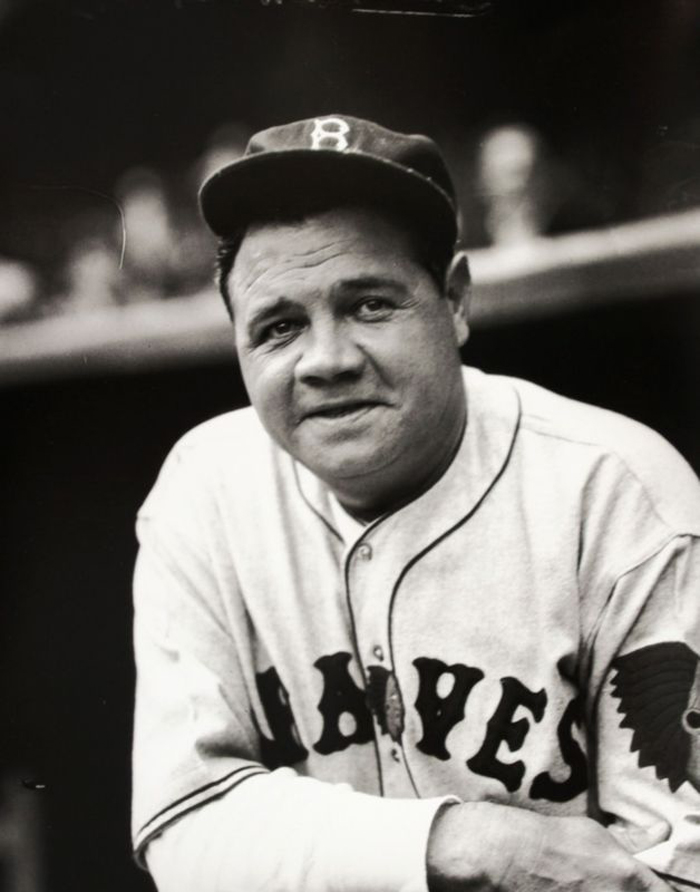
Babe signed to play for the Boston Braves in 1935 but retired in May of that same year.
From the time the Yankees acquired Babe Ruth until his final year with them in 1934, their record was 1,405 wins and 895 losses (.611). From the time the Red Sox sold Babe Ruth to the Yankees until he left them in 1934, their record was 891 wins and 1,403 losses (.388).
And you could say, “Nuf Ced”! But you’d be wrong…..
Because you could say the Yankees won seven pennants and four World Series while the Red Sox reeled off nine last place finishes, including six in a row!
And you could say that Red Sox acquisition Herb Pennock was 162-60 in 11 seasons with the Yankess and 5-0 with a 1.95 ERA while pitching 52 innings in four Yankee World Series! And he went into the Hall of Fame in 1948 wearing a Yankee hat!

Herb Pennock and Babe Ruth, Red Sox teammates in 1917.
And you could say that Red Sox acquisition Waite Hoyt was 157-98 in 10 seasons with the Yankees and 6-3 with a 1.62 ERA while pitching 77 innings in six Yankee World Series! And went into the Hall of Fame in 1969 wearing a Yankee hat!

Waite Hoyt won games one and four of the 1928 World Series, a four game sweep of the Cardinals.
And you could say that Red Sox acquisition Wally Schang, who caught for Boston in their 1918 World Championship season, caught for New York in their first World Championship season in 1923.
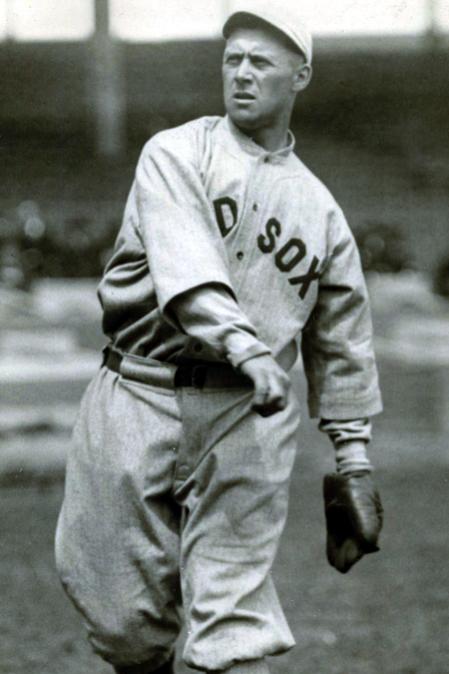
Wally Schang was acquired by Red Sox owner Harry Frazee in 1918 and caught for the Red Sox through 1920 before being traded to the Yankees.
And you could say that Red Sox acquisition Everett Scott, who was the Red Sox shortstop in their 1918 World Championship season, played shortstop for the Yankees in their first World Championship season of 1923.
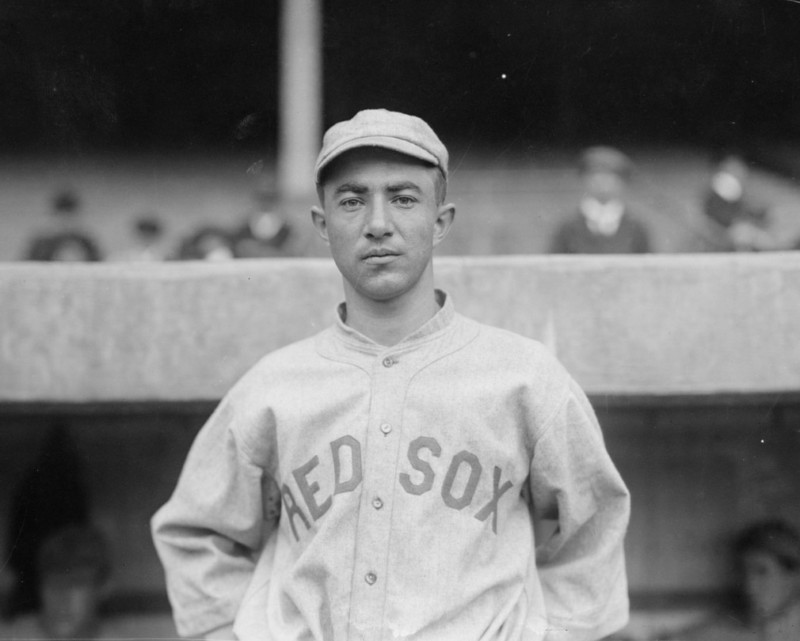
Everett Scott was the Red Sox shortstop for their 1915, ’16’ and ’18’ World Championship teams. He played in 1,307 consecutive games from June 20, 1916 until May 5, 1925; a record he held until broken by teammate Lou Gehrig who began his steak on June 1, 1925, with Everett Scott as his shortstop.
And you could say that Red Sox acquisition Mike McNally who was a valuable utility player on the Red Sox World Championship teams of 1915 and ’16’; was a valuable utility player on the New York Yankees 1923 World Championship squad.
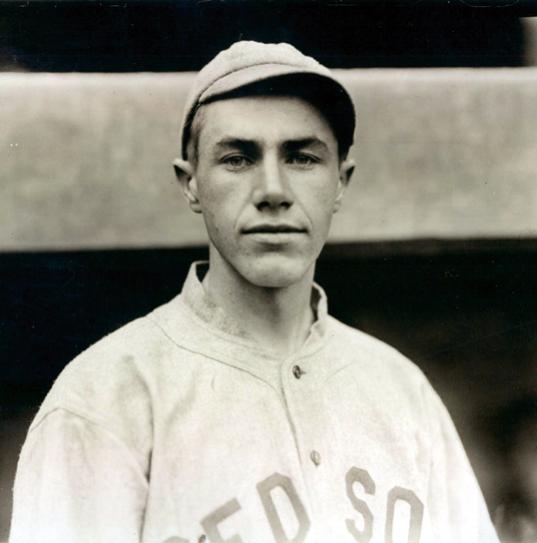
Mike McNally scored the winning run in game two of the 1916 World Series against the Dodgers; a 2-1 complete game win for Babe Ruth.
And you could say that Leslie Ambrose “Bullet Joe” Bush who won 15 games for the Red Sox in their 1918 World Championship season, won game five of the 1923 World Series 8-1 in a complete game effort that gave the Yankees a three games to two lead in the Series, on their way to that first World Championship.
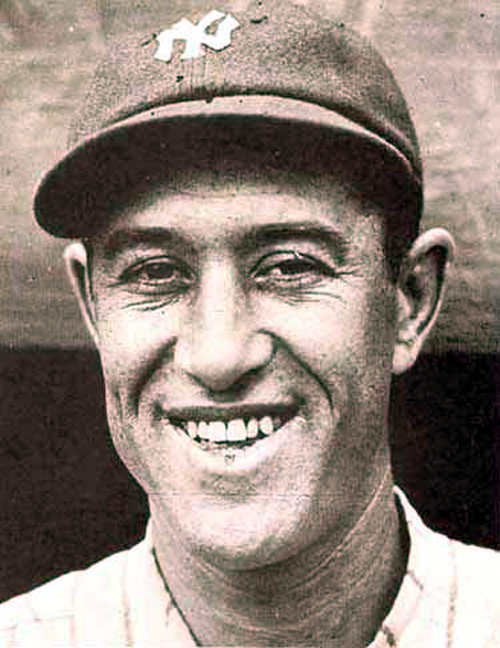
“Bullet Joe” was 62-38 in three years with the Yankees.
And you could say that Red Sox acquisition “Sad Sam” Jones who was 16-5 with the Red Sox in their 1918 World Championship season of 1918, was on the mound and recorded the final out, saving the clinching game of the 1923 World Series, New York’s first World Championship!
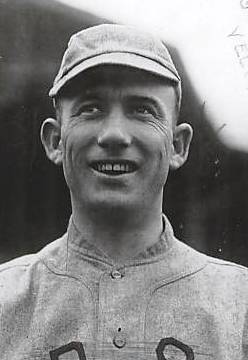
“Sad Sam” was 67-56 in five years with the Yankees, including 21-8 in 1923, their first World Championship year.
And you could say that Red Sox acquisition Carl Mays who was 2-0 in the 1918 World Series, Boston’s third in four years, was 80-39 in five years with the Yankees, including 5-2 out of the bullpen in their first World Championship season of 1923.

Carl Mays was famous for his “submarine” pitch.
And you could say that as far as the pure definition of the word rivalry, the Red Sox/Yankee rivalry still was not quite yet there. Oh they were still ” attempting to equal or surpass” one another and they were still “pursuing the same object”, however, as the Red Sox had once been a far superior team, so now were the Yankees. The head to head battles were still a ways away.
Oh and you could say that Babe Ruth went on to become the greatest baseball player in the history of the game and nearly 100 years later…..
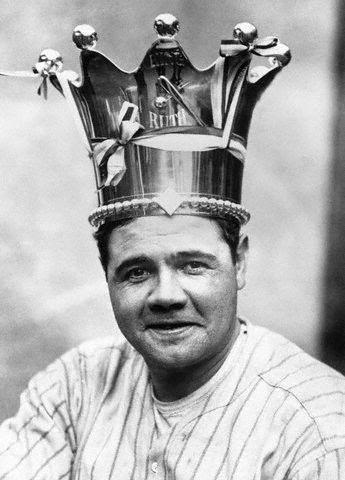
HE STILL IS!
“Nuf Ced”!
to be continued…..
And so it was at this time in Fenway Park history, 1918-1923, transition time.
Babe Ruth’s trade to the New York Yankees, marked the second time in five years that the Red Sox had traded someone who was arguably the best player in the American League. Yet the trade of Tris Speaker in 1916 did not adversely effect the Red Sox efforts, as they won the World Series in both 1916 and “18′.

However, with Babe Ruth trading in the pinstripes of the Boston Red Sox for the pinstripes of the New York Yankees; the turn around for both franchises was profound, immediate and everlasting!
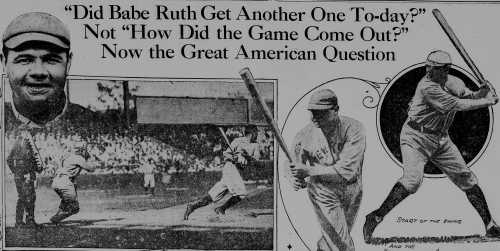
In 1920, Babe Ruth shattered his record of 29 home runs in a single season when he hammered 54 of them. He led the league in HR, RBI, Runs Scored, On Base Pct, Slugging Pct and Walks and did it all while hitting .376. The Yankees finished with 95 wins (the most in their history) but were three games back of the White Sox in third place. Their tide was turning.

The Red Sox were 72-81, finishing in fifth place and suffering their worst season since 1906. Harry Hooper led the team with seven home runs, added 53 RBI while hitting .312; a solid admirable season for the future Hall of Famer but in spring training 1921, he was traded to the White Sox. Their tide was turning as well.
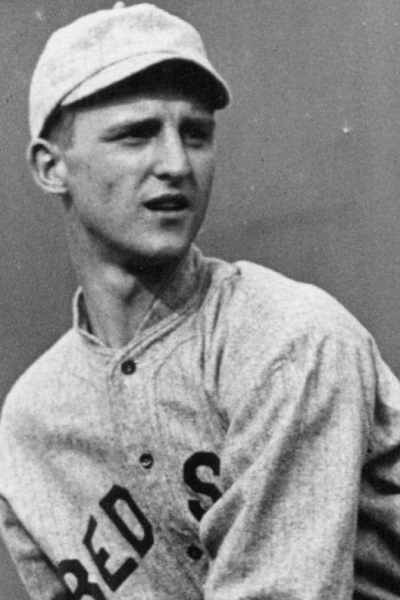
Herb Pennock was 16-13 in 1920, the only Sox hurler with a winning record. He was traded to the Yankees in January of 1923.
The 26-year-old southpaw Herb Pennock emerged as the ace of the Red Sox pitching staff, but his days in a Red Sox uniform were also numbered.
The 1921 season brought even new heights for Babe Ruth and the Yankees. He hit 59 home runs, knocked in 171 of his mates and hit two points higher at .378, leading the Yankees to their very first pennant. (And, he also led the league in all the same categories as the year before.) They lost the World Series to the Giants, with whom they shared the Polo Grounds, but their tide had decidedly turned!

Carl Mays who was the winning pitcher for the Red Sox in the deciding game of the 1918 World Series, was the ace of the Yankee staff in 1921 going 27-9.
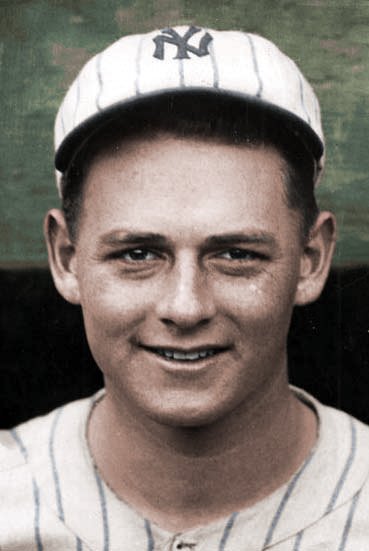
Twenty-0ne year old Waite Hoyt, acquired from the Red Sox in December of 1920, was the number two man on the ’21’ pennant winning Yankee staff, winning 19 games.
The Red Sox finished a few games better than the previous year, their tide was still turning.
It is not my intent to chronicle the exploits of Babe Ruth while with the Yankees. That you can do yourself with one click here.
http://www.baseball-reference.com/players/r/ruthba01.shtml
Take note of all the bold numbers, those indicate he led the league in that category. Suffice to say that if you recall what Barry Bonds did on steroids from 2000-2004, that was Babe Ruth on hot dogs and beer from 1920-1933!
The Yankees repeated as American League champs in 1922 but were swept by the Giants in the World Series. The following year marked the opening of the “House that Ruth Built” and in their first season in Yankee Stadium, the Yankees won their third successive American League pennant, only this time they capped it off by beating the Giants for their very first World Championship!
Their pitching rotation included the aforementioned Penncock (19-6) and Hoyt (17-9), both acquired from the Red Sox and these two fellows,

“Bullet” Joe Bush acquired by the Yankees from the Red Sox in December 1921, won 19 games for the Yanks in 1923.
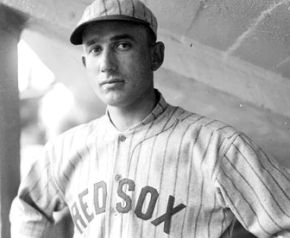
“Sad” Sam Jones was acquired by New York in the same trade with Boston that landed them Joe Bush, he was 21-8 with the 1923 Yankees.
By this time, the 31-year-old (old for a player back in the day) Carl Mays was relegated to the Yankee bullpen but he did manage to go 5-2 in 81 innings of work.
Herb Pennock was the winning pitcher and Sam Jones got the save in the deciding game of the 1923 World Series, a game in which Babe homered, delivering to New York their first ever World Championship!
Pennock, Hoyt, Bush, Jones and Mays were a combined 81-40 for the 1923 World Champion Yankees. Mays, Bush and Jones were a combined 52-33 in the Red Sox shortened World Championship season of 1918. Oh, and the other guy in that ’18’ Boston rotation, Babe Ruth at 13-7.
From the time the Yankees acquired Babe Ruth until his final year with them in 1934, their record was 1,405 wins and 895 losses (.611). From the time the Red Sox sold Babe Ruth to the Yankees until he left them in 1934, their record was 891 wins and 1,403 losses (.388).
What more need be said ?
Well you could say the Yankees won seven pennants and four World Series while the Red Sox reeled off nine last place finishes, including six in a row!
And you could say that the Yankees displaced the Red Sox as the premier franchise in all of baseball!
And you could say that the Red Sox stumled into the abyss of their “Dark Ages”.
And you’d be right!
And so it was at this time in Fenway Park history, 1920-1934, the “Dark Ages.”
On January 6, 1920, newspapers throughout the country told the news which had been rumored for weeks. The Boston Red Sox sold Babe Ruth to the New York Yankees!
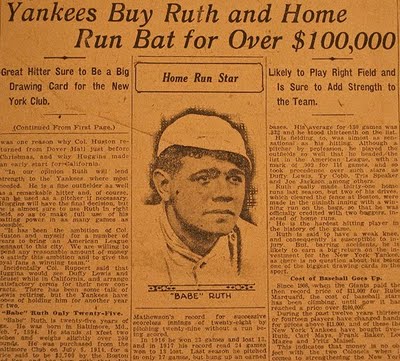
When looking back at this event through the eyes of nearly a century of hindsight, it is easy to scoff and decry such a move. Although there will always remain an element of disparity in evaluating this transaction; it is important to note and understand that events do not unfold in a vacuum.

Harry Frazee and Babe Ruth.
So then how is it that Red Sox owner Harry Frazee came to conclusion that it was a good idea to rid himself of Babe Ruth, the greatest baseball player who ever lived?
First a little about Harry Frazee. it is well-known that Frazee was a successful theatrical producer, however what is not well-known is that as an owner he was pro-active and somewhat innovative. He purchased the Red Sox in November of 1916 and by years end, he had offered Washington Senators owner Clark Griffith $60,000 for Walter Johnson.
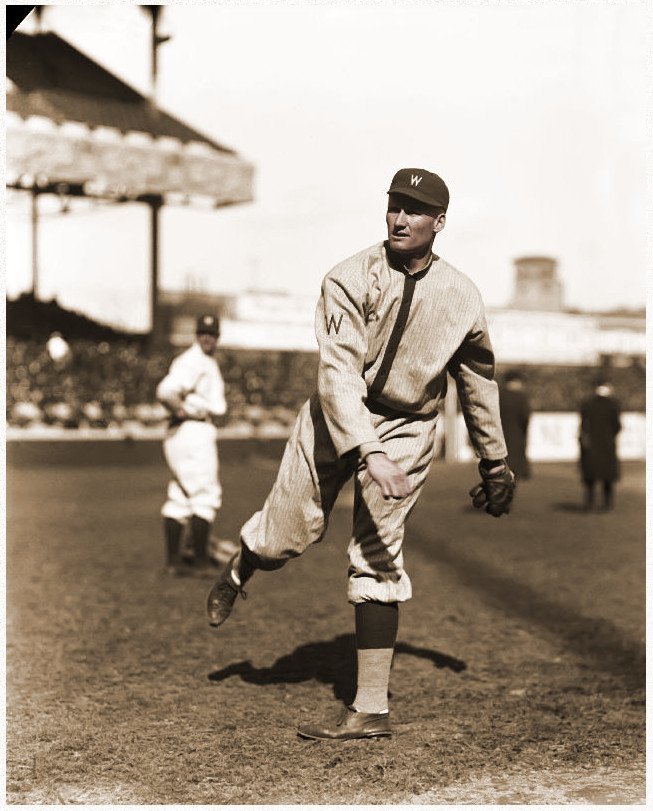
Walter Johnson 417-229 is one of only two pitchers in baseball history to win 400 or more games.
At 36 years of age, he was the youngest owner in baseball and following the “call to arms” throughout the nation in 1917, he purchased Amos Strunk, “Stuffy” McInnis, Wally Schang and “Bullet” Joe Bush from the Philadelphia A’s; all were significant contributors to the 1918 World Champion Red Sox.
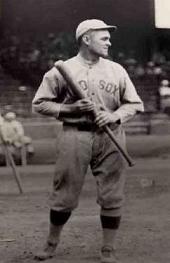 “Stuffy” McInnis, only Babe Ruth had more RBI for the Red Sox in 1918 than “Stuffy”.
Frazee was in an ongoing feud with American League president Ban Johnson and in fact at one point, he asked former President William Howard Taft if he would be interested in the job of one-man Commissioner of all of baseball. Taft declined while Ban Johnson fumed.
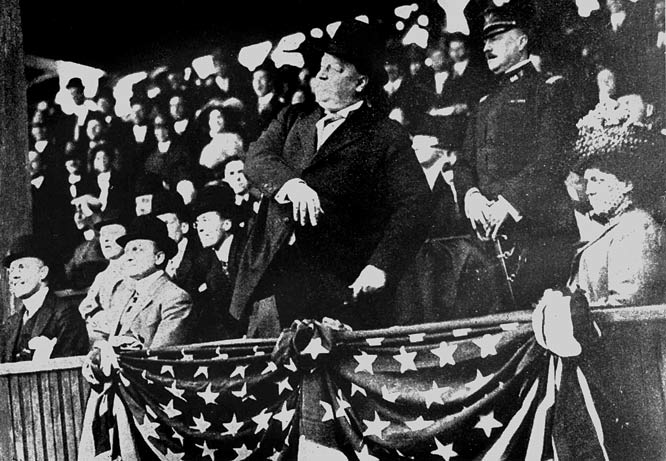
William Howard Taft, the only man to serve as President of the United States and Chief Justice of the United States Supreme Court.
Babe Ruth was the best player in baseball before he became a New York Yankee. He led the league in home runs in 1918 and set a new home run record in 1919. He was both pitching and playing the field and at the end of the 1919 season he was heading into the second year of a $30,000 contract which called for $10,000 per year.
 The Babe.
His exploits on the field were legendary, his exploits off the field were legendary, his exploits in the Fenway Park clubhouse were, at times, combative and disruptive. As is usually the case with megastars, Babe had his own set of rules. Curfew issues nearly brought Babe and manager Ed Barrow to blows on more than one occasion.
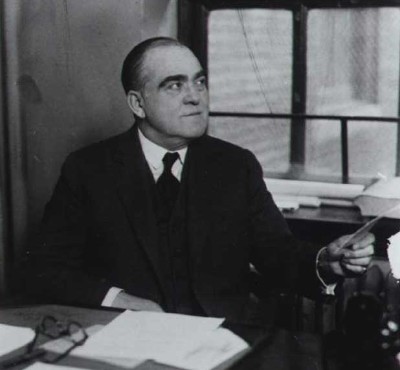
Ed Barrow.
The issue was settled in spring training of 1919 when Barrow exonerated Babe from “bed check” in exchange for Babe leaving him a note telling him what time he came in.
There were times throughout the season when Ruth was allowed to leave the team to play exhibitions in which he made up to $500 per game. Babe actually left the team, without permission, the last weekend of the ’19’ season to play in such an event; a move that did not endear him to either Frazee or a number of his mates.

At the end of the 1919 season, Frazee had given Ruth a $5000.00 bonus to compensate him for contract incentives he’d missed because he had pitched during the season. With Babe on a barnstorming tour in California in the fall of 1919, the word came that he wanted his salary doubled for the 1920 season.
Needless to say, this did not sit well with old Harry and the slippery slope that would take Babe to New York was greased, but not before Frazee offered him to the White Sox, straight up for Joe Jackson, White Sox owner Charles Comiskey declined!
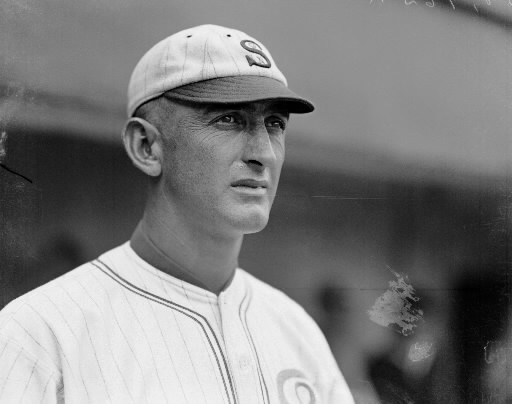
“Shoeless” Joe would play only one more year, 1920, before being banned forever for his role in throwing the 1919 World Series.
Perhaps the most interesting aspect to the transaction of the century is the response by Boston fans. Boston newspapers ran “opinion poles” on the trade and did so for about eight days. Surprisingly they ran about 50/50 and the fans looked forward to the players Frazee would procure with the money Ruth brought him.
Likewise, the press saw the deal as a positive one for Boston as the widely held belief was that Babe had simply grown to big for Boston.
However, the transaction marked the crossroads for both franchises which were headed in different directions and its ramifications echoed across a century of two cities and their beloved baseball teams! For the loss of Babe and those to follow ushered in the dark ages of the Boston Red Sox and history has named Harry Frazee as the mastermind of it all.
to be continued…..
And so it was at this time in Fenway Park history, Babe leaving time.
As I have revitalized this blog, I have spent some time looking through all the “stats”, that’s right blogs have stats. Anyway, what the stats tell me is that among the widest read pieces I have posted here in three years, the Red Sox/Yankee rivalry is among the most popular. So I thought I would repost them!
So here you go, the first in a multi part series! This first appeared on March 13, 2012.
Enjoy!
One thing I have learned in my 101 posts on this blog is that you who read it, help create it. I read something interesting and get an idea, I research and write about it and then I get a comment or an email and another article takes shape. So today, I give you The Anatomy of a Rivalry.

The unflappable Mr. Webster states that a rival is “one who attempts to equal or surpass another or who pursues the same object as another,” and a rivalry is “the act of competing or emulating”,”the state or condition of being a rival.”
THE FIRST STANZA 1901-1919
The Red Sox and Yankees were both born in 1901 with the inception of the American League. In their first incarnation, the Red Sox were known as the Boston Americans while the Yankees were birthed in Baltimore as the Baltimore Orioles. They moved to New York in 1903 and from then until 1913, they were known as the New York Highlanders, because they played at Hilltop Park, in the Highland section of the city.
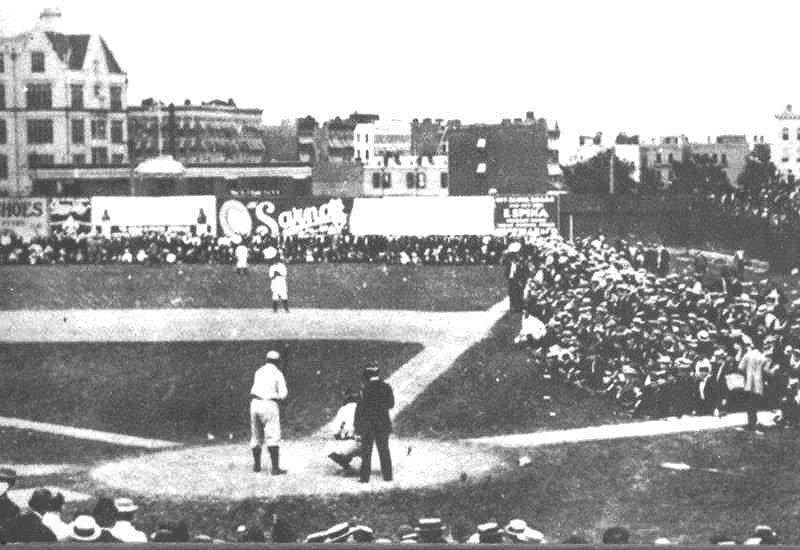
Hilltop Park, home of the New York Highlanders from 1903 through 1912.
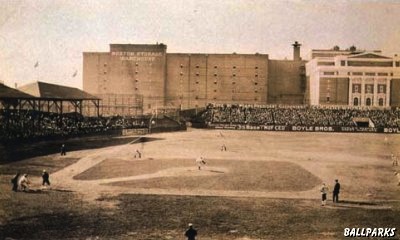
The Huntington Avenue Grounds, home of the Boston Americans (Red Sox), 1901 through 1911.

In 1913 the Highlanders moved to the Polo Grounds and called themselves the New York Yankees.
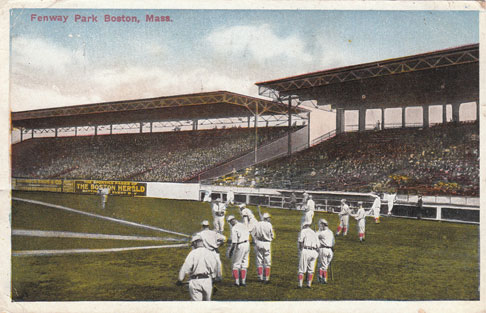
In 1907, Boston Americans owner John I Taylor began to call his team the Red Sox and in 1912 they moved into a brand new Fenway Park.
In the first two decades of the American League the Red Sox were the dominating force. They won the American League pennant in 1903, ’04’, ’12’, ’15’, ’16’ and ’18’ and the only year they were not World Series Champs was 1904. There was no World Series in 1904 because Giant manager John McGraw refused to let his team play against the “upstart” league.

The 1904 American League Champs.
To go along with their six pennants, the Bostonians finished in the first division 15 times. Oh, by the way, a first division finish was a term that was used pre playoffs when the post season consisted of just the World Series. From 1901-1960 it meant finishing first, second, third or fourth in the two eight team leagues; the leagues changed to 10 teams each in the 1960s, adding a fifth place finish to the mix. The Division Play-Offs began in 1969.
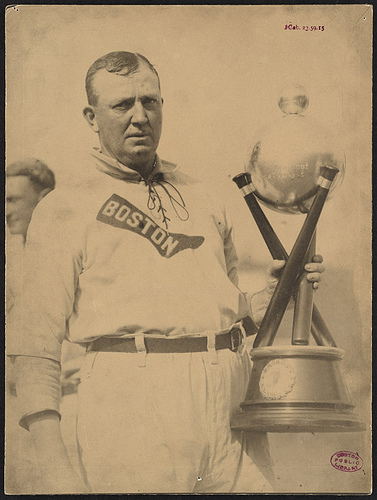
Led by the pitching of Cy Young
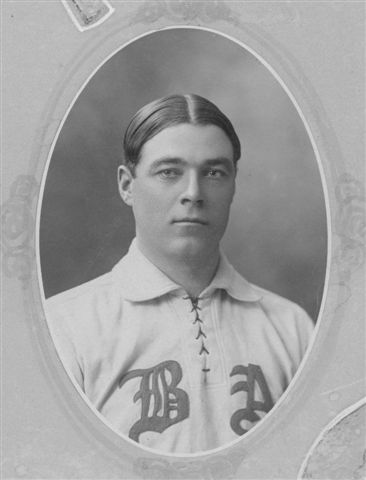
and Bill Dinneen,
the Boston entry of the American League dominated the first five seasons. When Fenway Park opened her doors in 1912, it was the likes of:
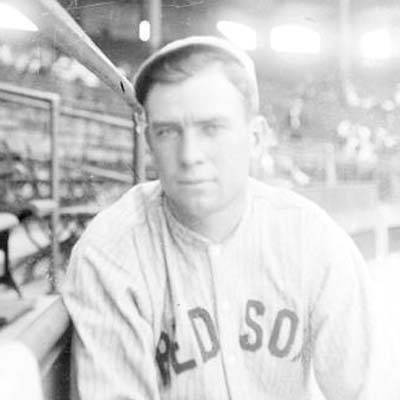
Tris Speaker
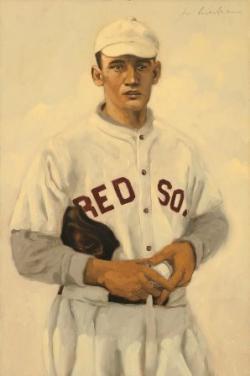
“Smokey” Joe Wood
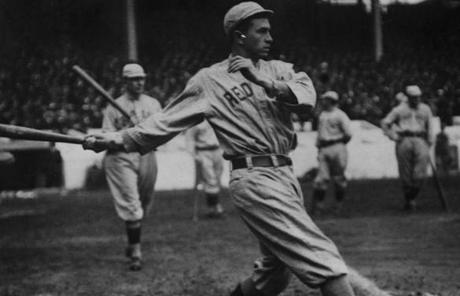
Harry Hooper
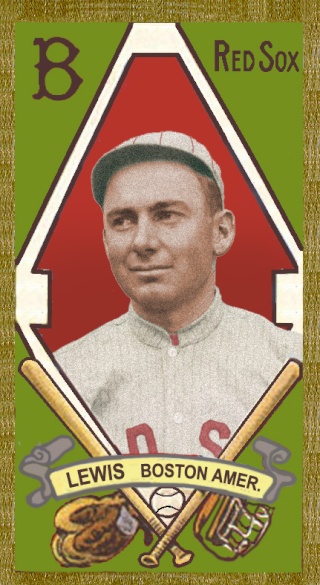
Duffy Lewis

and Babe Ruth
who led the Red Sox to four World Championship in Fenway’s first six years! From 1901-1919 the Red Sox were the best team in baseball, they won 1548-1258 .552, they had only four losing seasons in that span and they clearly were the class of the league.
The Orioles/Highlanders/Yankees on the other hand were a mediocre lot. They mustered only seven winning seasons, had only six first division finishes, never won a pennant and hit the 100 loss mark twice. Their overall record was 1339-1452 .480.
The Boston team even got the best of the first ever transaction between the two clubs. In December of 1903 they swapped pitchers, Boston sent right-hander,

Tom Hughes
to the Highlanders for southpaw,

Jesse Tannehill.
Tannehill pitched five years in Boston going 62-38 including back to back 20 win seasons in 1904 and ’05’. A key figure in the Boston rotation, he was one of three 20 game winners in their 1904 rotation. Hughes, on the other hand, was 7-11 with New York and in July of 1904 he was traded to Washington.
The Americans/Red Sox and the Orioles/Highlanders/Yankees were rivals in the nacent years of the American League only in the sense that they “pursued the same object”. In head to head competition the Boston entity held a distinct advantage going 216-180 .545. Then in January of 1920, the teams announced they had made a trade and everything was was about to change!
to be continued…..
And so it was at this time in Fenway Park history, 1901-1919.
Saturday’s post on Mickey Mantle solicited a heartfelt and wonderful response from Tom. In it he said “I guess I shouldn’t say this, but I absolutely loved Mantle…” and it is that comment that inspires me this morning.
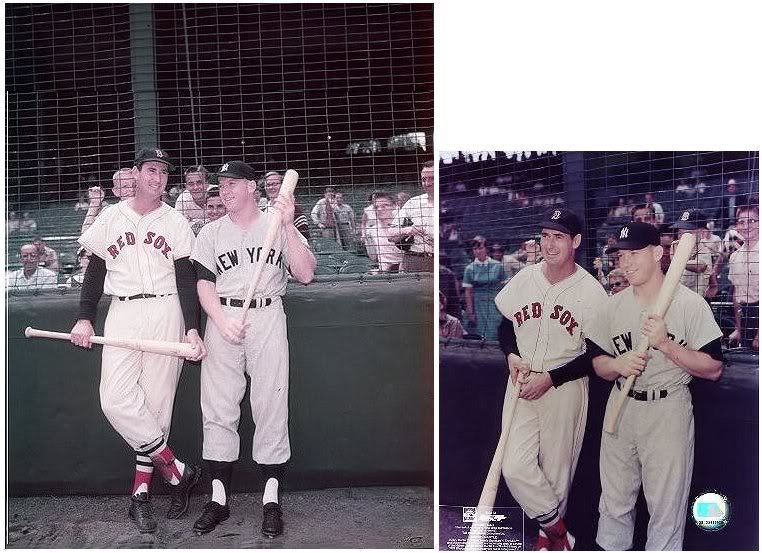
Two of the all time greats at Fenway Park in 1958.
There is a common misconception, held by many, that to be a Red Sox fan means one must hate the Yankees. So in the interest of candor and in the spirit of full disclosure I want to declare I DO NOT HATE THE YANKEES! In fact I have not “hated” the Yankees since the early 1960s.
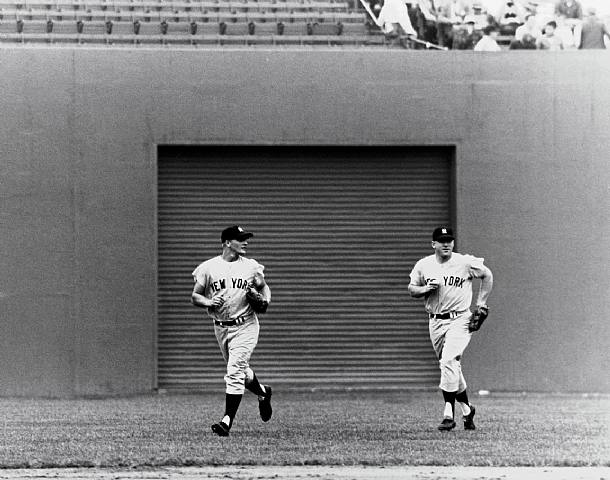
Roger Maris and Mickey Mantle at Fenway Park, 1961.
I have been following the Red Sox since 1959 when I was six years old and from then until the Red Sox won the pennant in 1967, their best season was ’59’ when they went 75-79 and finished in fifth place out of eight teams!
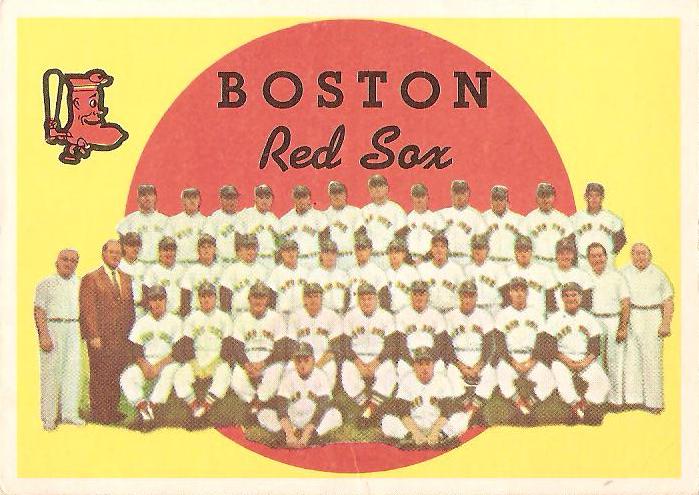
The 1959 Boston Red Sox.
The Yankees, on the other hand, won the American League pennant in 1960, ’61’, ’62’, ’63’ and 1964 winning the World Series in ’61’ and ’62’. Adding insult to injury, during those years the Red Sox went 63-89 in head to head games with the Yankees. I was delighted when Bill Mazeroski’s homer beat the Yanks in the ’60’ World Series and ecstatic when the New Yorkers fell victim to Sandy Koufax and Bob Gibson in the Series’ of 1963 and ’64’. Thus, it is safe to say that, my “hatred” of the Yankees was born of the jealousy and frustrations of a child’s heart.
I did not experience the Red Sox/Yankee rivalry until the 1970s for it was not until the later half of that decade that both teams were once again good enough to vie for the American League pennant. Things were different then, for major league baseball had gone to division play and a playoff system. So now they battled for the title of AL East Champs.
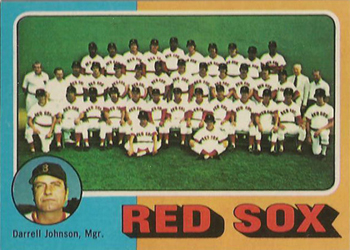
The Red Sox were in the hunt in 1972, and 1974 before winning the East and the pennant in 1975. In 1976, the Yankees made their first World Series appearance in 12 years. They followed that up in 1977 with their first World Championship since 1962. Then came 1978!

Bucky Dent crosses home greeted by Chris Chambliss and Roy Clark after his home run gave the Yankees a 3-2 lead.
Playing the first one game playoff in the American League since 1948, the Yankees defeated the Red Sox 5-4 at Fenway Park. There were seven Hall of Famers in Fenway Park that day, “Catfish” Hunter, “Goose” Gossage and Reggie Jackson in pinstripes and Carl Yastrzemski, Dennis Eckersley, Carlton Fisk and Jim Rice wearing red sox.
I was present at that game and when it was over I literally circled the Park for two hours absorbing the “injustice” of it all, however when the Yankees made it to the World Series a couple of weeks later, I was rooting for them! They beat the Dodgers for their first back to back World Series Championship since the early 1950s.
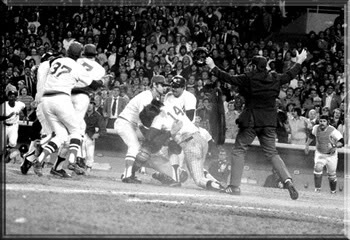
Red Sox/Yankee battle in May of 1976.
The Sox/Yankees have produced some fantastic on field brawls! There were members on those teams in the seventies that had a genuine disdain for each other and it was carried between the lines.
The rivalry hit its zenith this past decade when the Red Sox miracle of “04” unfolded at the expense of, none other than, the Yankees. And today the battle continues.
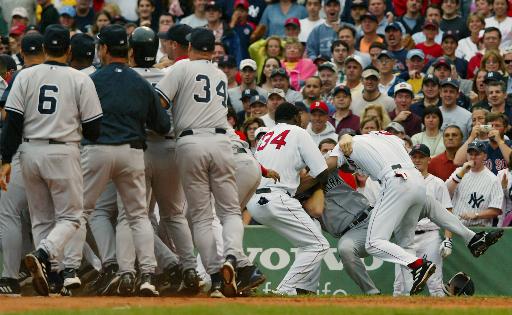
Sox/Yankees battle at Fenway, 2004.
I don’t hate the Yankees, there I said it again! Frankly I think it’s because I have evolved from just a Red Sox fan to a baseball fan who loves the Red Sox. How could any true baseball fans, not love the way the likes of Mantle, Maris, Berra, Guidry, Munson, Jackson, Pinella, Jeter, Posada, Rivera et al play or played the game of baseball?
Now I will confess, I hold a particular disdain for Yankee fans, not all of them mind you, just those who feel entitled. Those who feel the Yankees will win simply because they’re the Yankees and they somehow deserve it. That illustrates a complete disrespect for the game and a lack of appreciation of just how incredibly difficult it is to perform, day in, day out, year in, year out, at the level of excellence that has marked the histories of both these franchises. And I am sad to say, that many members of Red Sox Nation, have developed a similar posture.
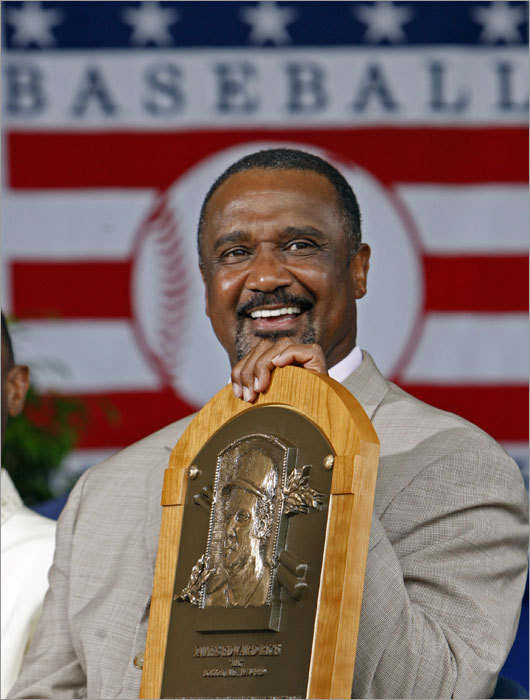
Jim Ed Rice.
In July of 2009, I was in Cooperstown with my son for the induction of Jim Rice. I wore a t-shirt with this photo…..
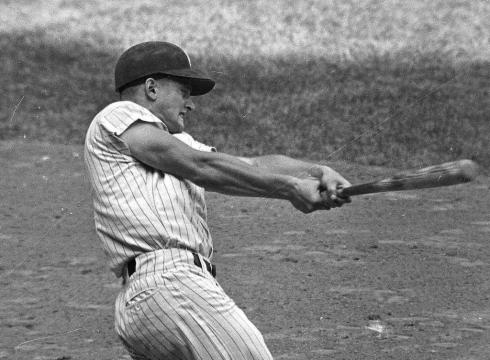
under the photo were the words, “61 Homers, No Steroids” and of course I was adorned with my Red Sox cap. I was purchasing some items from a street vendor who looked at me and said in his finest New York accent, “Hey your from Borston, whaddaya doin with that shirt on?…..A Borston fan wearin a Maris shirt.” I retorted, “I can’t like Maris because I’m from Boston?”
I leave you with the words I left with him. “There are idiot baseball fans everywhere, you have your share and we have our share”, and so it is. I’m not sure you can love Dustin Pedroia and not love Derek Jeter. I’m not sure you can love Jorge Posada and not love Jason Varitek. So Tom, never feel you ever, ever have to apologize because you loved the likes of Mickey Mantle, any and all true baseball fans, loved the Mick too.
And so it is on this day in Fenway Park history, March 12, 2012.
And Jim Rice and Josh Beckett played golf…..
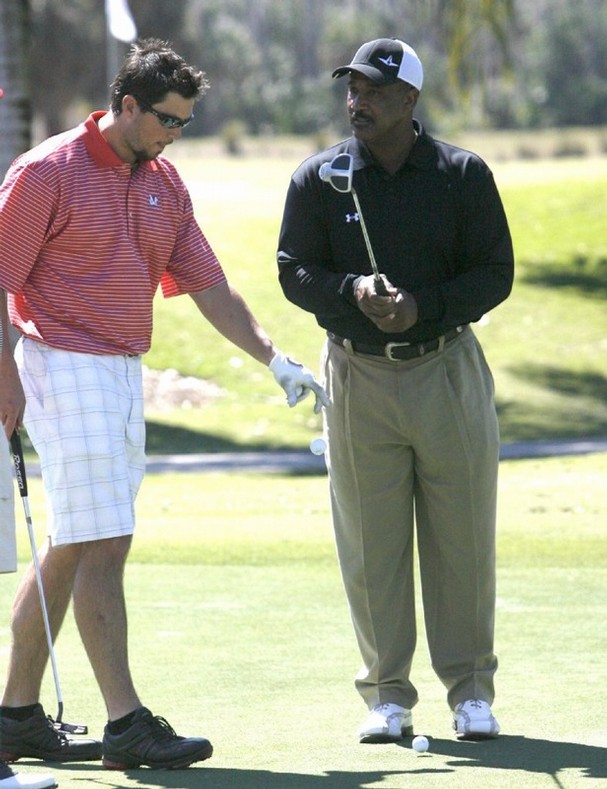
And so did I….Happy Sunday
And so it is on this date in Fenway Park history, March 11, 2012.
The game of baseball produces buckets full of oddities and Fenway Park has witnessed more than her share in her first century of existence. Today’s first installment of Fenway’s foibles involves none other than Mickey Mantle.

Mickey Charles Mantle made his debut on April 17, 1951 against the Red Sox at Yankee Stadium.
Wearing the number six, he played right field and was inserted in the third spot in the order by manager Casey Stengal. His first at bat was a right-handed one and came against this man,
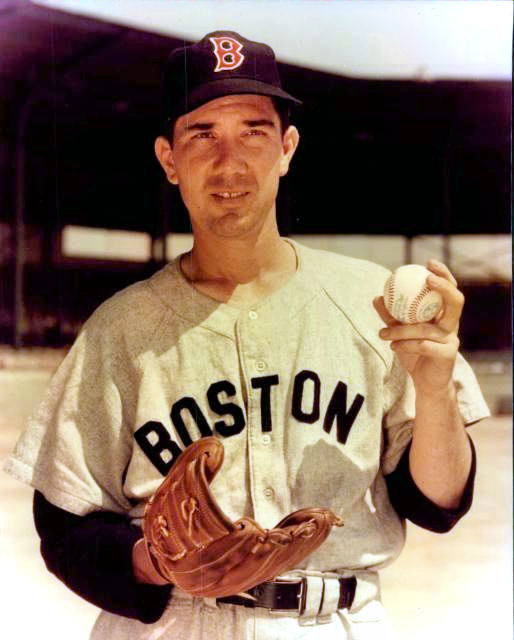
Red Sox lefty Bill Wight.
He grounded out to second base to end the first inning. His first hit, also produced his first RBI in the sixth inning when, still facing Wight, he singled in Jackie Jensen giving the Yankees a 3-0 lead. He scored his first run two batters later when Yogi Berra singled him in stretching the lead to 4-0 in a game the Yankees eventually won five zip.
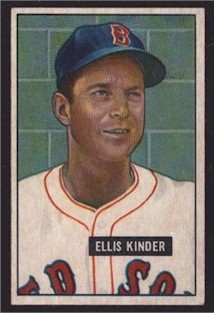
Mantle’s Fenway debut would come nine days later when he pinch hit for third baseman Billy Johnson in the ninth inning of a game the Red Sox won 13-7. Red Sox port-sider Ellis Kinder struck him out.
The next day, Mick was in right field and leading off and the Red Sox completed a sweep of the short two game set winning 4-3. Mantle went 0-4 with a walk. When he and the Yankees returned to Fenway it was May 28th and he was playing right field but was now batting sixth. He went 0-4 and when the teams gathered for a Memorial Day doubleheader two days later, he was in the seventh spot.
The Red Sox starter in the first game was,
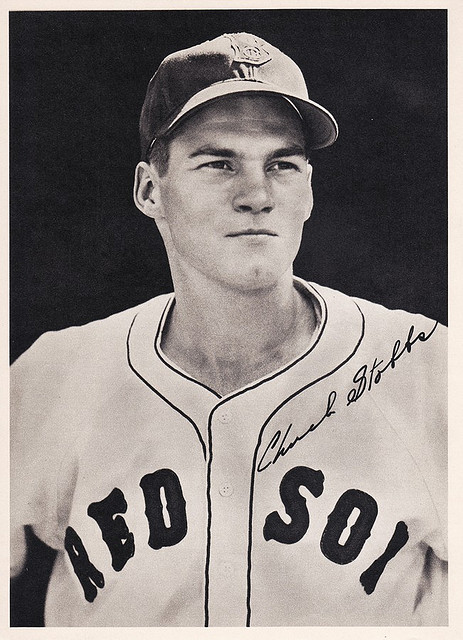
Chuck Stobbs.
Stobbs had made his debut as a 17-year-old in 1947 and was in the fifth year of a 15 year career which would see him go 107-130 with four teams. On this day the Red Sox lefty was to face Mickey Mantle three times. The first came in the top of the second inning; New York had two runners on and one out when Mick stepped in, Stobbs struck him out. The second time was with Mantle leading off the fifth, he struck him out. Mantle came up again in the sixth inning with two outs and Joe DiMaggio on second and Stobbs got him on strikes for the third time in a row. In the seventh inning, Casey Stengal pinch hit for Mantle with Jackie Jensen who hit a two run homer to give the Yankees the lead.
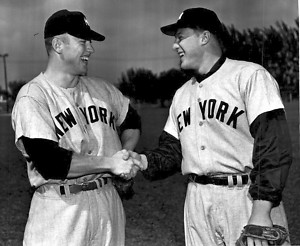
Mantle and Jensen.
Both Stobbs and Mantle were in the clubhouse when the first game finally came to an end in the bottom of the 15th on a home run by Red Sox shortstop Vern Stephens giving the Red Sox an 11-10 win.

When Stengal handed the home plate umpire the lineup for the second game, Mantle’s name was penciled in, leading off and playing right field. On the Fenway mound for the Sox was Mick’s old friend Bill Wight, another southpaw.
Leading off the game, Mantle went down on strikes and did so again in the third inning. He was scheduled to lead off the top of the sixth but when the Yankees took the field in the fifth Cliff Mapes was in right field.

Cliff Mapes homered leading off the sixth.
And rookie Mickey Mantle’s day of futility was over. He had batted five times and punched out five times! The 19-year-old Mantle was sent to the minor leagues before the end of the 1951 season only to return in ’52’ wearing the number seven and setting a course that would make him the greatest switch-hitter in baseball history.
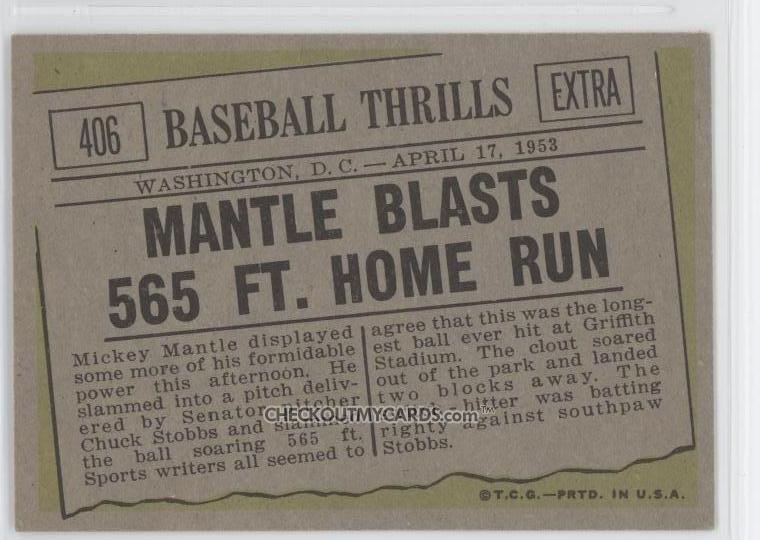
The names of Mantle and Stobbs became forever linked when Stobbs delivered the pitch that Mick hit clear out of Griffith Stadium in Washington DC.
Jackie Jensen would go on to win an MVP Award as the Red Sox right fielder in 1958.

And Cliff Mapes has the distinct honor as the last Yankee to wear the number 3, before it was officially retired in 1948!

Mantle enjoyed enormous success at Fenway Park. In fact it was, except for Tiger Stadium, his favorite place to visit. And why not? He hit .311 with 38 home runs and 105 RBI in the 152 games he played there. He said goodbye to baseball from Fenway Park on September 28, 1968.

Popping out to short in the first inning….
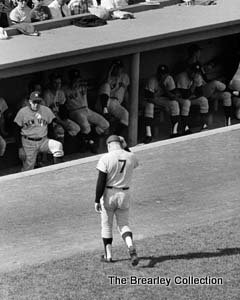
And making his way through the dugout, and into history!

Mickey Mantle was one of the greatest players to ever play at Fenway Park, or any park for that matter. However, on that one day in May of 1951, Red Sox pitchers Chuck Stobbs and Bill Wright struck him out five times in a row, creating a story for their grandkids to be told, and retold and then, told again!
And so it was at this time in Fenway Park history, 1951-68 ” Mick’s” time.
Are you ready for this? Good. How many of these guys do you recognize: Joe Harris, George Burns (nope not the comedian), Ira Flagstead, and Howard Ehmke? The names may strike a chord with a few of you, sound familiar and I dare say a couple of you may even know why. They are the stars of the 1923 Red Sox.
 Joe Harris played left field and led the team in hitting, .335 and home runs with 11.

George Burns was the first baseman, he hit .328 and led the team in RBI with 82.

Ira Flagstead played right field and hit .312 with eight homers and 53 RBI.
However, the real star of the team was this man,

He is Howard Ehmke and he was the ace of the pitching staff and he did something in 1923 that had never been done before and is still an American League record.
First it must be understood that the 1923 version of Fenway Park’s Boston Red Sox were in a word, abysmal! They were 61-91 and they finished in dead last place, 37 games behind the Yankees. They entered last place on June 18th with a 6-2 loss against the Browns in St. Louis and they kept a stranglehold on the cellar for the remainder of the season. They hit 34 home runs as a team, their defense had a league worst 5.25 runs allowed and their pitching staff produced a league worst 4.20 ERA.

However, our boy Howard won 20 games! He went 20-17 with a 3.78 ERA accounting for 32% of the teams victories. Two of those wins were very special, very special indeed.
It was Friday September 7th and the Sox were securely entrenched in the cellar 33 1/2 games back. They were in Shibe Park in Philadelphia to take on Connie Mack’s A’s. In the seventh inning, Ehmke was hurling a no-hitter when A’s pitcher Slim Harris (no relation to Joe) stepped in and rifled one to the gap in left centerfield for a double. When the ball returned to the infield, the Red Sox appealed to the umpire that he missed first base. He was ruled out preserving the no-no which Howard completed.
Four days later, Ehmke was on the mound in the brand new Yankee Stadium. New York’s centerfielder Whitey Witt lead off the game and hit a hard ground ball to third baseman Howie Shanks. It bounced off his chest and was ruled a hit by the official scorer Fred Lieb. The only other Yankee to reach base that day, did so on a walk. Lieb refused to relent to the pressure to change the call and Ehmke missed out on throwing back to back no-hitters. However, he still holds the American League record for the least amount of hits surrendered in consecutive games, a total of one!
 Fred Lieb would later say ruling Witt’s hit, a hit was the “saddest decision I ever made.”

Howard Johnathan Ehmke pitched four years for the Red Sox, when they were in the midst of what can best be described as their dark ages. He was 51-64 with a 3.83 ERA yet 89 years later he still stands alone, a jewel in the crown of Fenway folklore.
And so it was at this time in Fenway Park history, 1923-26, Howard’s time.
 fenwaypark100