“An opener is not like any other game. There’s that little extra excitement, a faster beating of the heart. You have that anxiety to get off to a good start, for yourself and for the team. You know that when you win the first one, you can’t lose ’em all.” Early Wynn

You have got to be kidding me! I can’t stand it! It started in the year 2000 so I should be used to it should I not? Then why? Why am I so irritated? Why am I so aggravated? Why does it seem that the more it happens the more it bothers me? I don’t get it! I can’t get it! I don’t ever want to get it! What in the hell are we doing opening the baseball season in Japan?

Yesterday while most of us were sleeping, the Seattle Mariners beat the Oakland A’s 3-1 in an 11 inning contest in Tokyo Japan!

Now don’t misunderstand me or get me wrong, I have nothing against the good folks of Tokyo Japan, I’m not a xenophobe, it’s just that I’m an old school kind of guy. Old school kind of guys have a tendency to appreciate and want to honor tradition and there is no sport more steeped in and linked to tradition than our American Pastime!http://www.youtube.com/watch?v=7SB16il97yw

“The one constant through all the years has been baseball” and for 120 years the one constant was Opening Day in Cincinnati! Why Cincinnati you say? Well that’s where it all began, sort of.
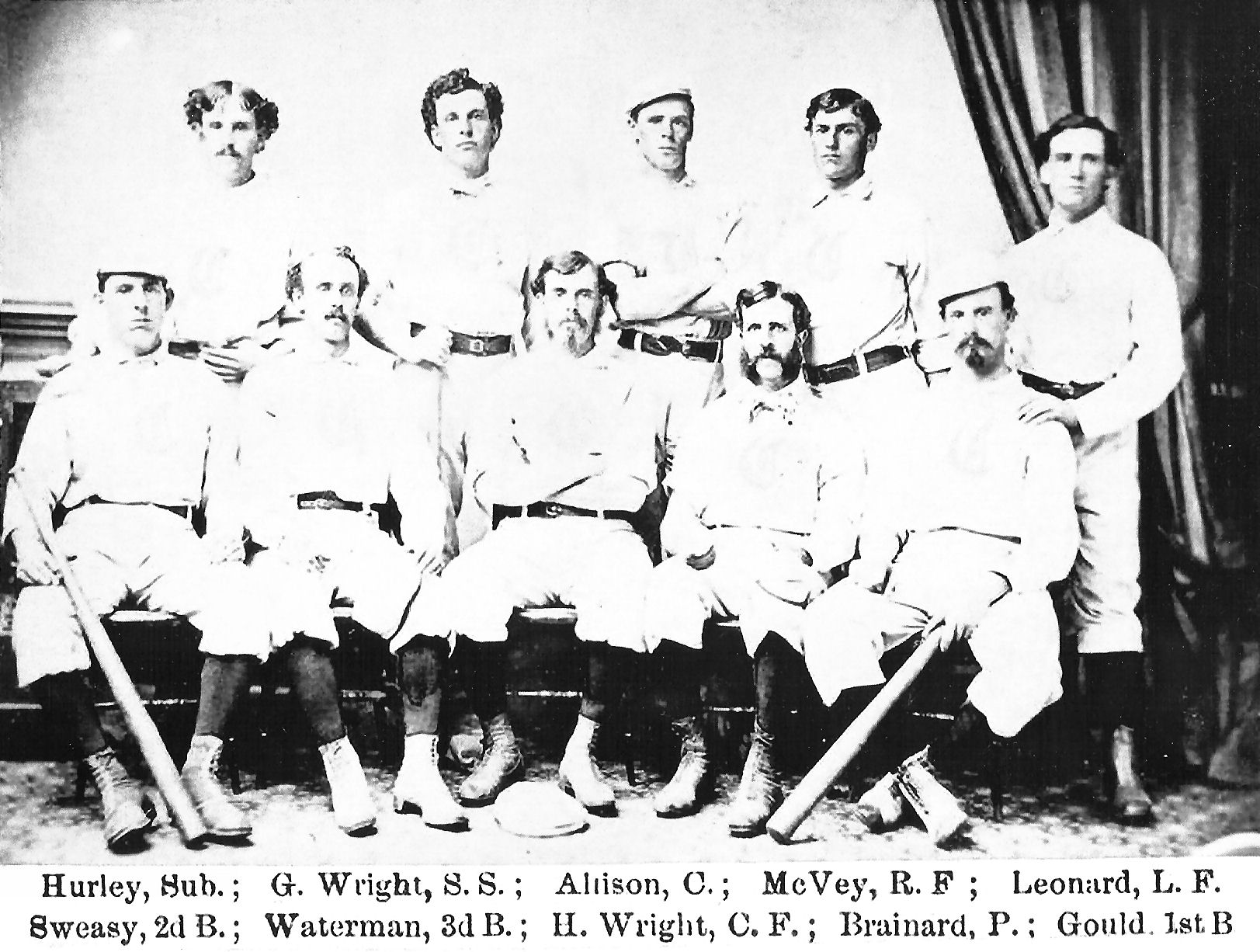
The 1869 Cincinnati Red Stockings.

The 1869 version of the Cincinnati Red Stockings were the first ever professional baseball team. In honor of that and, with a few exceptions, from then until 1990, the season always opened there on the day before it opened every place else.

Opening Day 1968, Crosley Field Cincinnati.

It irritated me in 1990 when that tradition was abandoned but now that irritation is compounded by the fact that we now open the season out of the country and I am left to ponder the whys of all that.

Opening Day 1971 Riverfront Stadium, Cincinnati.

Oh I get that it’s about new markets, broadening and cultivating the international fan base. I get that the primary reason behind it all is

$$$$$$$$$$$$$$$$$$$$$$$$$$$$$$$$$$$$$$$$$$$$$$$$$$$$$$$$$$$$$$$$$!

I get all that, but really, really? Can’t all that be done and still open the season right here in good old Cincinnati? In the heart of the land from which this great game was spawned?

The Great American Ballpark has been the home of the Cincinnati Reds since 2003 and it has never hosted the inaugural game of a baseball season.

In May of 2004, in Pittsfield Massachusetts a document, dated in 1791, was revealed which made reference to a bylaw protecting the windows of the towns meeting-house by refusing to allow baseball to be played within 80 yards of the new building.


On October 6, 1845, Alexander Cartwright’s  Knickerbocker Club played an intrasquad game at Elysian Fields in Hoboken New Jersey. It’s significance is that it appears to be the first ever baseball game which was written about in the newspaper.
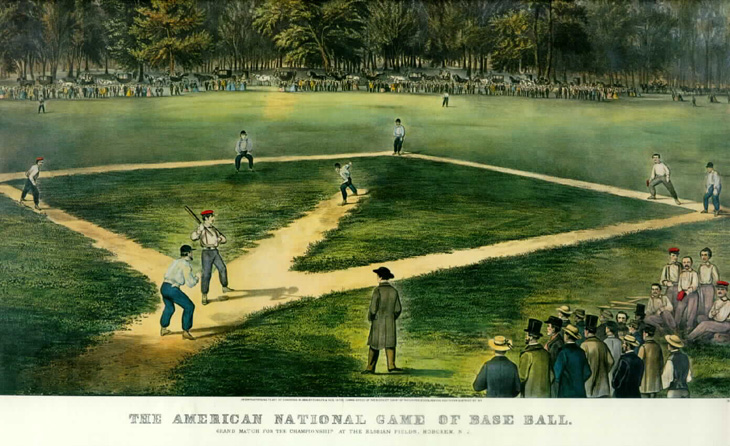
Elysian Fields.

There is a uniquely American flavor to this the greatest of games. And it is, in fact in this writers opinion, the greatest thing which this great country has ever exported! And I am all about the continued exportation and cultivation of it throughout the world.

But is it too much to ask that the season begin each year in Cincinnati? If for no other reason then to remind us  from where we have come, to remind us of our beginnings, to remind us of the role baseball has played in shaping our country, to remind us of what baseball has meant and continues to mean to our history, to remind us of the best we can be as a people, as a culture, as a nation! And all wrapped up in this the simplest, the most complex, the most difficult, the greatest of games! Is it too much to ask that America’s pastime kick off in America?

Ahhhhhh baseball is upon us!

Let the games begin!

And so it is on this date in Fenway Park history, March 29, 2012.


Posted in Fenway Park Baseball | Tagged , , , , , , , , , , , , | Leave a comment

A few more of the “Fellers” from Fenway Park’s 1912 Red Sox, the Guys Behind the Dish…..

 I think that today,  it’s time you learned about some of the other “fellers” on the 1912 Red Sox team. We’ve looked at the big boys, and the stars, now we meet some of those guys who provided the link in the 1912 Fenway Park chain.

Let’s start with the catchers. We met Bill Carrigan, he was the main man behind the dish, catching 87 games for manager Jake Stahl.  But do you know that there were three other dudes who caught for the first Fenway Park team, three! Two of them were rookies and one was in his second year.  

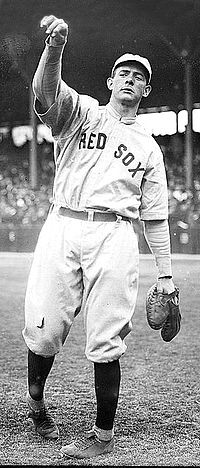
So, in order of most games caught I introduce first, Mr. Forrest Leroy Bergland, aka, Forrest Leroy Cady, aka Hick Cady (good lord do I love those old names)

Hick Cady caught for the Red Sox from 1912 through 1917 seeing action in three World Series!

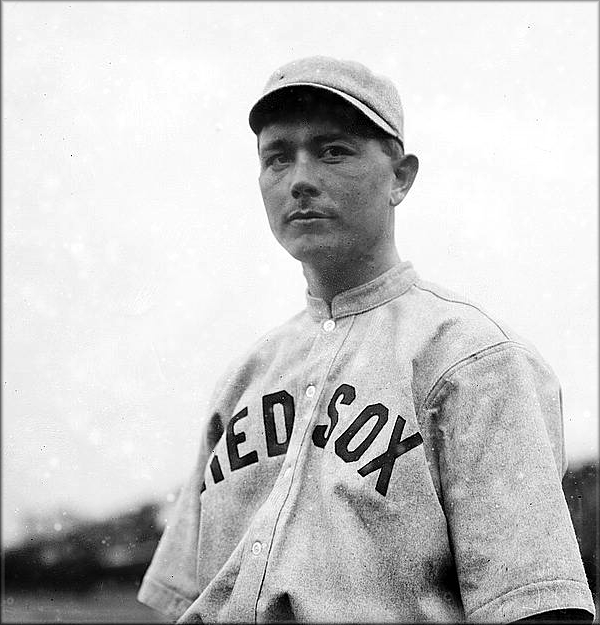
 Next is Leslie Grant “Les” Nunamaker


Nunamaker caught with Boston from 1911-1914 including 35 games in Fenway Park’s inaugural 1912 season.

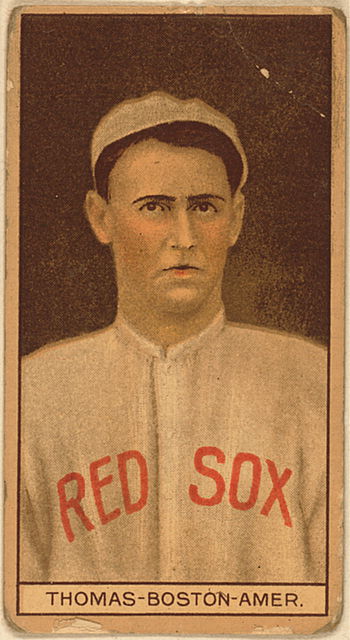
And last but certainly not least is, Chester David “Pinch” Thomas, see what I mean about those names?

Thomas caught from 1912-1917 in Boston and appeared in the 1915 and ’16’ World Series.

It was Hick Cady’s deadly accurate arm which impressed manager Jake Stahl in Hot Springs Arkansas during spring training in 1912 and impressed him enough to take the 26-year-old rookie to Boston as Bill Carrigan’s back up catcher for Fenway Park’s inaugural squad.

A defensive stalwart behind the plate, Cady actually became the preferred catcher of Red Sox ace “Smokey” Joe Wood in 1912. The battery clicked pretty well as Wood went an astounding 34-5 in Fenway’s inaugural year.


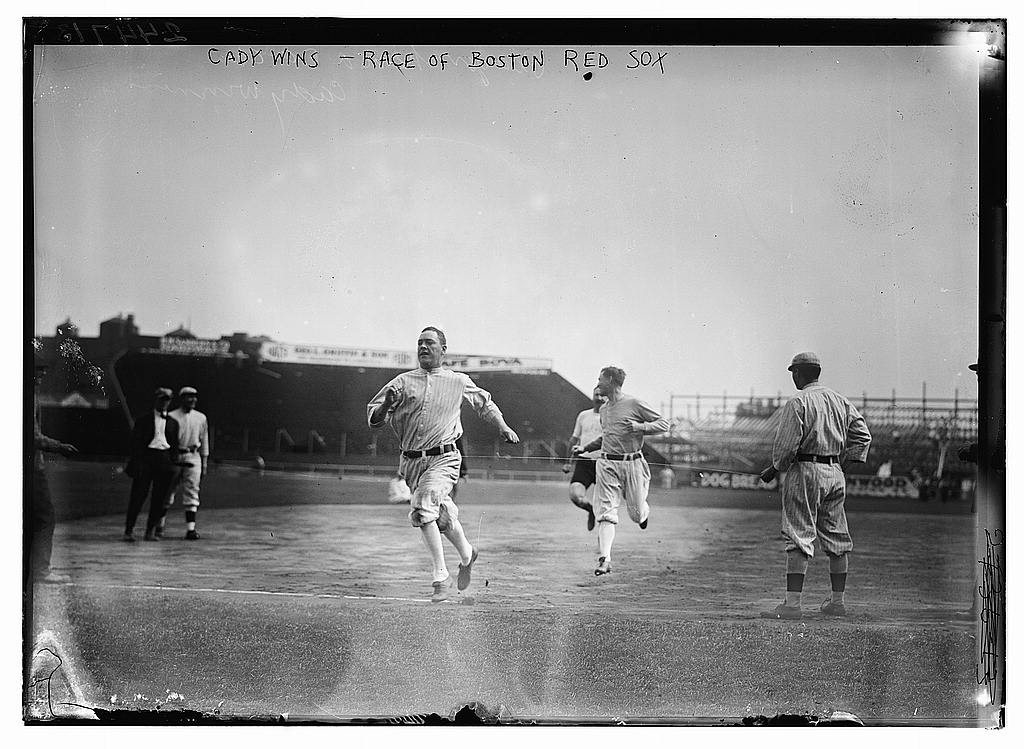
Hick Cady races and wins against teammate “Buck” O’Brien (head turned) and trainer Jack O’Brien at Fenway Park in September of 1912, just a few days before Fenway     Park’s first ever World Series.               

Cady caught in the World Series of 1912, ’15’ and ’16’ with the Red Sox including seven of the games of the 1912 Series.  Hick Cady actually pinch hit for a guy named Babe Ruth during the 1915 season. Ruth was strictly a pitcher in those days and did not appear as an everyday player until 1918.     

 Les Nunamaker saw limited duty with the Red Sox in parts of the 1911, ’12’, ’13’ and ’14’ seasons. He caught only 131 games for them, however he is forever solidified in history as a member of the 1912 World Champion Boston Red Sox, Fenway Park’s first team.

Nunamaker was traded to the Yankees in 1914 where he became the first catcher in history to throw out three runners in an inning trying to steal second base.

Chester ‘Pinch” Thomas caught only 13 games with the Red Sox in 1912, however he was the regular Red Sox catcher for the 1915 and ’16’ World Championship seasons.

 Thomas was  a pinch-hitter extraordinaire throughout his career, going 13-31 (a .417 clip) in that role from 1913-1918.

Chester David “Pinch” Thomas played for 10 seasons. He was a .237 lifetime hitter. He hit only two career home runs and he never had more than 24 RBI nor more than 24 runs scored. However, “Pinch” Thomas was a winner, for in four of those 10 seasons, Thomas was part of four World Championship teams. Three of them were the Boston Red Sox of 1912, ’15’ and ’16’.

And so it was at this time in Fenway Park history, 1912 Fenway’s inaugural season.


Posted in Fenway Park Baseball | Tagged , , , , , , , , , | Leave a comment

All Those Springs Ago…..

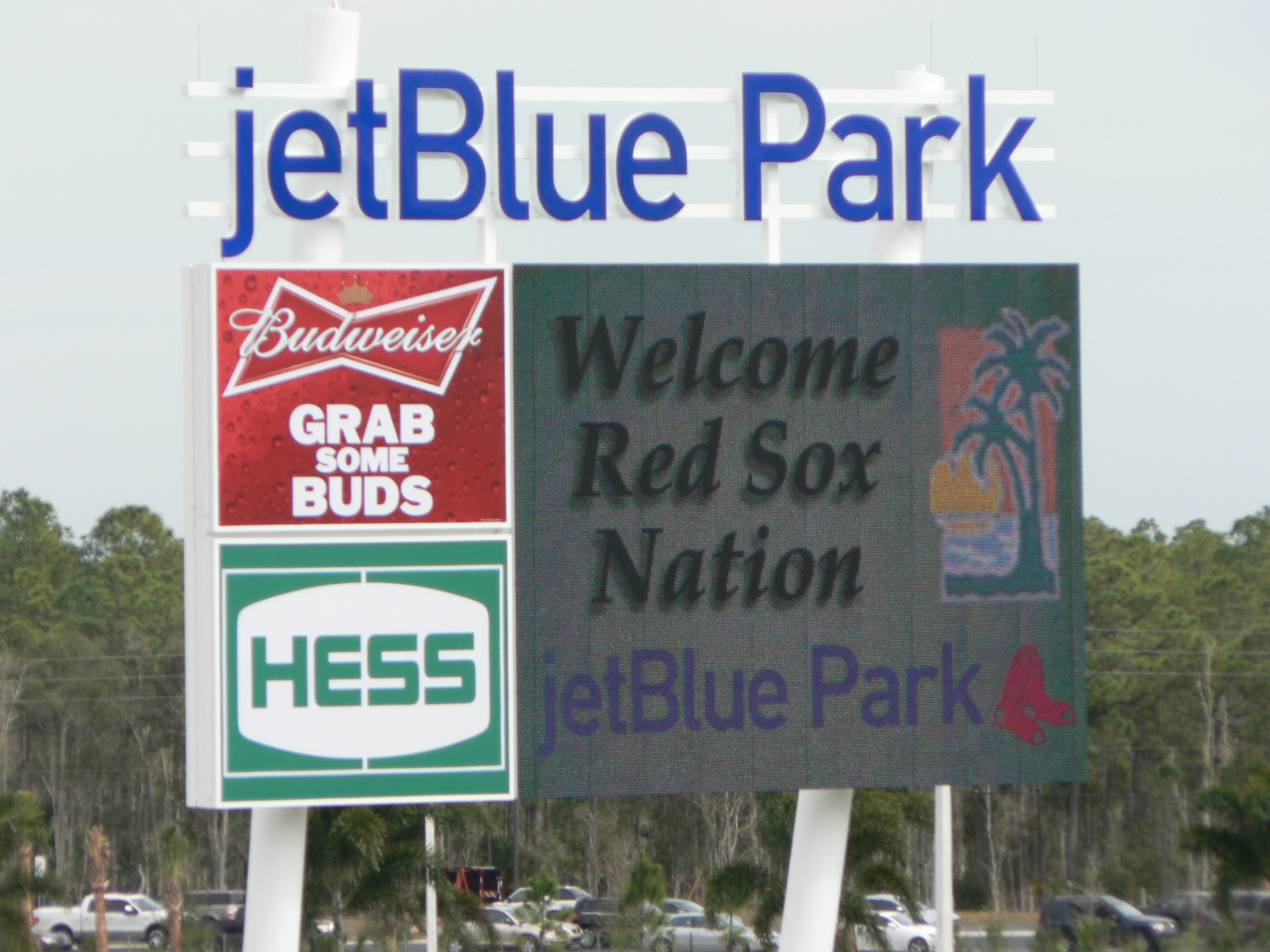
As spring training 2012 in the Red Sox new facility at JetBlue Park in Fort Myers Florida draws to a close;

I thought it might be fun to take a look back at spring training in the early days of Fenway Park. Those days were spent in a lovely little place called Hot Springs Arkansas.

Hot Springs Arkansas was one of the first designated spring training haunts dating all the way back to 1886. The city derived its name from the fact that about a million gallons, per day, of natural thermal water flow from 47 different springs; and it is the Oldest National Reserve in the country.

The Red Sox actually began training in Hot Springs in 1908 and were there from 1912-1918, the glory, nascent years of Fenway Park. And why not?

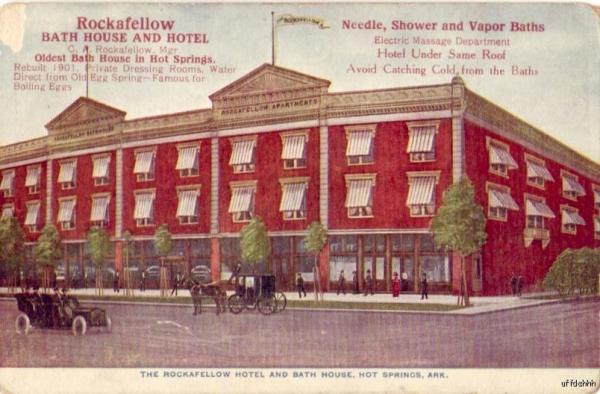
It had it all, spas, vapor baths, bath houses, gambling, race tracks and plenty of women. It was a ball players paradise. The Red Sox grew so fond of Hot Springs Arkansas that Sox owner John I Taylor built Majestic Field for his team there in 1909. Two years later, he would build them a nice little ball park about 1000 miles north and call it Fenway Park.

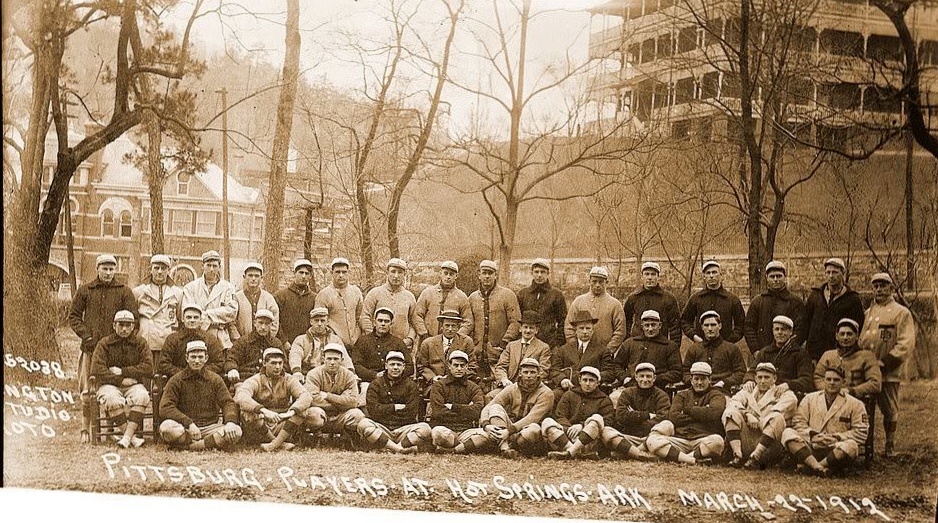
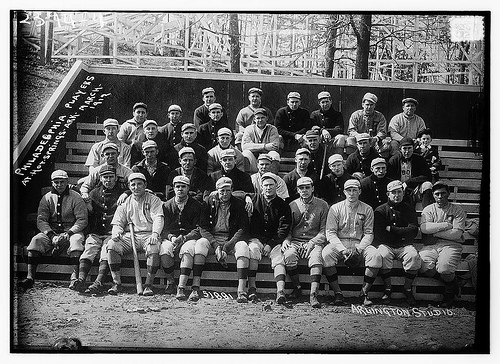
In 1912, the Red Sox actually shared Hot Springs with,

The Pittsburgh Pirates

And

The Philadelphia Phillies.

In fact in 1912, the Pirates great shortstop Honus Wagner refereed a high school basketball game between Hot Springs High and Memphis High.

In pre Fenway Park days in 1909, Royal Rooters president “Nuf Ced” McGreevey made good on a promise and presented a diamond ring to Red Sox second baseman Amby McConnell.

“Nuf Ced”, in white, stands next to the diamond ring winner Amby McConnell.

McGreevey pledged a diamond ring to the Red Sox player who stole the most bases in 1908. Amby swiped 31 bases, eight more than third baseman Harry Lord.

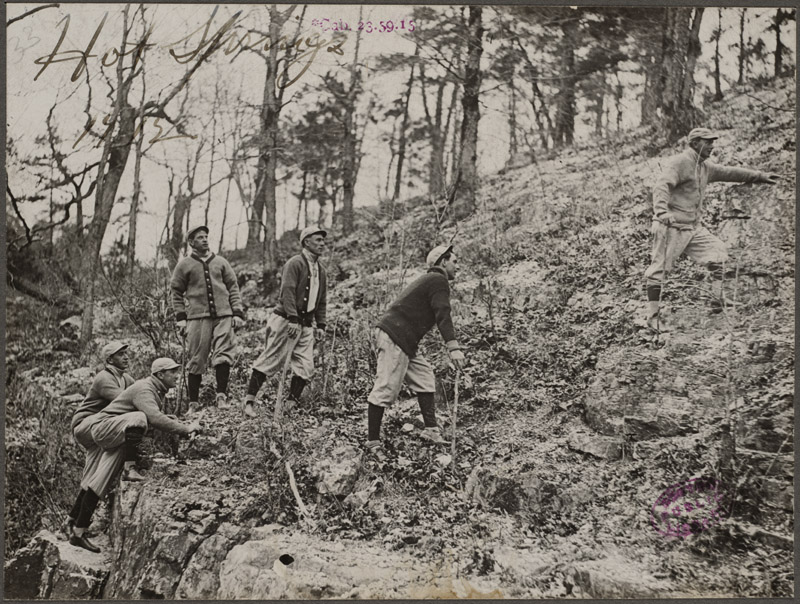
Hot Springs offered a plethora of activities, some even designed to help get the boys in shape.

 Some of the 1912 Red Sox take to the hills for a hike.

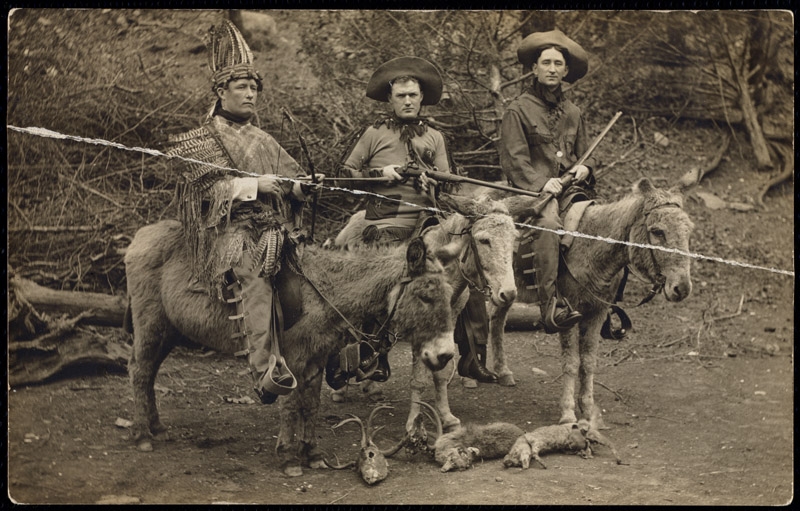
There were recreational activities as well,

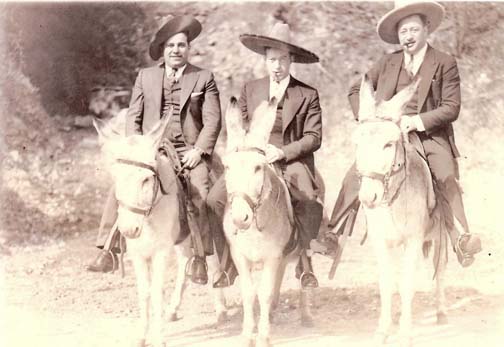
Hunting on donkey back? Not really, this was part of the “schtick” at the McCleod’s Amusement Park, also known as Happy Hollow.

Some pretty shady folks found solace and entertainment in Hot Springs’ Happy Hollow.

Al Capone, left, and friends. Do you think anybody made fun of Capone’s goofy hat?

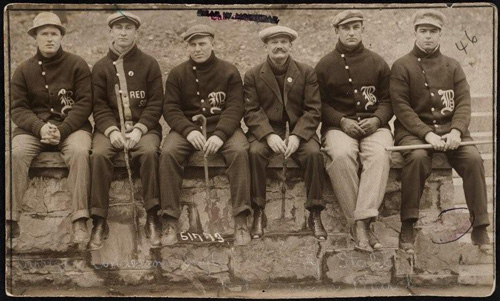
And there was time to simply, hang out.

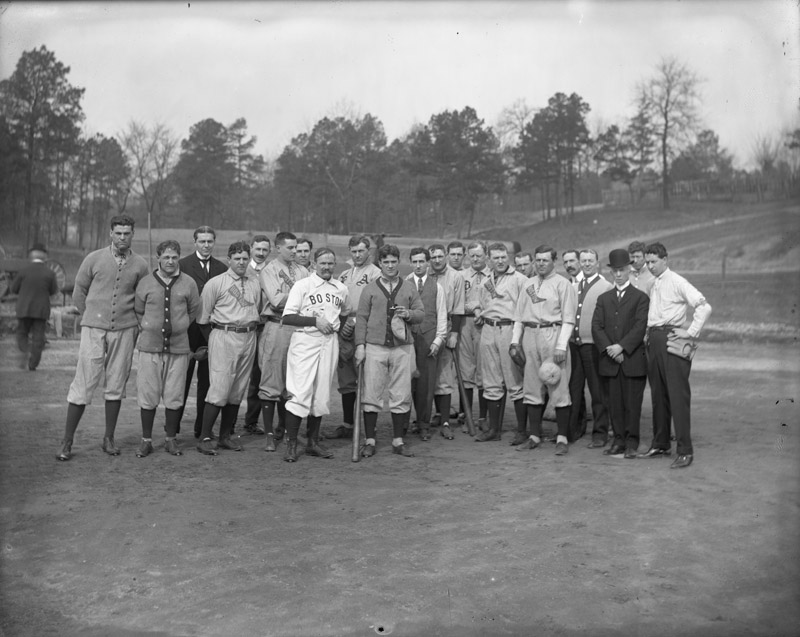
Bill Carrigan (far left) and “Nuf Ced” (4th from left) hanging out with a few of the boys during the Spring of 1912.

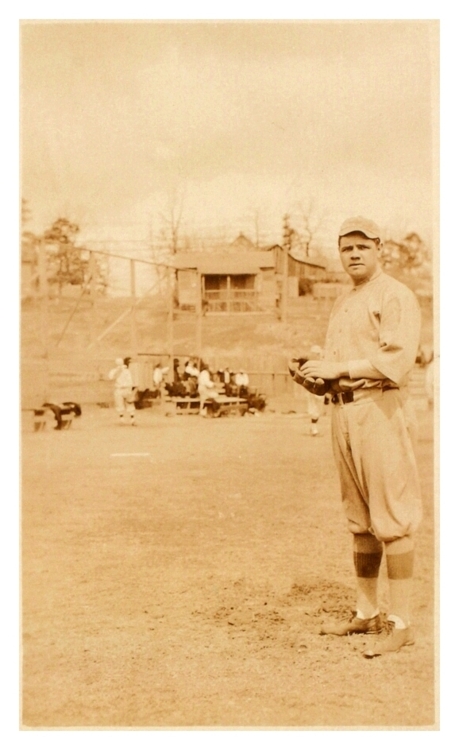
A 20-year-old Babe Ruth joined the Hot Springs fray in March of 1915.

Babe Ruth at Majestic Field in Hot Springs in 1915.

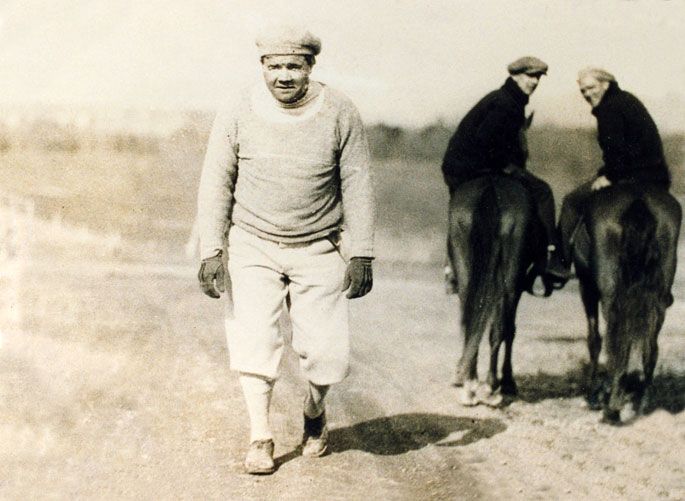
And the Oak Lawn racetrack became one of the Babe’s favorite spots. He would even “train” there at times.

Babe at Oak Lawn.

As the “Roaring Twenties” were coming to an end, so to was Spring Training in Hot Springs Arkansas. Major League baseball was looking to the sun and sand of Florida and one by one teams headed farther south. The Red Sox tested the waters in Tampa in 1919 and returned to Hot Springs from 1920-23. In ’24’ they tried San Antonio for a year and then to New Orleans for 1925, ’26’ and ’27’. After brief stints in Bradenton and Pensacola Florida and a year in Savannah Georgia, the Red Sox settled in Sarasota in 1933 and, save for the war years, and a seven-year hiatus to Scottsdale Arizona (1959-1965), they have been in the Sunshine State; Sarasota 1933-1958, Winter Haven 1966-1992 and Fort Myers from then to now!

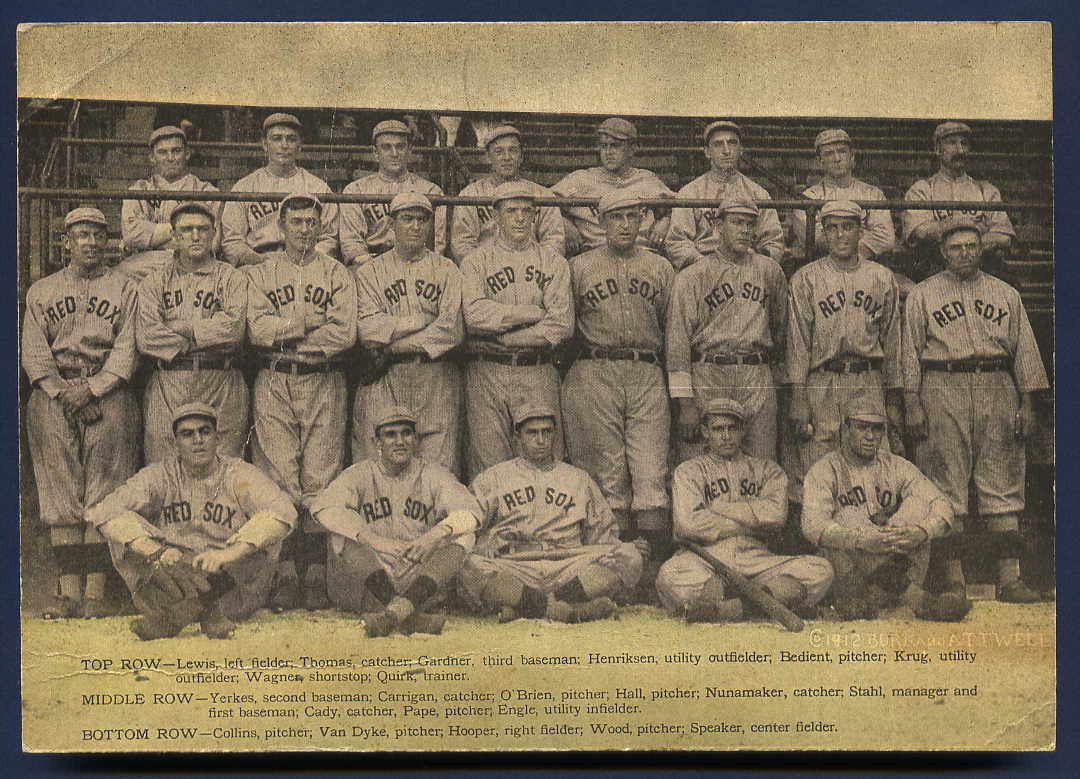
When the Red Sox broke camp in 1912, they headed for a new ball park and an era of dominance the likes of which the team nor the American League had ever seen.

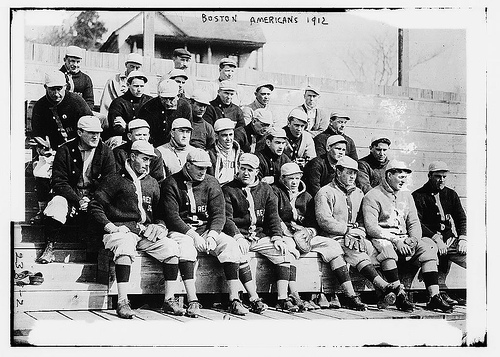
The 1912 Boston Red Sox.

And as they break camp and head north next week, they embark on Fenway’s second century hopeful that they sit on the threshold of dominance not seen since the nascent glory days of Fenway Park, America’s Most Beloved Ball Park!

And so it was at this time in Fenway Park history, Hot Springs time, 1908-1918.


Posted in Fenway Park Baseball | Tagged , , , , , , , , , | 2 Comments

The All Fenway Team Secondbasemen, The Quiet Leader and The Laser Show…..

The second base position is being voted on for the All Fenway Park team. http://mlb.mlb.com/bos/fan_forum/all_fenway_team.jsp

Thus far we have on my All Fenway Park 25 man squad; the pitching staff: Jon Lester (L), Jonathan Papelbon (R), Pedro Martinez (R), Roger Clemens (R), Luis Tiant (R), Dick Radatz (R), Mel Parnell (L), Lefty Grove (L), Babe Ruth (L) and “Smokey” Joe Wood (R) the two catchers, Carlton Fisk and Jason Varitek and the first baseman, Jimmie Foxx.

I only chose one first sacker and I will only choose one third baseman as well, however for the middle infielders I will choose two at each spot.

There are 13 spots yet to fill and two will be filled at second base. The first guy is both known and loved by all and why not. He packs a 6’3″ 245 pound effort into a 5’9″ 180 lb pound body. He has no business being as good as he is and as good as he is has been good enough to garner the Rookie of the Year Award in 2007 and an MVP Award in 2008. He is tough, he is ornery, he is fearless, he is relentless, he is brilliant, he is a self-proclaimed laser show, he is Dustin Pedroia!

 Pedroia was voted the 2007 Rookie of the Year with 24 of 28 first place votes. (Photo Keith Allison)

A second round draft pick in 2004, he made it to Fenway for a brief stint in September of 2006 before sticking for good in 2007 and being voted the league’s top rookie. He followed that up by leading the league in runs scored, hits and doubles the following year and adding his first gold glove to his collection. He also won the Silver Slugger Award as the best offensive player at his position on his way to the 2008 MVP.

The 2008 MVP won Gold Gloves, emblematic as the best defensive player at his position, in 2008 and  2011. (Photo RL Cooley)

In his six seasons calling Fenway Park home, he has averaged 17 home runs and 78 RBI per season while hitting .305. In two American League Championship Series’ he has hit .345 with four homers and 10 RBI and in the 2007 World Series he hit .278 with a homer and four ribbies!

Pedroia led the league in runs scored in 2008 and 2009 and in 2011 he had the best strikeout to at bat ratio, striking out once every 13.9 at bats. (Photo Dan Dionne)

A favorite of the Fenway Faithful, his value on the diamond may well be exceeded by his value in the clubhouse.

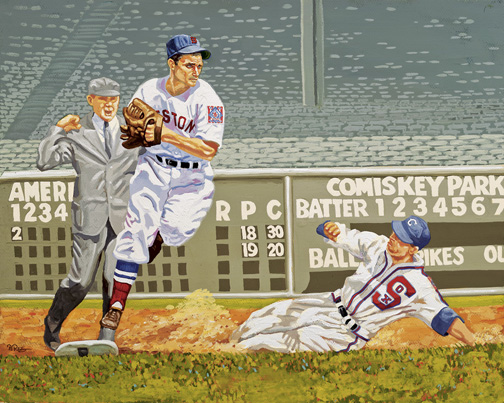
The other second baseman made his debut in 1937 at the age of 19 and on the twenty-fifth birthday of Fenway Park. He played 14 seasons with the Red Sox and he was an all-star nine times. He is Robert Pershing Doerr!

Doerr is honored in bronze, along with Ted Williams, Dom DiMaggio and Johnny Pesky, outside of Fenway Park in the Teammates Statue.

Purchased from the Hollywood team in the Pacific Coast League in 1935, Doerr, like Pedroia, made it to Fenway in just two years. Bobby was a significant cog in the Red Sox return to respectability in the late 1930s and throughout the 1940s.

Playing before the days of the Gold Glove Award, he was widely recognized as one of the best defensive second basemen of his time; four times he led the league in putouts and fielding percentage. (Dick Perez Art Work)

A very versatile hitter, Doerr could be a table setter as well as a run producer. In his 14 seasons he hit .288 and averaged 19 home runs, 108 RBI and 95 runs scored per season! And also, like Pedroia, he excelled in the post season, hitting .409 with a homer and three RBI in his only World Series appearance in 1946.

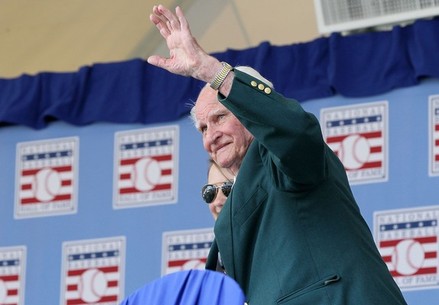
He is the only Red Sox player in history to hit for the cycle twice and in 1986 he was recognized as one of the games all-time greats when the Veteran’s Committee voted to induct him into the National Baseball Hall of Fame. The Red Sox followed in kind, when they retired his number 1 on Fenway Park’s hallowed right field facade.

Bobby Doerr’s career was cut short at the age of 33 due to a back injury.

Called the “silent captain” of the Red Sox by none other than Ted Williams, Doerr served as the Red Sox first base coach in 1967 and today he is revered as one of the greatest Red Sox of them all!

A favorite of the Fenway Faithful, his value on the diamond may well have been exceeded by his value in the clubhouse.

And so it is on this day in Fenway Park history, March 26, 2012, All Fenway secondbasemen selection day.


Posted in Fenway Park Baseball | Tagged , , , , , , , , , , , , , , , , , | Leave a comment

“And on the seventh day He rested”…..Genesis

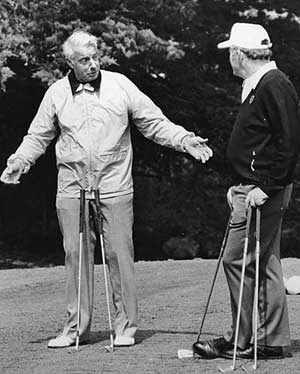
And Joe DiMaggio and his buddy played golf…..

And,

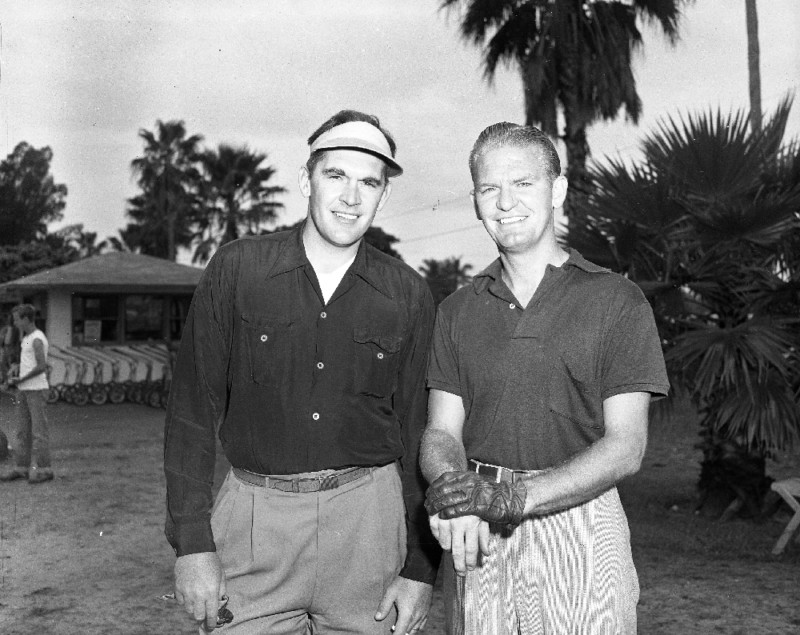
so did Johnny Lindell and his buddy,

And so did I…..Happy Sunday!


Posted in Fenway Park Other | Tagged , , , , | Leave a comment

The Anatomy of a Rivalry, The Sixth Stanza….It Comes to Fruition…..

Well we’ve been through a few stanzas of the Red Sox/Yankee rivalry song. The last verse was the Joe D/Teddy Ballgame wonder of the summer of ’41’. Therein the stage was set for the rivalry that would blossom at the end of that decade.

On Tuesday April 23, 1946, the Red Sox lost an 11 inning game to Washington which dropped their record to 6-2 and in a tie for first place. The next day they were beaten by the Yankees and dropped into second place by a full game.

They would not lose again until May 11th and after 15 straight wins (a team record) they held a 4 1/2 game lead which would be their smallest lead for the remainder of the season. They ran away with their first pennant in 28 years finishing 12 games ahead of the Tigers and 17 games ahead of the third place Yankees.

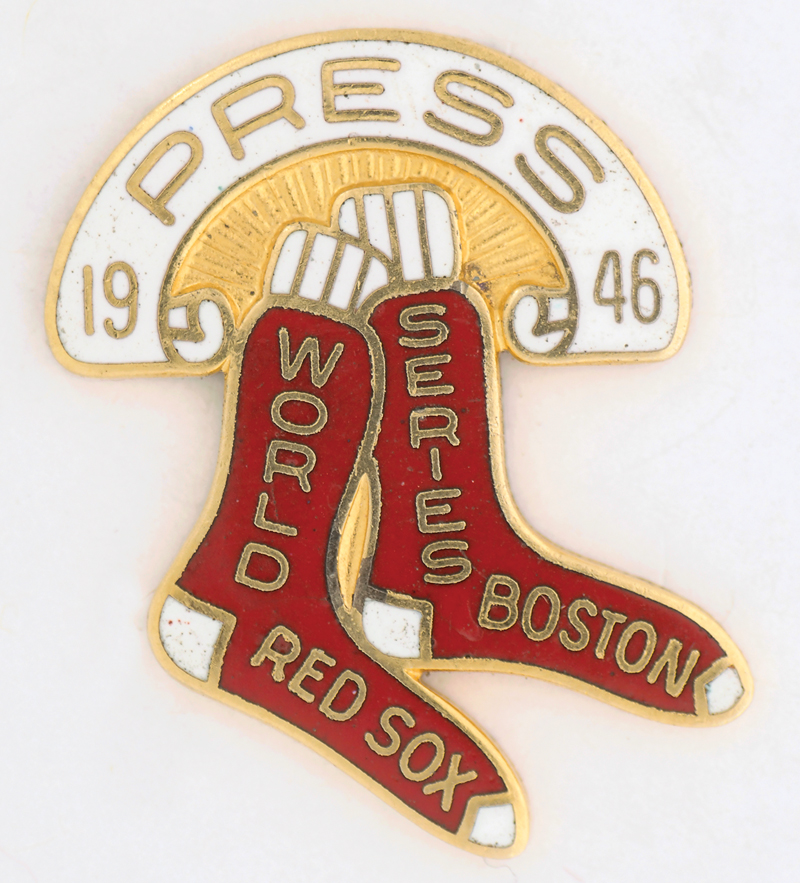
Joe Cronin, in his 12th season as Red Sox manager finally led them to the promised land in 1946. They dropped the World series to the Cardinals in seven games.

The 1947 season found a return to bridesmaid status for the Fenway Park nine. They were actually in first place on the 19th of June but at the end of the month they dropped six in a row and eight of 10 falling to eight games back and they were out of the race eventually finishing in third, 14 games behind, guess who? Oh, and the Guess Whos beat the Dodgers in the World Series.

Joe McCarthy managed the Yankees from 1931-1946 and was at the helm for seven World Series Championships.

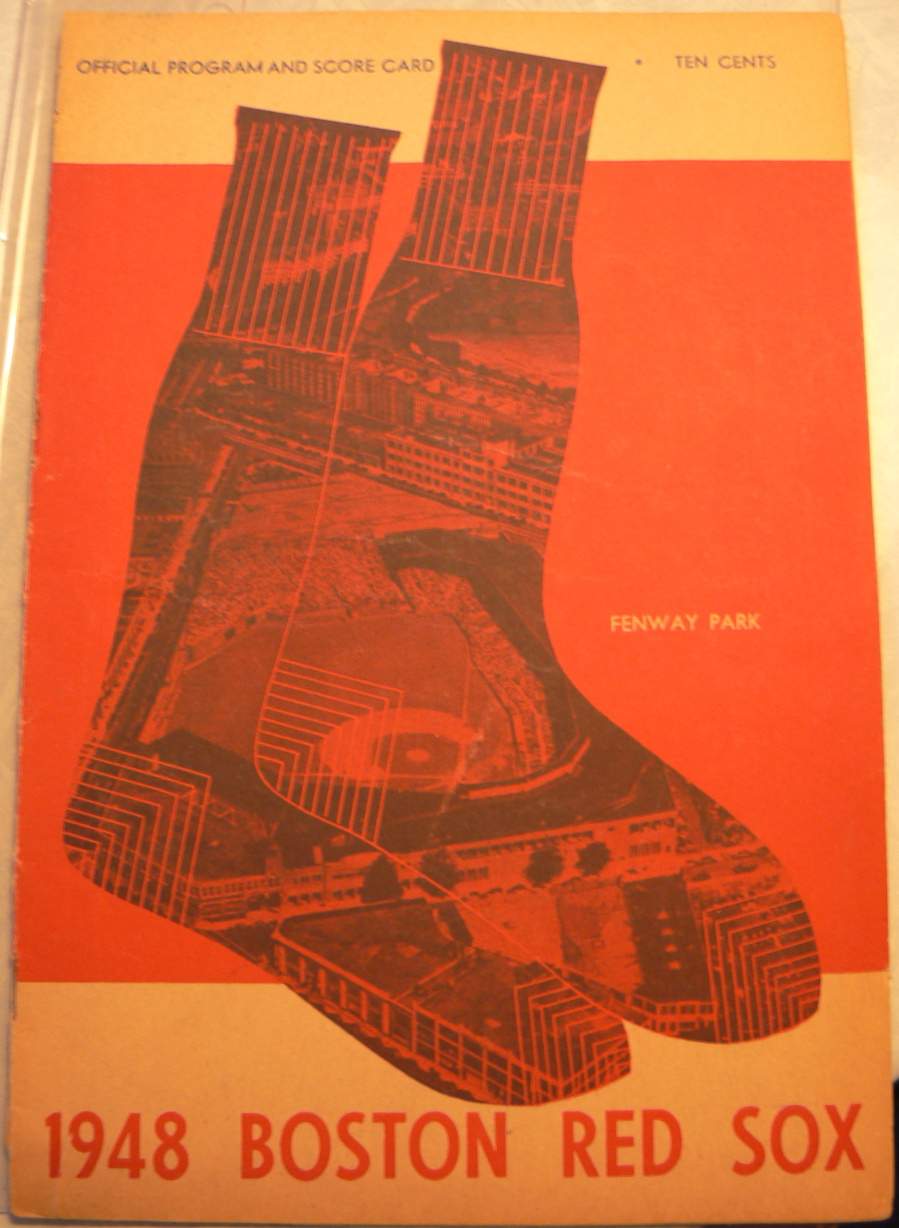
The 1948 season ended with the Red Sox losing a one game playoff to the Cleveland Indians at Fenway Park. However, it is within that season that the birth of a true rivalry between the Red Sox and the Yankees took place.

 Perhaps their new manager had something to do with it as the Red Sox hired former Yankee manager Joe McCarthy. Perhaps Mr. Yawkey was looking for a little of that World Series magic to rub off on his boys. The magic did not appear in spring for sure as the Red Sox stumbled out of the gate with five losses in their first six games and then embarked on a journey of steaks! Win four, lose five, win four, lose three and then they dropped 12 of 15 games to end the month of May 11 1/2 games out of first!  McCarthy righted the ship and a 13 game winning streak, begun in mid-July, had the Red Sox in first place by the end of that month and from then on it was a three team race between the Red Sox, Indians and the Yankees. 

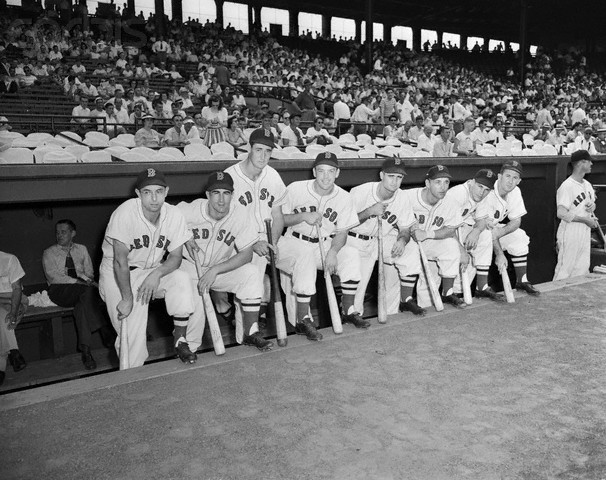
The Boston Red Sox in August of 1948, standing in their order in the lineup:  Dom DiMaggio CF, Johnny Pesky 3B, Ted Williams LF, Vern Stephens SS, Bobby Doerr 2B, Stan Spence RF, Billy Goodman 1B and Birdie Tebbets C.

The Last weekend of the season arrived and on Saturday morning October 2nd, the standings had the Cleveland Indians in first place with a record of 95-57, the Red Sox and Yankees were tied for second, a game back at 94-58. The Yankees were at Fenway, the Tigers were in Cleveland.

In Cleveland the Indians beat the Tigers clinching a first place tie. In Boston, Ted Williams hit a two run first inning homer sparking the Red Sox to a 5-1 win eliminating the Yankees and keeping their hopes alive for a tie.

Playing the unusual position of spoiler, the Yankees battled the Sox in that final game however, the Red Sox overwhelmed them with a 15 hit attack in a 10-5 win. The Tigers helped the cause with a 7-1 win over the Indians who were now on their way to Fenway for a one game winner take all match.

Cheers turned….

To tears as the Indians wrestled the pennant away from Red Sox pitcher Denny Galehouse, 8-3. Making them bridesmaids, once again!

However, in the first true head to head matchup for a pennant against the Yankees, since the inception of the American League, the Red Sox had prevailed, it was little consolation. However, the Fenway Faithful couldn’t, “Wait till next year”! A cry they would come to embrace more than they ever wanted to.

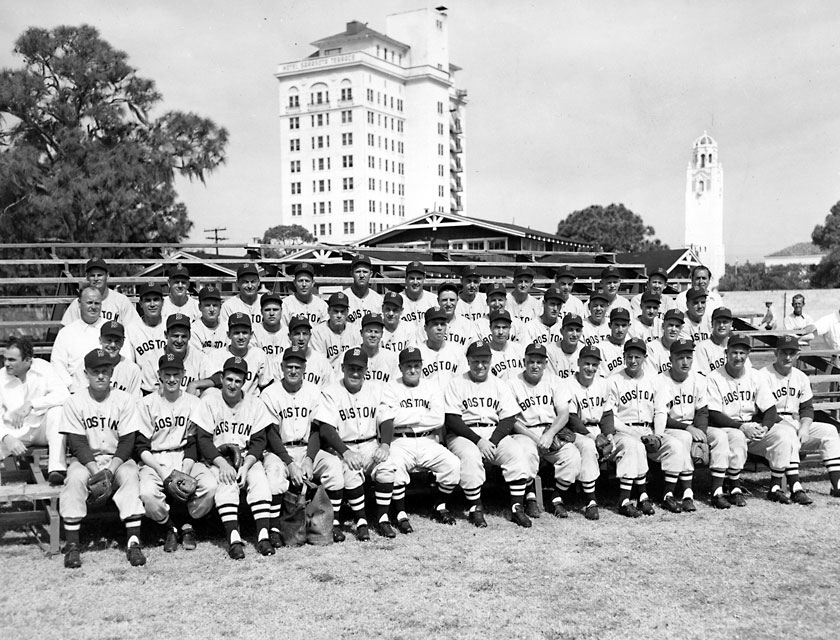
Spring Training 1949, Sarasota Florida.

The season of 1949 was part of what I have come to call the “Litany of Futility” which was imparted to me by my dad. He talked of the 1948 playoff game but nothing hurt as much as 1949.

The season was almost a carbon copy of 1948, start slow, streaky, 12 games out in July and a strong August/ September surge got them back in the hunt. Three straight wins against the Yankees had them a one game lead in first place with five games to go. They beat the Senators two of three and then headed to Yankee Stadium for the final two games of the season. The Red Sox needed one win and they would be World Series bound!

On Saturday October 1st, the Sox jumped to a 4-0 lead after three but the Yanks tied it with two in the fourth and two in fifth. It remained that way until the bottom of the eighth, when up stepped the immortal John Lindell. Who? That’s what I said as Dad related the story, “I never heard of him… he’s a journeyman nobody who killed us”. Oh, I thought, not quite sure what that meant at the time.

John Lindell, made the Yankee team in the early forties. He was relatively successful as a  war replacement player but by the end of the decade he was a backup outfielder and in ’49’ he played in 78 games, none bigger than the next to last game of the season.

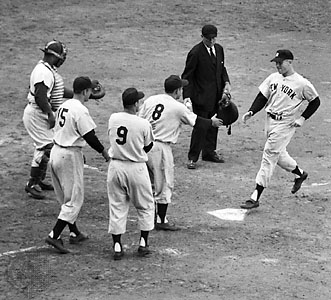
With one out in the eighth, he deposited a Joe Dobson pitch into the seats giving New York a 5-4 win and life.

The next day nearly 70,000 gathered in the “House that Ruth Built” as 20 game winners,

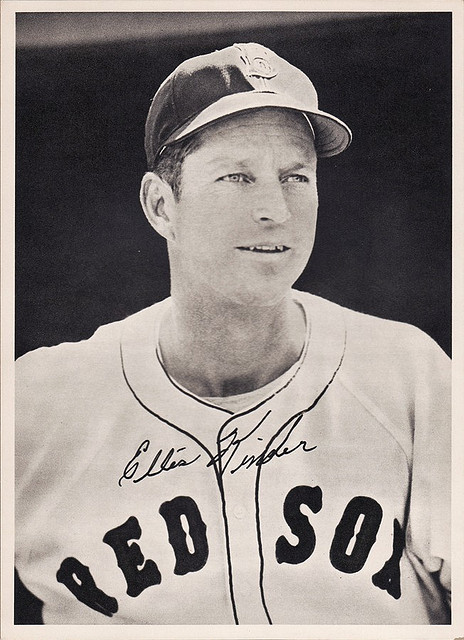
Kinder was 23-6 in 1949.

Ellis Kinder and

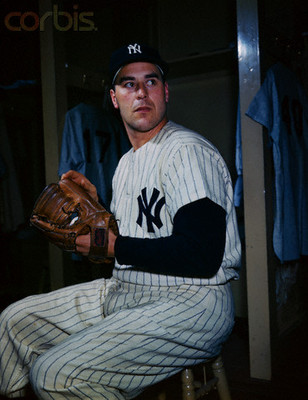
Raschi was 21-10 in 1949.

Vic Raschi squared off. The Yankees scored a run in the first and that was all the scoring until the Yankees added four in the bottom of the eighth. The Sox did not go quietly as they came back with three in the top of the ninth but it was too little, too late and they once again wore the bridemaids slippers to the post season dance! And added another link in what was fast becoming a chain of futility. But not to worry, for the Fenway Faithful knew they on the verge of cracking them, they were right there, a new decade awaited and they couldn’t “wait till next year”!

to be continued…..

And so it was at this time in Fenway Park history, the late 40s, the “Birth of a Rivalry” time.

Posted in Fenway Park Baseball | Tagged , , , , , , , , , , , | 4 Comments

The All Fenway Team, The Firstbaseman, A No-Brainer…..

Alrighty then, it’s time for the first baseman on the All Fenway team. 

http://mlb.mlb.com/bos/fan_forum/all_fenway_team.jsp

Remember now, I am not selecting one player at each position, rather an entire 25 man All Fenway Park roster. The pitching staff is: Jon Lester (L), Jonathan Papelbon (R), Pedro Martinez (R), Roger Clemens (R), Luis Tiant (R), Dick Radatz (R), Mel Parnell (L), Lefty Grove (L), Babe Ruth (L) and “Smokey” Joe Wood (R) and my two catchers are Carlton Fisk and Jason Varitek.

Very often, defense is sacrificed at this position in favor of offensive strength, especially power. In pre DH days, and still applicable in the National League, often a player who is “slowing down” will move to first to accommodate his diminishing physical skills. Some examples, Ernie Banks, moved from short to first, Carl Yastrzemski from left field to first, Harmon Killebrew from third to first and Rod Carew from second to first, all are Hall of Famers.

With all due respect to the five others nominated for this position, this one for me is a no-brainer!

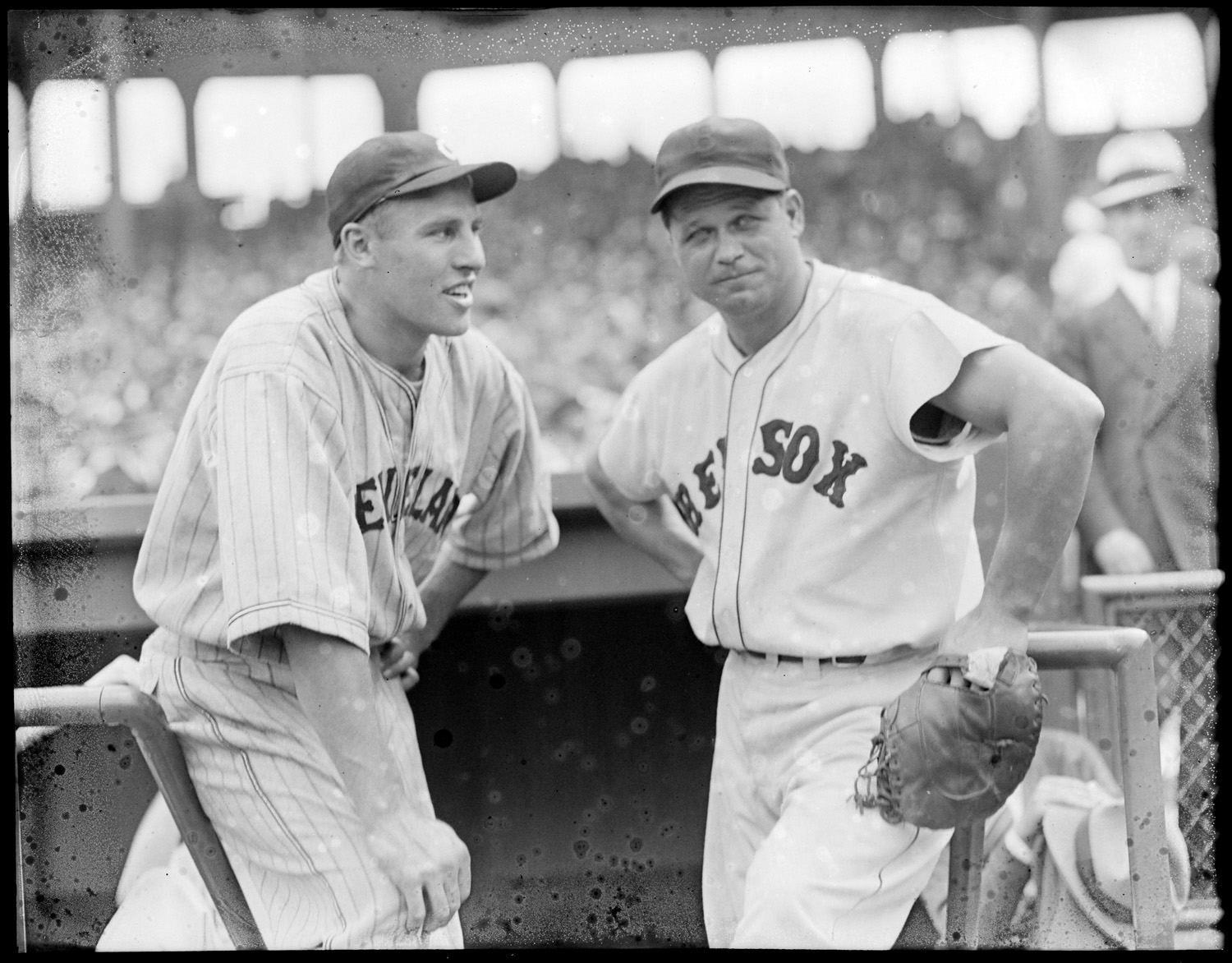
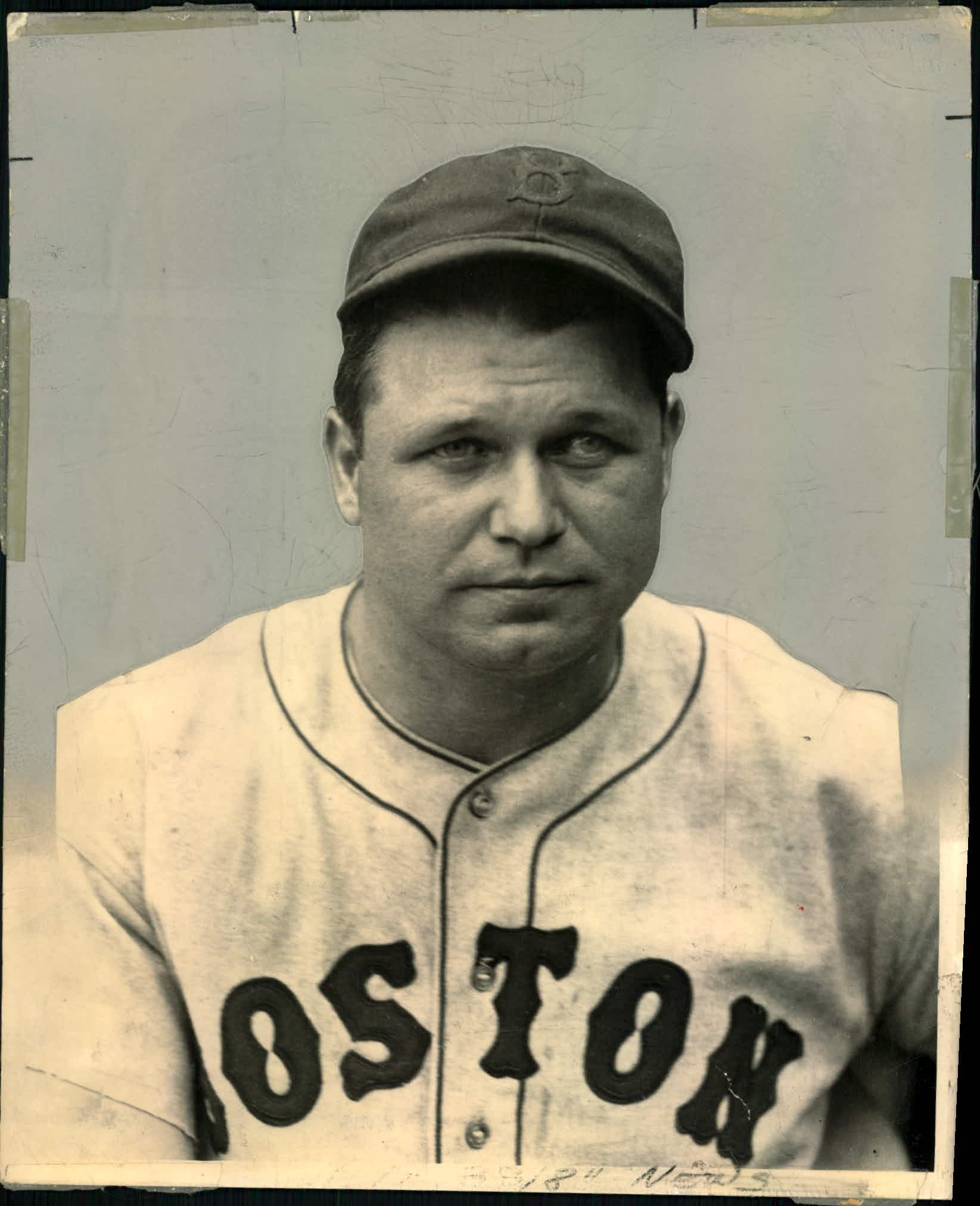
Jimmie Foxx played first base for the Red Sox from 1936-1942.

In seven seasons with the Red Sox, Foxx hit .320 and averaged 32 homers and 113 RBI a year. He won his third MVP Award in 1938 when he hit 50 home runs. The first Red Sox player to crack the 50 home run club, he held the team record for homers in a season until David Ortiz hit 54 in 2006. 

Jimmie Foxx was the second player in baseball history to hit 500 career homers.

Foxx was a legendary strong man and one of the first musclemen to play the game. Playing at a time when muscles were thought to actually hurt a baseball player, Foxx earned the moniker The Beast for the size of his muscles.


Foxx’s muscles developed from the work he did being raised on a farm. He loved to show off his arms and used to cut off his sleeves to expose his muscles.

Foxx explained to Time Magazine how working on a farm developed his physique: “…I worked on a farm and I am glad of it. Farmer boys are stronger than city boys. When I was 12, I could cut corn all day, help in the wheat fields, swing 200-pound bags of phosphate off a platform into a wagon. We had games on the farm to test strength and grip. A fellow had to plant both feet in half a barrel of wheat and then pick up two bushels of wheat or corn and balance them on his shoulders. Another trick was to lift a 200-pound keg of nails without letting the keg touch your body. I could do that easily but I never realized then it was helping me train for the Big Leagues.”

Ted Williams and Jimmie Foxx played together from 1939-1942 and Ted Williams regarded Foxx one of “the finest people I ever met.”

Foxx’s tape measure home runs became legendary and like Babe Ruth, fans, writers and players alike marveled at how high and far he could hit a baseball. At Shibe Park in Philadelphia (Foxx’s first home), the left field roof was 65 feet high and the back wall of the stadium was 378 feet from home plate at its closest point. Twenty four times, Foxx launched baseballs clear out of the park and many of them were not at the “nearest point”. Comiskey Park in Chicago had similar height but the back wall was about 425 feet away from home, Foxx hit six balls clear out of that edifice as well.

 The All Star Game was established in 1933 and Foxx made the first nine American League All Star squads.

Oh and did I mention, he could fly! A state 200 yard sprint champion in high school, Foxx was an excellent defensive player as well. He literally could and did play all around the diamond, including a few stints on the mound.

Jimmie Foxx is not only the greatest Red Sox first baseman, he is in the arguably  the greatest first baseman in the history of the game and perhaps the greatest right-handed hitter who ever lived!

And so it was at this time in Fenway Park history, the time of “Double X”, the time of “The Beast”. Thank you Bill Jenkinson.

Posted in Fenway Park Baseball | Tagged , , , , , , , , , , , , , , , | Leave a comment

” I will never understand why he pitched Galehouse and not Parnell.” Remo Sinibaldi explaining how the Red Sox lost the American League pennant in 1948.

Mel Parnell died yesterday.

I first learned of Mel Parnell at the knee of my father. Following the Red Sox beginning in 1959, I never had the pleasure of seeing him pitch, however, every kid who grew into his Red Sox in that era learned of the futilities of 1947, 1948 and 1949 and Mel played a key role in ’48’s futility. The strangest part of it all is, the role he played is that he didn’t play. Huh? I know, sounds confusing but here’s what went down.

You see Mel Parnell was a rookie in 1948 and he was not a bad rookie at all, going 15-8 with a 3.14 ERA and at a time when Fenway Park was a graveyard for many a left-handed pitcher he was 8-3 with a 2.29 ERA at Fenway.

The 1948 regular season ended in a deadlock between the Indians and the Red Sox, setting the stage for a one game playoff to decide the American League champs. Mel was well rested and ready to go and he had beaten Cleveland three times during the year. He arrived at Fenway Park expecting to pitch but Red Sox skipper Joe McCarthy went with “his gut”and pitched Denny Galehouse, a journeyman right hander instead of the rookie south paw. Galehouse got rocked and the Sox lost 8-3 and Boston lost out on a opportunity for a subway series.

Mel played a significant role in another Fenway chapter which was written in 1967. Having joined the Red Sox broadcast team in the mid 60s, it was he who was at the TV mike on October 1, 1967 when Minnesots Twins third baseman Rich Rollins popped out to Rico Petrocelli which secured the American League pennant.

Yesterday Mel Parnell’s voice fell silent, his golden left arm forevermore baseball empty and in leaving us he brought me once more to my father’s knee and once more I could hear his voice tell me the tale of Mel Parnell and how he WOULD have pitched the Sox to the American League pennant in 1948.

God speed “Dusty”…..And thank you.

And so it is on this day in Fenway Park history, March 22, 2012.


Posted in Fenway Park Baseball | Tagged , , , , , | Leave a comment

Going, Going, Gone…..Richard Young

One of the best things about writing this is the contacts made and coming to know “cyberfriends”. One such friend is Richard Young. Richard works for BU Photography and we met when he assisted in procuring a couple of photos of Harry Agganis for the soon to be released Images of Fenway Park.

As it turns out, Richard reads this blog and as a kid was a huge Mickey Mantle fan. My recent post about Mantle led to him sharing a poem he wrote about Mick which he allows me to share with “youse guys”. Lucky youse guys! (Staying true to the New York vernacular) 

GOING, GOING GONE.

Mantle’s dead.
The world is upside down.
Drunk on fastballs;
missed the hanging curve.

Now no more facades.
Gone the oil and leather.
Left to limp alone
this outfield stretch
of time.

Warning tracks
in the mirror;
shadows of the switcher.

Rounding third,
head down, for home.
Shake with Frank Crosetti,


Yogi at the plate.
Steps are full of Enos,
Moose and Gil.
Got a run for Whitey.
Grim is in the pen.
Smiles again, and
 shyly tips his bill.


From the cannon shot
off Ramos to the
knuckleball of Shultz
all the way to Denny’s
freebie five-uh-oh.


From drainage ditch
to abscessed hip,
through bottles
and beyond.

A seven etched
in the heart.
Slow motion dreams
of gray pinstripe.
The Mick’s no more
around.


Old Casey
sent him down.


The perfect drag.
The comet
run aground.

 And so it is on this day in Fenway Park history, March 21, 2012, thank you Richard, thank you Mick.

Posted in Fenway Park Baseball | Tagged , , | Leave a comment

The Anatomy of a Rivalry, the Fifth Stanza, The Kid, The Clipper and 1941…..

It has often been said that 1941 was the last year of innocence. The war in Europe was raging, the debate in America about whether we should enter it or not, was raging. And the debate in the baseball world, DiMaggio or Williams was raging.

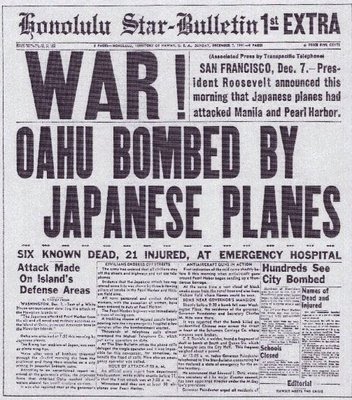
Japan ended the debate about the war on December 7th,

but not before Ted Williams and Joe DiMaggio captivated the country throughout the 1941 baseball season.

Joe DiMaggio arrived in New York in 1936 and he was an instant star, hitting .323 with 29 homers and 125 RBI! He was a veritable RBI machine as in his first five seasons his totals were, 125, 167, 140, 126 and 133 an average of 138 a season. He averaged 34 homers a year, including a league leading 46 in 1937 and his batting average was .345 including back to back American League batting titles in 1939 and 1940. The Yankees had won the World Series an unprecedented four straight times from ’36’ through ’39’ and Joe D. was the 1939 MVP!

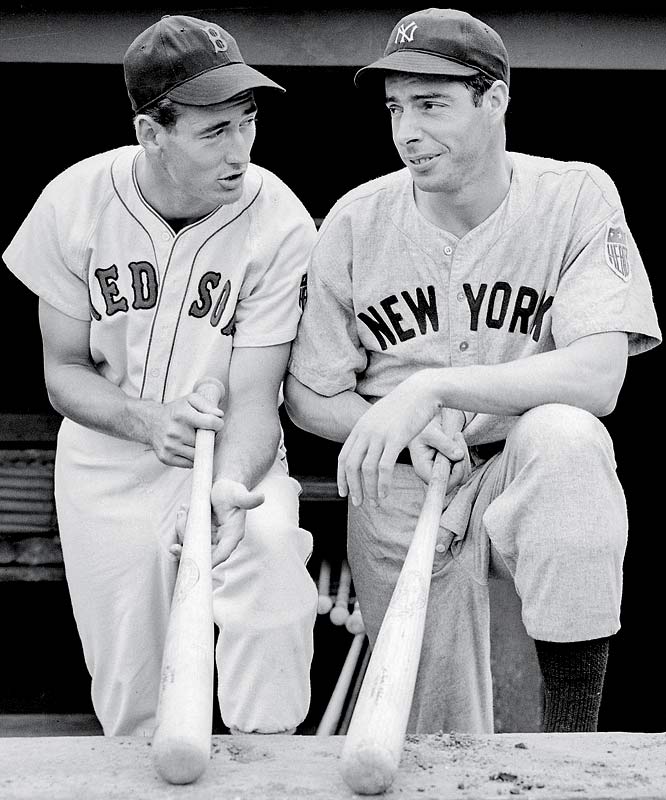
Ted and Joe at the 1941 All Star Game.

Ted Williams arrived in Boston in 1939 and was an instant star, hitting .327 with 31 home runs and a league leading 145 RBI. He was a veritable on base machine, reaching 44% of the time his first two seasons; he would lead the league in that category for 12 of his 19 seasons. The Red Sox were emerging from their two decade doldrums and appeared ready to challenge the Yankees as the class of the league. But before that would occur, these two men would take the baseball world on a ride for the ages!

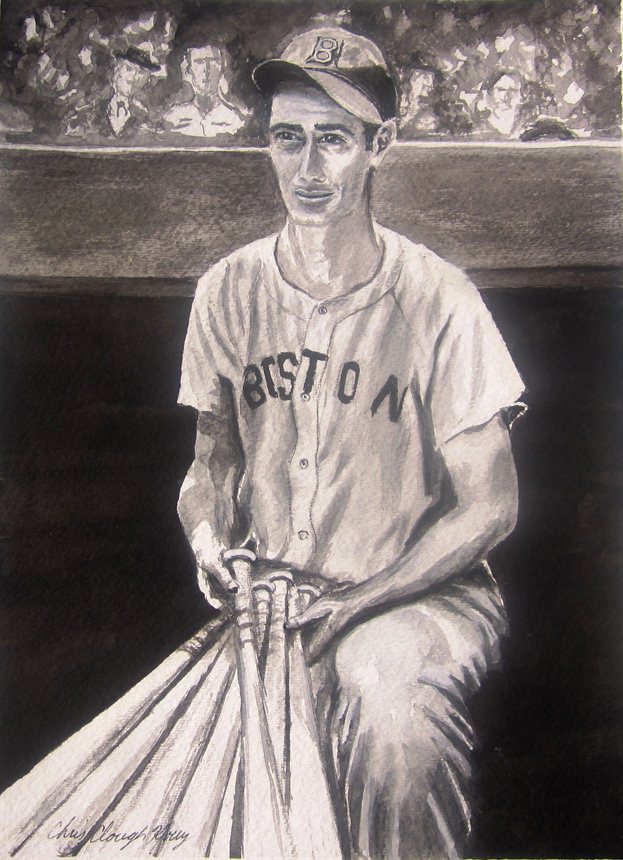
Teddy Ballgame, 1941 (by Chris Kfoury)

The year did not begin well for Ted as he broke a bone in his ankle in spring training which  limited him to pinch-hitting duties for the first two weeks of the season. His first start came on April 22 in Washington and he went 2-4. He would not start again until April 29th, in Detroit and his first start without a hit came on May 2nd, in Cleveland against the Indians. When that game ended, he was hitting, .308 the lowest he would hit all year!

 On May 15th 1941 in Yankee Stadium, a White Sox pitcher named Eddie Smith spun a complete game nine hitter as his mates pounded three Yankee pitchers in a 13-1 rout. The only Yankee run was a result of a Joe DiMaggio RBI single in the first inning. It was a rather nondescript box score a mere 1-4 with an RBI, yet it was the first step on a historic quest that is heretofore unmatched in baseball annals. It would be two months, two days and 56 games before Joe DiMaggio’s name would appear in another box score that read, zero hits.

 Eddie Smith pitched 10 seasons and was 73-113 lifetime. He is engraved in history as the pitcher who surrendered the first hit of Joe DiMaggio’s 56 game hitting streak.

On May 15th, the Red Sox were at Fenway Park versus the Indians and Ted Williams also had a rather nondescript box score, going 1-3, a single for his 20th hit of the year. He was now hitting, .339.

 During DiMaggio’s streak, he had 22 multi-hit games; 14 with two hits, five with three  hits and three with four hits. Nine of those 22 came in the last 16 games of the streak. He broke Wee Willie Keeler’s modern-day record when he hit in game number 45 of the streak. It came July 2nd at Yankee Stadium against the Red Sox and it was a fifth inning two run homer.

Red Sox pitcher Dick Newsome, surrendered the hit that broke Willie Keeler’s record.

In seven of the last 10 games of the steak, DiMaggio had multi-hit games and in  game number 57, where it came to an end, Indians third baseman Ken Keltner robbed him of two hits down the left field line.

Ken Keltner twice made back-handed stabs to his right down the third base line and threw Joe D out by a half step each time, stopping the streak at 56 games.

During the 56 game streak from May 15th through July 16th, DiMaggio had 91 hits in 223 at bats for a .408 clip. Thirty five of the hits were for extra bases and he hit 15 homers and had 55 RBI. He walked 21 times thus reaching base 122 times during his 56 game stretch.

While Joe D was making his history, Ted Williams was on a march creating his own. It is interesting to note that on May 15th, Williams began what would become a 23 game hitting streak, ending on June 8th in Chicago. Ted entered that doubleheader hitting .431.

During DiMaggio’s streak, Williams had a hit in 45 of the 52 games he played. In those 52 games, he had 21 multi-hit games, 12 with two, seven with three and two with four. He hit .412 with 12 homers and 50 RBI.

It was during that stretch that Ted was at his highest average for the season. He was hitting; .436 on June 6th, .434 on June 5th, and .431 on June 7th. He was hitting .405 at the All Star break and went 0-4 the first game following it. That lowered his average to .398 and it would take him until July 25th to get back to .400.

Ted Williams fifth inning homer off Mel Harder on July 25, 1941 put him back at .400 and he did not dip below that mark for the rest of the season.

Contemplate that for a minute. He was over .400 from July 25th until the end of the season! In fact from May 25th on, he was at .400 or better for all but two weeks of the rest of the season.

The Red Sox season ended with a doubleheader at Shibe Park in Philadelphia. That morning Williams was hitting .400 (.3996 to be exact.) Manager Joe Cronin suggested he sit it out, he had his .400, the season was over. Ted would have none of it and he played both games of the doubleheader, going 4-5 in the first game and 2-3 in the second finishing at what has become the magical mark of .406.

Ted Williams September 28, 1941 in Philadelphia.

The Red Sox remained the bridesmaid of the Yankees again in 1941, however, the Williams/DiMaggio rivalry would blossom into the Red Sox/Yankee rivalry. But first there was a war to fight.

to be continued…..

And so it was at this time in Fenway Park history, Ted and Joe’s time, 1941

Posted in Fenway Park Baseball | Tagged , , , , , , , , , , | 2 Comments