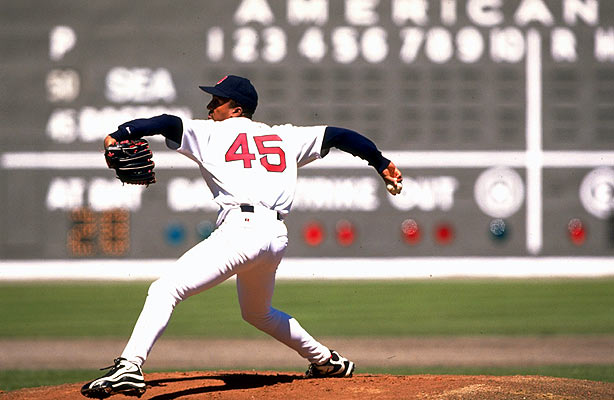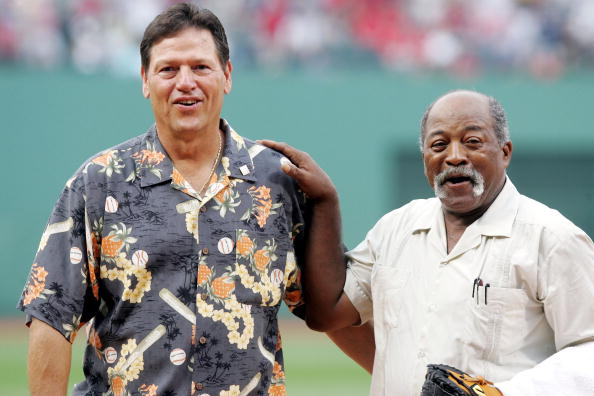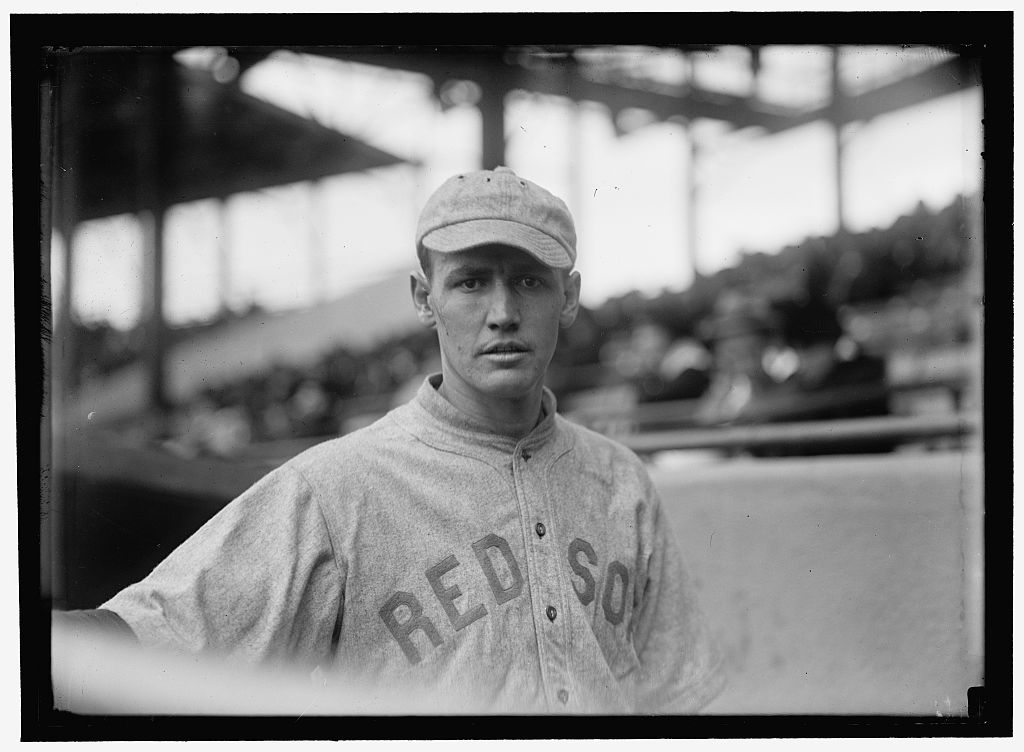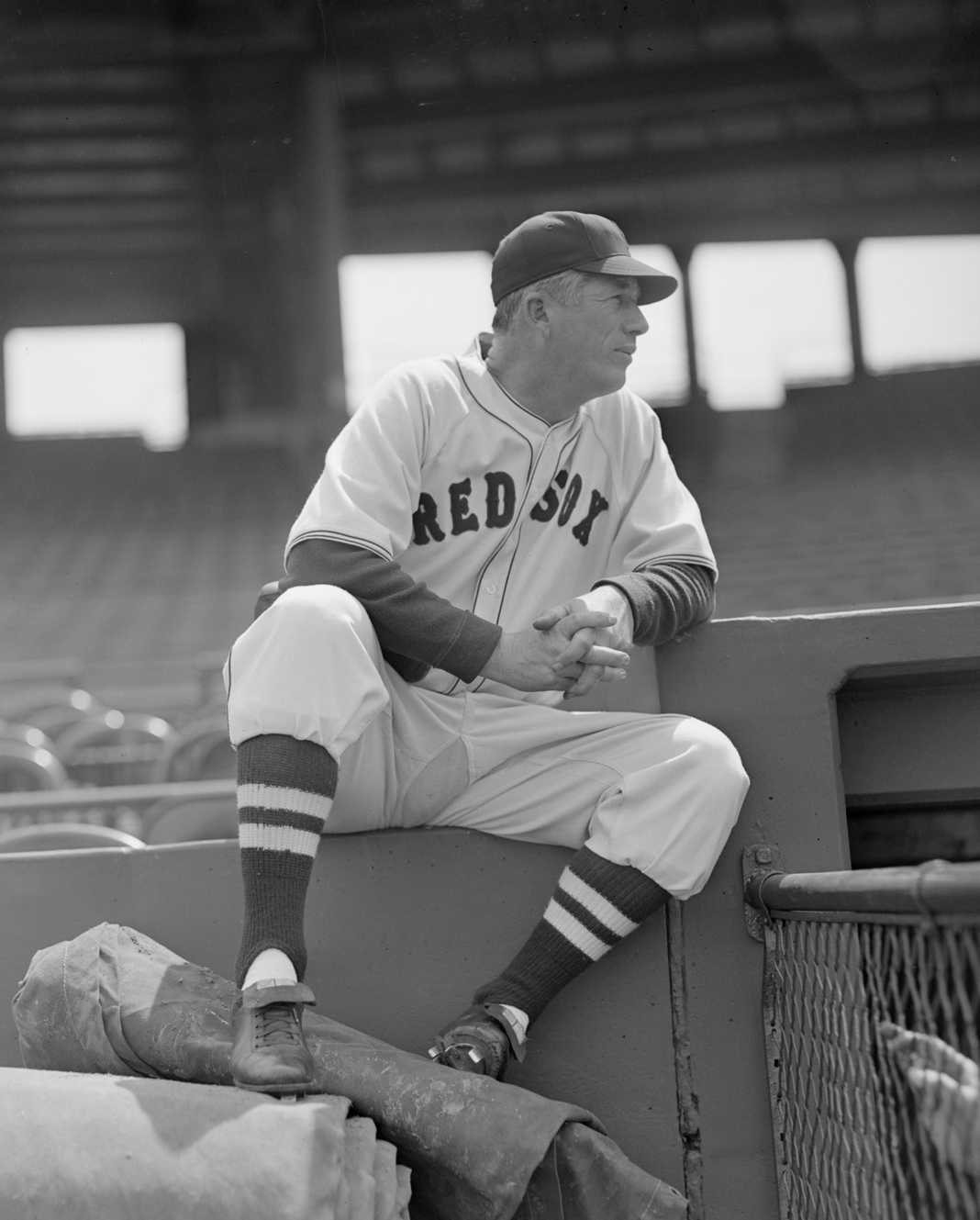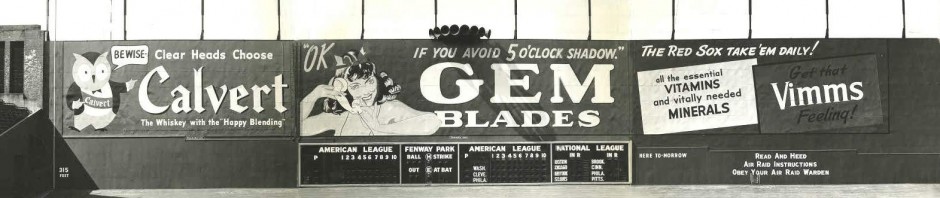
In the “Big Inning”…..

We all know that God is a baseball fan. If you doubt that simply check out the first line of Genesis. “In the “big inning” God created the heavens and the earth”. He certainly did a lot of work following the “big inning” “and he rested on the seventh day from all His work that He had done”.

 I think He might have played golf….Happy Sunday!

Posted in Fenway Park Other | Leave a comment

All Fenway Team….The Bullpen…..

I told you I was going “old school” with the bullpen so I have chosen two. I guess we’ll call them closers and as I did with the starters, I’ll start with the most recent and roll back. The requirement for eligibility for the All Fenway relievers is simply 400 innings pitched.

The first one is a no-brainer…..

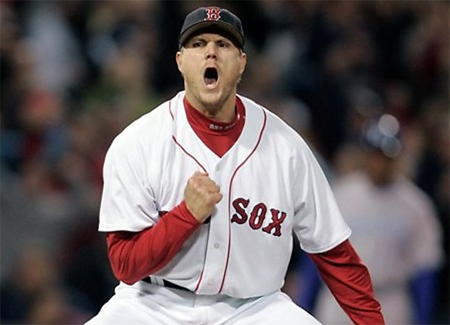
Jonathan Papelbon 2005-2011.

Jonathan Robert Papelbon made his debut on Sunday July 31, 2005 at Fenway Park in a start against the Minnesota Twins. He worked 5 1/3 innings, surrendering three runs (two earned) and chalked up a no decision in a game the Red Sox eventually won 4-3. His first win came in Toronto six weeks later when he faced only 10 batters pitching the 10th, 11th and 12th innings of a 6-5 Sox win.  He added two more wins that month working in a set up role and although there were a couple of more starts that summer, when the Red Sox headed north for the 2006 season, they did so with Papelbon slated for the set up man for closer Keith Foulke.

The Red Sox opened the 2006 campaign in Texas and they led 7-2 in the eighth when Papelbon entered and got the Rangers one, two, three. In the ninth, Foulke gave up a run and two hits in the five batters he faced. The following day it was Mike Timlin in the set up role and “Paps” recorded his first career save preserving Josh Beckett’s 2-1 win with another one, two, three inning including two punch outs. The following day Foulke pitched the ninth inning of a 14-8 Red Sox win in Baltimore in what turned out to be his swan song, as the next day Papelbon recorded his third straight one, two, three inning; his second save and there was no turning back for Papelbon, Francona or the Red Sox. Jonathan Papelbon was it!

In six seasons he averaged 37 saves with a high of 41 in 2008. A four-time all-star, he became as much a part of the Fenway Park story as any player in Red Sox history.

His legendary stare on the mound…..

 His fist pump of the old fat cop on his entry from the bullpen  http://www.youtube.com/watch?v=WG90qaZs3V8&feature=fvwrel  and of course his

dance following the Red Sox winning the ALCS in 2007.

http://www.youtube.com/watch?v=o6eXGDjbWn8&feature=fvwrel

He won the Babe Ruth Award as the New York Writers MVP of the 2007 World Series in which he had three saves.

Perfectly “Paps”.

 Jonathan Papelbon was fun, and he was good, damn good, in fact he is the greatest closer in the history of Fenway Park!

The other bullpen guy….

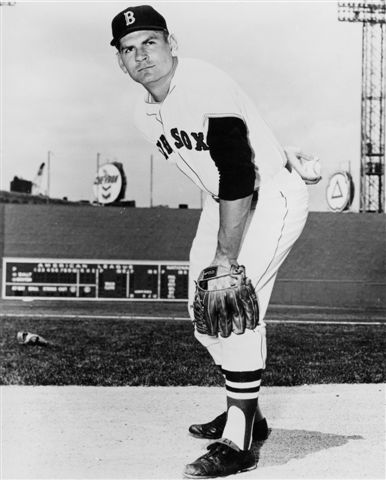
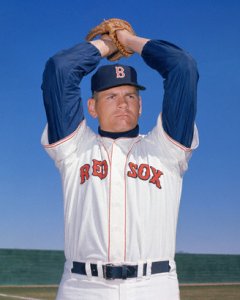
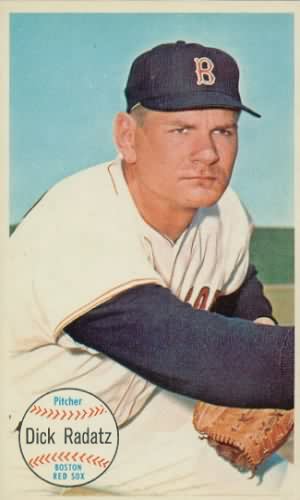
Dick Radatz 1962-1966.

First they called him “Moose” and then they called him “The Monster”. At 6′ 6″ and 230 pounds, his physique fit both monikers. However his evolution from “Moose” to “Monster” was directly related to his dominance on the mound.

“Moose” was a two-time all-star with the Red Sox and in 1964 he struck out 181 batters in relief, still a major league record. 

Pitching at a time when the save had just been “invented” and it was still not yet an “official” stat, and a “closer” meant, as often as not pitching more than an inning, Radatz dominated!

“The Monster” twice won the Sporting News “Fireman of the Year Award. In his years with Boston his strikeout per nine inning mark was 10.1.

In four full seasons with the Red Sox, Radatz was 49-34 (.590) with 104 saves and a 2.65 ERA. In 1964 he was 16-9 with a league leading 29 saves. He appeared in 79 games that year, closing 67 of them and those 16 wins remain a record for wins in a season by a Red Sox relief pitcher.

Coming from an era when “closers” often pitched well more than one inning, Radatz actually had 19 appearances where he pitched 4 innings or more. And he won 16 of them. Included in that was a nine inning win in relief against the Yankees in 1962. In 1963 he fired 33 1/3 consecutive scoreless innings out of the Sox pen.

Dick Radatz reportedly, struck out Mickey Mantle 46 times in 64 at bats! Retrosheet.org states that Mantle struck out 12 times in 16 at bats against “The Monster”. Either way, his dominance of the All Time Great is clear!

Radatz will serve multiple roles on my All Fenway staff, he’ll be the long and middle reliever, close on occasion and for those of you wondering about a lefty specialist for the dangerous left-handed hitter, “Moose” is the guy, lefties hit .211 against him, righties, .213.

      And so it is on this day in Fenway Park history, the All Fenway pitching

                                                      staff , February 25, 2012.

Posted in Fenway Park Baseball | Tagged , , , , , , , | Leave a comment

The All Fenway Team, The Right-handers…..

Today I will name the right handers to my All Fenway pitching staff. Remember they must have 100 decisions in a Red Sox uniform and I will start with the most recent and work my way back.

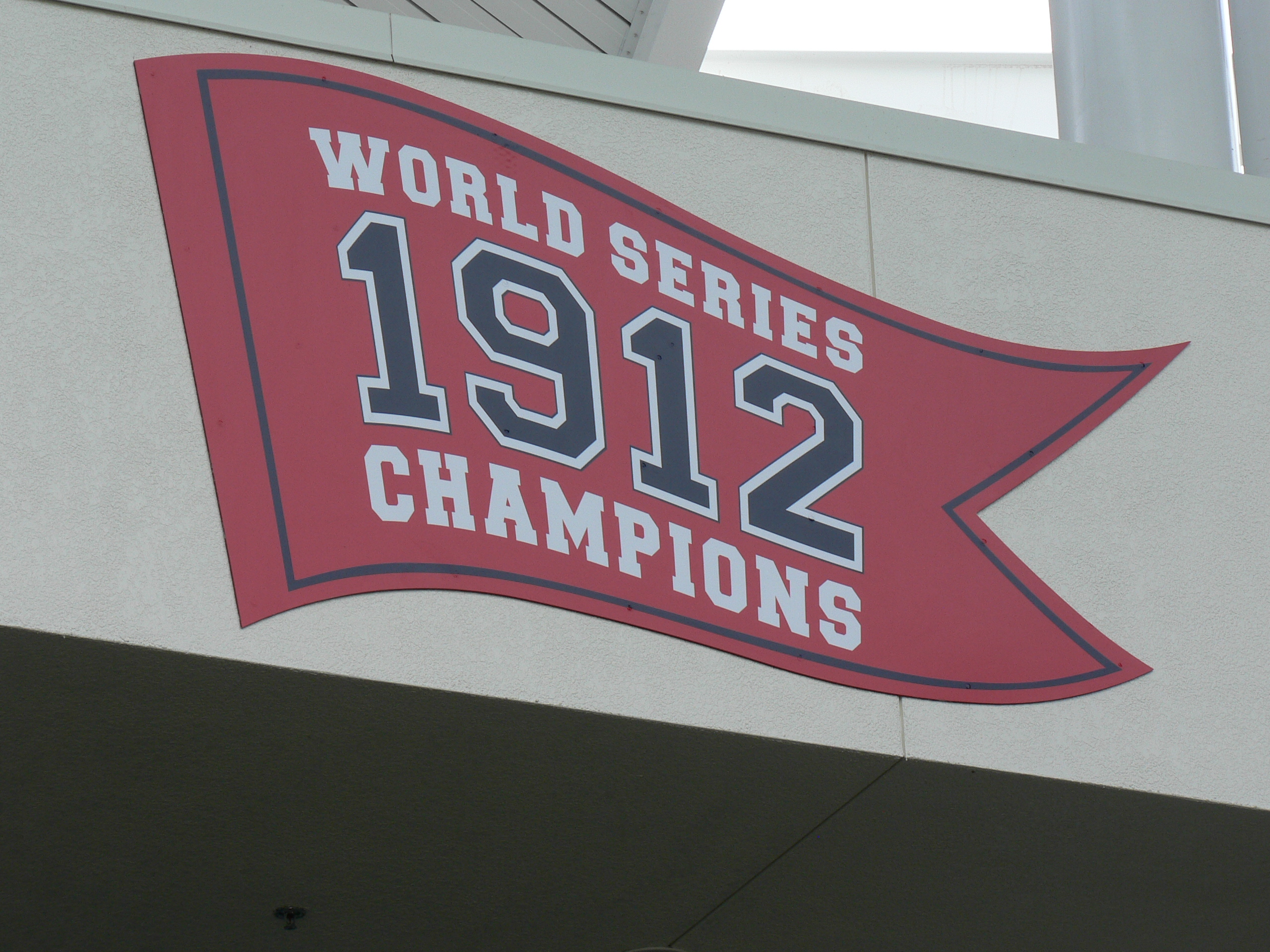
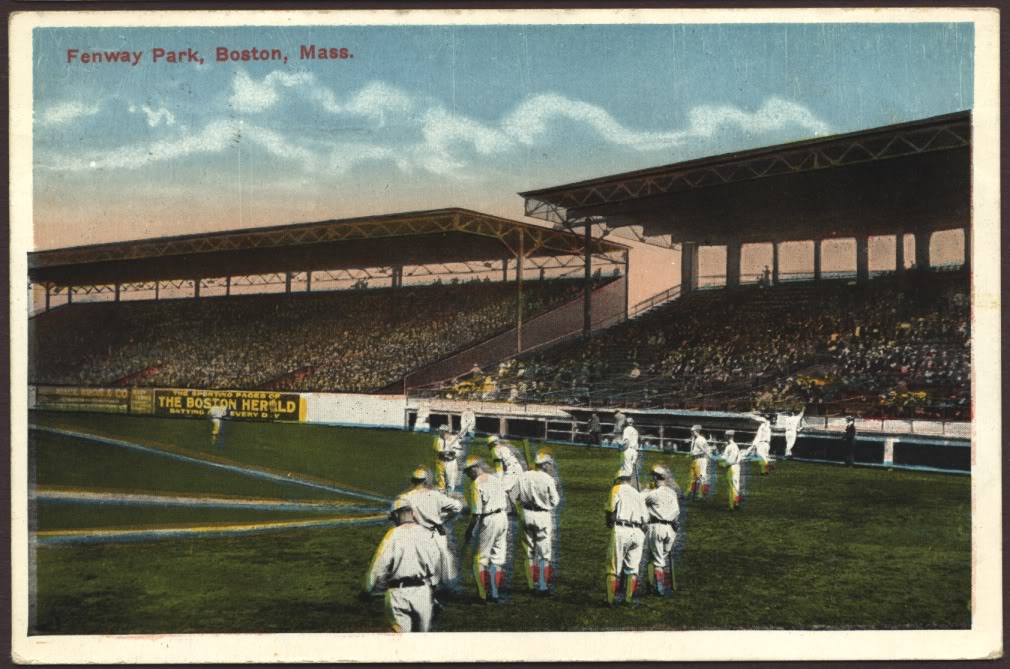
Fenway Park 1912.

The first right hander to make the staff…..

 Pedro Martinez  1998-2004.

Pedro Martinez arrived in Boston in 1998. Acquired by General Manager Dan Duquette from the Montreal Expos in what may well be the greatest trade in Red Sox history, Pedro was coming off a 1997 season in which he won the National League Cy Young Award. In seven years in Boston he was 117-37 (.760) with a 2.52 ERA.

Pedro won back to back Cy Young Awards in 1999 and 2000.

He led the league in wins once, winning percentage three times, ERA four times, shutouts once, strikeouts three times and strikeouts per nine innings four times. In 1999 he won the pitching triple crown leading the league in wins, ERA and strikeouts becoming the first (and only) Red Sox pitcher to strikeout 300 batters in a season, (313). Pedro pitched for Boston in the midst of what one day will be designated the “Steroid Era”. When historians factor that into the evaluation of Pedro Martinez with Boston, they may well conclude that he had the most dominant stretch by any pitcher in baseball history!

The next righty…..

Roger Clemens 1984-1996 won three Cy Young Awards with the Red Sox and was the 1986 MVP, the only Sox pitcher to win the MVP Award.

“The Rocket” arrived at Fenway Park in 1984 with more fanfare, more promise than any Red Sox pitching prospect in their history. In 13 years with Boston he fulfilled that promise going 192-111 (.634) with a 3.06 ERA. Always among the league leaders in all pitching categories, he led the league in wins twice, ERA four times, complete games twice, shutouts five times and strikeouts twice. He is the Red Sox all time strikeout leader (2,590) and he is tied with Cy Young for most career wins by a Red Sox pitcher. His self-inflicted demise surrounding his association with steroids, took place after he left the Red Sox, thus he makes my All Fenway pitching staff.

Next up…..

Luis’ El Tiante” Tiant 1971-1978. His 1.91 ERA led the league in 1972.

He pitched eight seasons calling Fenway Park home, he led the league once in ERA and once and shutouts. He was 122-81 (.601) with a 3.36 ERA and never has there been a pitcher whose numbers didn’t even begin to tell the story, he was 3-0 with a 2.65 ERA in post season play with the Red Sox and therein is a hint of the whole story, and within that is a game which defines Luis Tiant.

On October 15, 1975 at Riverfront Stadium in Cincinnati “El Tiante” took to the hill. It was game four of the World Series and the Reds held a two games to one lead. After four innings, Luis and the Red Sox were ahead 5-4 and that is where the battle began.

Luis did not have what could be called his best stuff. What Luis had was, well, Luis! Throughout the rest of the game, the Reds had men on base in every inning but one. Twice there were two on and in the ninth, Fred Lynn ran down a shot to centerfield by Ken Griffey that would have tied the game and put the winning run in scoring position. The last out of the game was a pop out by Joe Morgan.

Tiant’s line score reads a complete game 5-4 win; he surrendered four runs, walked four and struck out four. He threw somewhere between 160 and 175 pitches and in the end, he simply would not be denied. In that one game is a microcosm of Luis Tiant. Carlton Fisk said that if he had to win one game, he would give the ball to Luis Tiant. Who would argue with that? Not me!

Carlton Fisk and Luis Tiant.

Rounding out the starters…..

“Smokey” Joe Wood 1908-1915.

To round out the staff, we go back to Fenway’s beginnings. In 1912 the Red Sox had their best season ever and their best pitcher was Joe Wood. Walter Johnson said he never saw anyone throw harder than Joe Wood and had he not injured his arm he would, in all probability been one of the greatest of all time. In eight seasons on the hill for the Red Sox he was 117-56 (.676) with an ERA of 1.99. In 1912 he was 34-5 with a 1.91 ERA. He holds the Red Sox record for wins in a season (34), consecutive wins (16), career ERA (1.99) and shutouts in a season (10).

The All Fenway starting rotation is set, tomorrow we’ll put a couple of guys in the bullpen.

         And so it is on this day in Fenway Park history, February 24, 2012. 

Posted in Fenway Park Baseball | Tagged , , , , , , , , , , | Leave a comment

The All Fenway Team, Installment Number One,The Southpaws…..

The Boston Red Sox are planning a plethora of events to celebrate Fenway Park’s 100th birthday this summer. Among them is the selection, by the fans, of Fenway Park’s 100th Anniversary team, the All Fenway team!http://mlb.mlb.com/bos/fan_forum/all_fenway_team.jsp

The voting has begun now as fans can select the best left and right-handed starting pitchers at the moment. It will end with the center fielder and manager being selected from May 7th through May 20th. A fun exercise and fodder for many a sports bar discussion/argument, mill.

Not one to miss out on a good baseball discussion, I am going to take a bit of a different track and it will go like this. I am going to select my all time Fenway Park team! Not just one player at each position but a 25 man team! An All Time Fenway 25 man roster if you will. Today I will begin with the pitching staff. Oh, and it will be old school, no “set up” bullpen guys! All starters with two guys out of the bullpen. Oh and I do have one criteria which must be met, each starter must have at least 100 decisions in a Red Sox uniform.

Today I select my southpaws, starting with the most current and working my way back towards 1912. With that said, the first guy on the staff is…….

John Lester 2006-present.

Lester became eligible for my squad just last year after completing his sixth season in a Red Sox uniform. His lifetime record of 76-34 earns him a .691 winning percentage. That is the best in Red Sox history for a lefty with 100 or more decisions. A two-time all-star, he led the league in strikeouts per nine innings in 2010 and since he entered the rotation in 2008 he has averaged over 200 innings per season, a workhorse by today’s standards. His 162 game average is 17-7 with a 3.53 ERA. He is 2-3 in the post season with a 2.57 ERA. He was the winning pitcher in the World Series clinching game in 2007!

Next up…..

Mel Parnell 1947-1956.

Cracking the rotation in 1948, for the next six seasons, Mel Parnell was the ace of the Red Sox staff. His best year was 1949 when he went 25-7 with a 2.77 ERA. He led the league in wins, complete games (27) innings pitched (295.1), made his first all star team and finished fourth in the MVP balloting. His 25 wins remains a Red Sox record for wins in a season by a left-hander. In 10 years he went 123-75 (.621) with a 3.50 ERA. His 162 game average was 16-10 and he threw 20 career shutouts.

He is forever cemented in Red Sox folklore by being passed over to pitch the one game playoff for the American League pennant against the Indians in 1948. Manager Joe McCarthy went with journeyman Denny Galehouse who got pounded, the Indians went on to the World Series and the Red Sox went home. Parnell never pitched in the post season.

Next up…..

Lefty Grove 1934-1941.

I’ve written about Grove a couple of times, once just this past week regarding his Banner of Glory waving on Van Ness Street. Even though his best years were behind him when he arrived in Boston, Lefty Grove earns a spot on the All Fenway pitching staff. He was 105-62 (.629) with a 3.34 ERA in eight years with the Red Sox. Four times he led the league in ERA, once in shutouts and he was a five time all-star in Boston. He won his 300th game in a Red Sox uniform, the only pitcher to do so!

Next up…..The last lefty…..

Babe Ruth 1914-1919.

It seems hard to believe that a guy who pitched 100 years ago and for only three complete seasons would make the squad, but the numbers are staggering and the performance does not lie!

Babe was a full-time pitcher in 1915, 16 and 17. In those three years he was 65-33 (.633) with a 2.02 ERA. He led the league in ERA once, starts and complete games once as well. In 1916 he threw nine shutouts an American League record for shutouts by a left-handed starter which he still holds, sharing it with Ron Guidry. He is the only Red Sox left-handed pitcher to have back to back 20 win seasons (23 in 1916, 24 in 1917) and he still holds the Red Sox records for starts (41), complete games (35) and innings pitched 326.1 by a left-handed pitcher in a season. He was 89-46 .659 with a 2.19 ERA for the Red Sox and held the Red Sox record for lifetime winning percentage for a lefty until Jon Lester broke it last year.

He was 3-0 (0.87 ERA) in World Series play including a 14 inning complete game win in game two of the 1916 World Series, the longest complete game win in Series history. His 29.2 consecutive scoreless World Series innings pitched was a record until 1961. He went to his grave saying that was the record of which he was most proud!

      And so it is on this date in Fenway Park history, February 23, 2012.

Happy Birthday Boom! 


Posted in Fenway Park Baseball | Tagged , , , , , , , | Leave a comment

Of Dads and Spring…..

Pitchers and catchers reported this week and we are but a matter of days removed from the full squads arriving for spring training. Ah spring when hope beats in the human heart and the promise of October lingers, a perpetual whisper.

For the next six weeks all of baseball will be tied in first place as kids and “old men” reach; kids for their dreams and “old men” for one more ride on the merry-go-round.

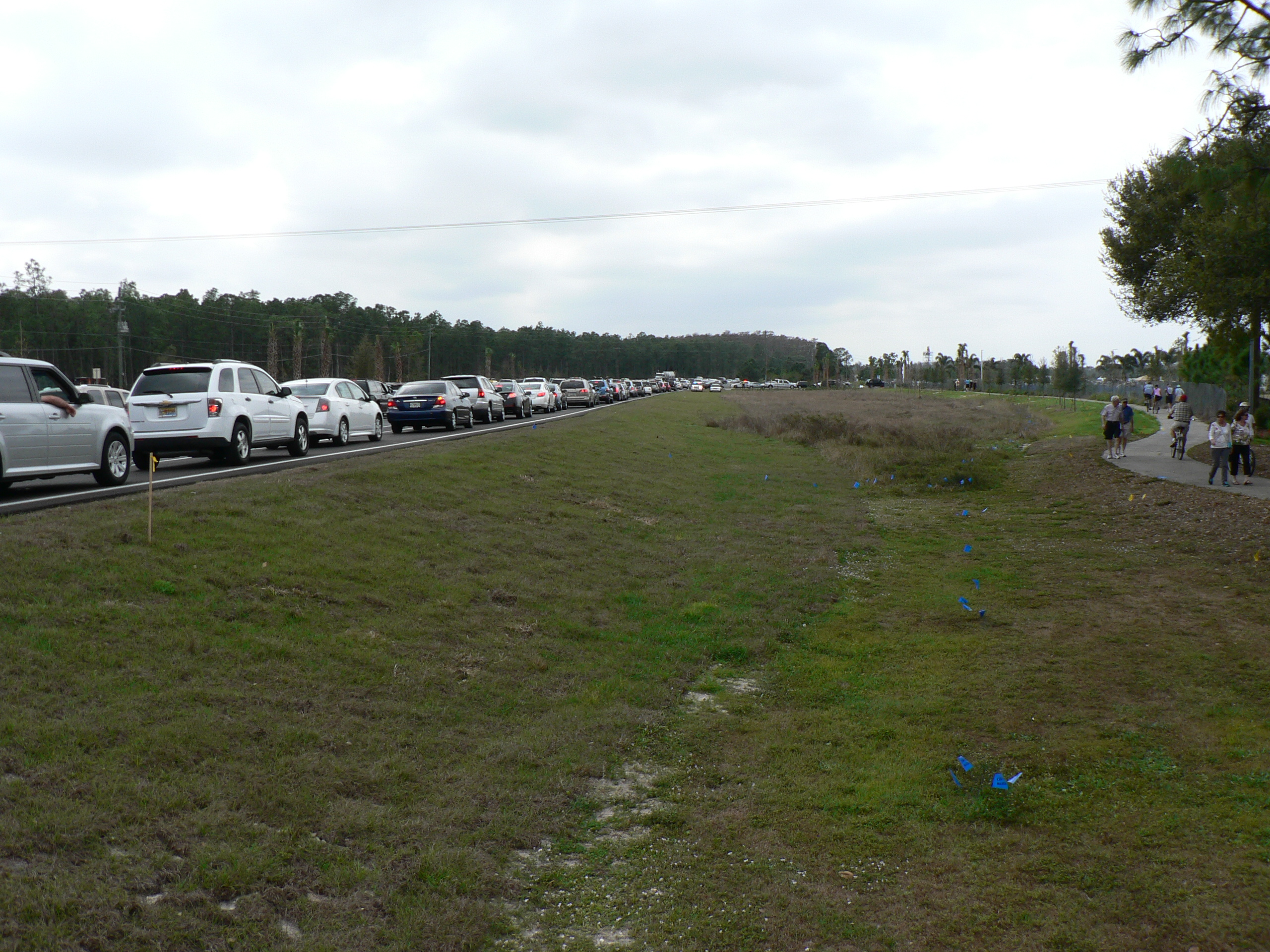
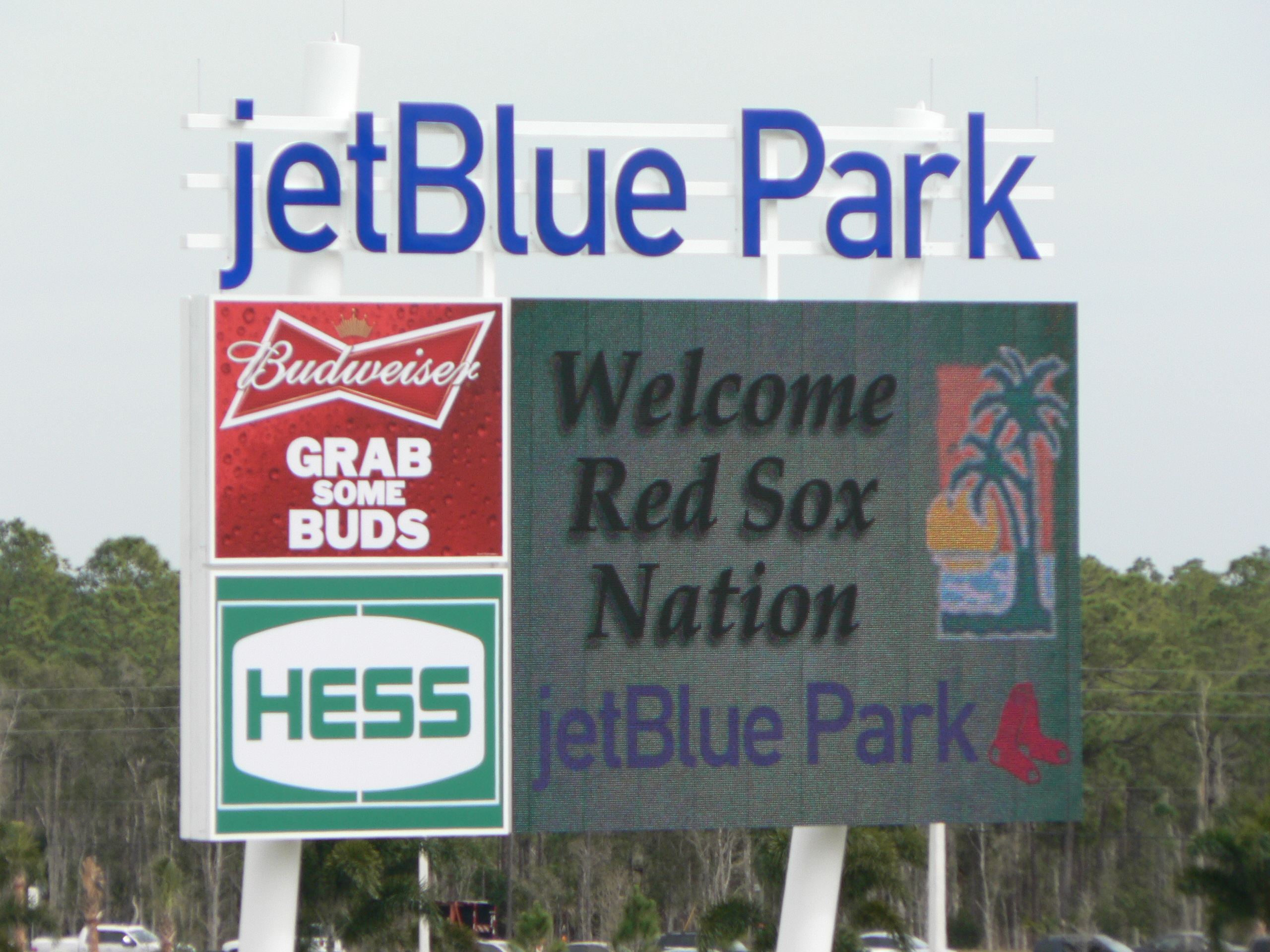
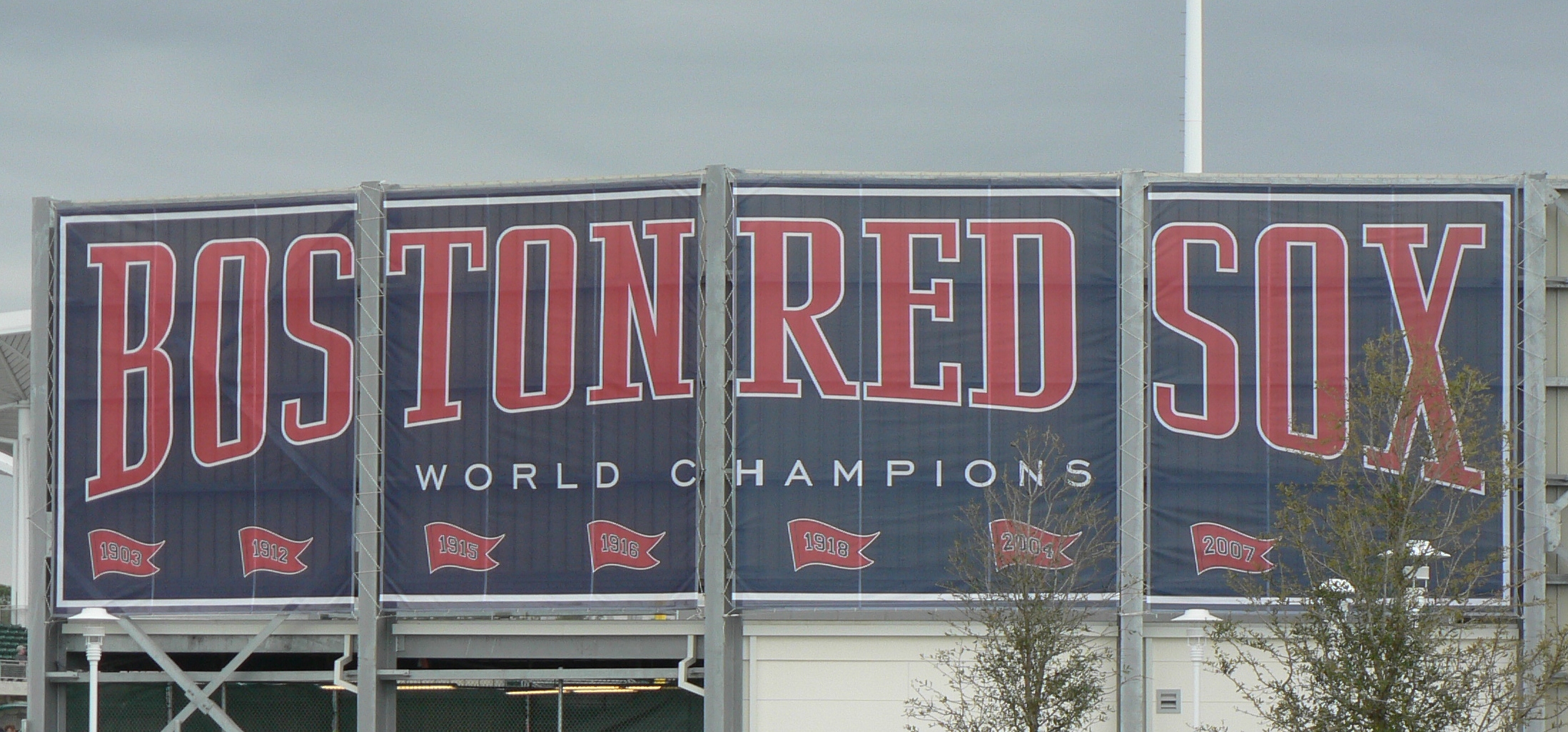
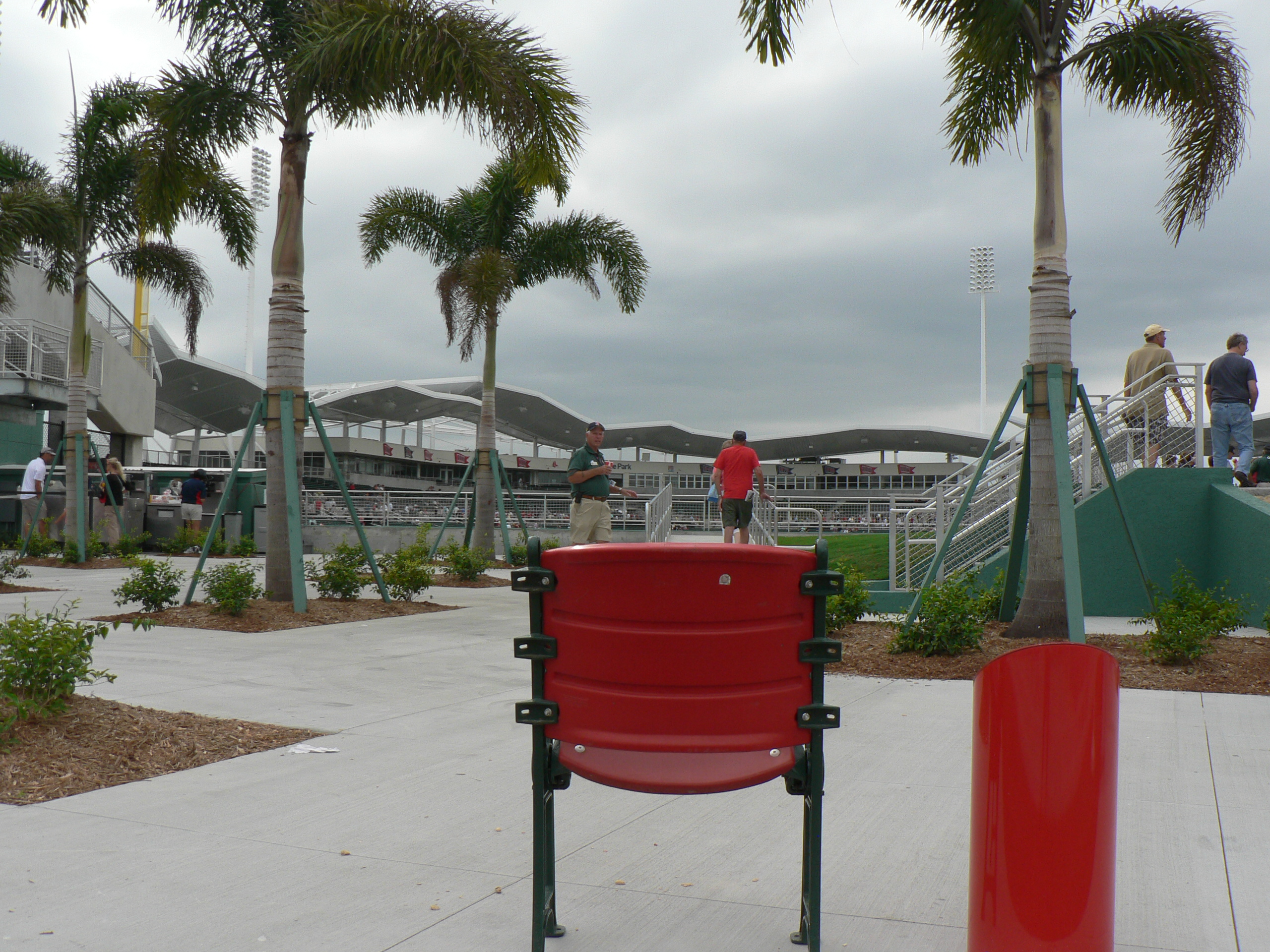
This year brings an added excitement as the new and the old mingle. The new Jet Blue Park in Fort Myers Florida welcomes the Red Sox before they make their way north to play in Fenway Park for her 100th season!

As is often the case in spring; my thoughts turn to my dad and my mind is awash with memories of the times we shared at, among and with Fenway Park and the Red Sox.

There was that first game in the summer of 1959. I don’t remember who they played, I don’t even remember if they won but forever emblazoned in my mind is that first look of Fenway Park’s emerald blanket below the twinkling of diamonds. “That’s left field and that’s where Ted Williams plays”.

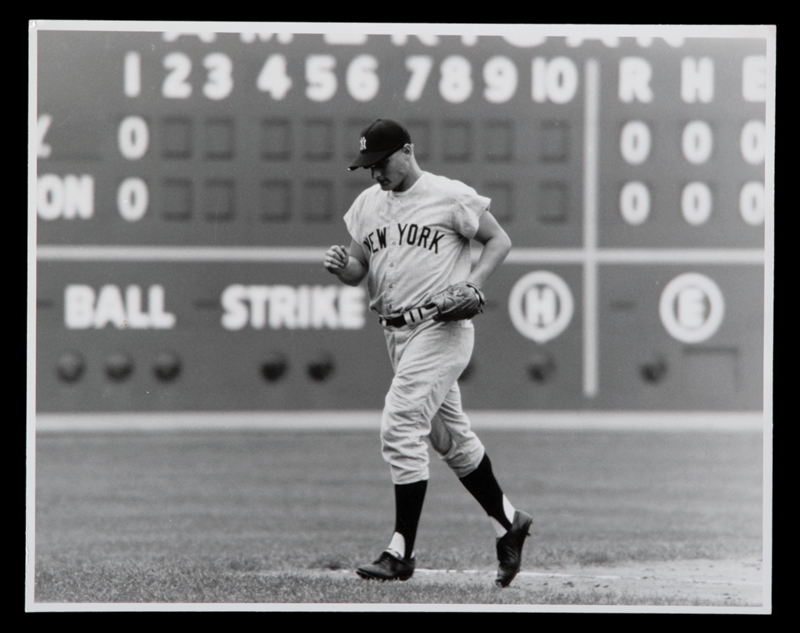
There was Memorial Day in 1961 when Dad, my brother and I met with Dad’s best friend Bob and his two kids. It was my first live look at the Yankees and boy they were a site to see. By days end I had seen Mickey Mantle hit two home runs, “Moose” Skowron hit two home runs, Yogi Berra hit a home run and I saw Roger Maris hit home runs number 10 and 11 on his way to a record-setting 61 home run season. http://www.retrosheet.org/boxesetc/1961/B05300BOS1961.htm

Roger Maris heads to the Yankee dugout at Fenway.

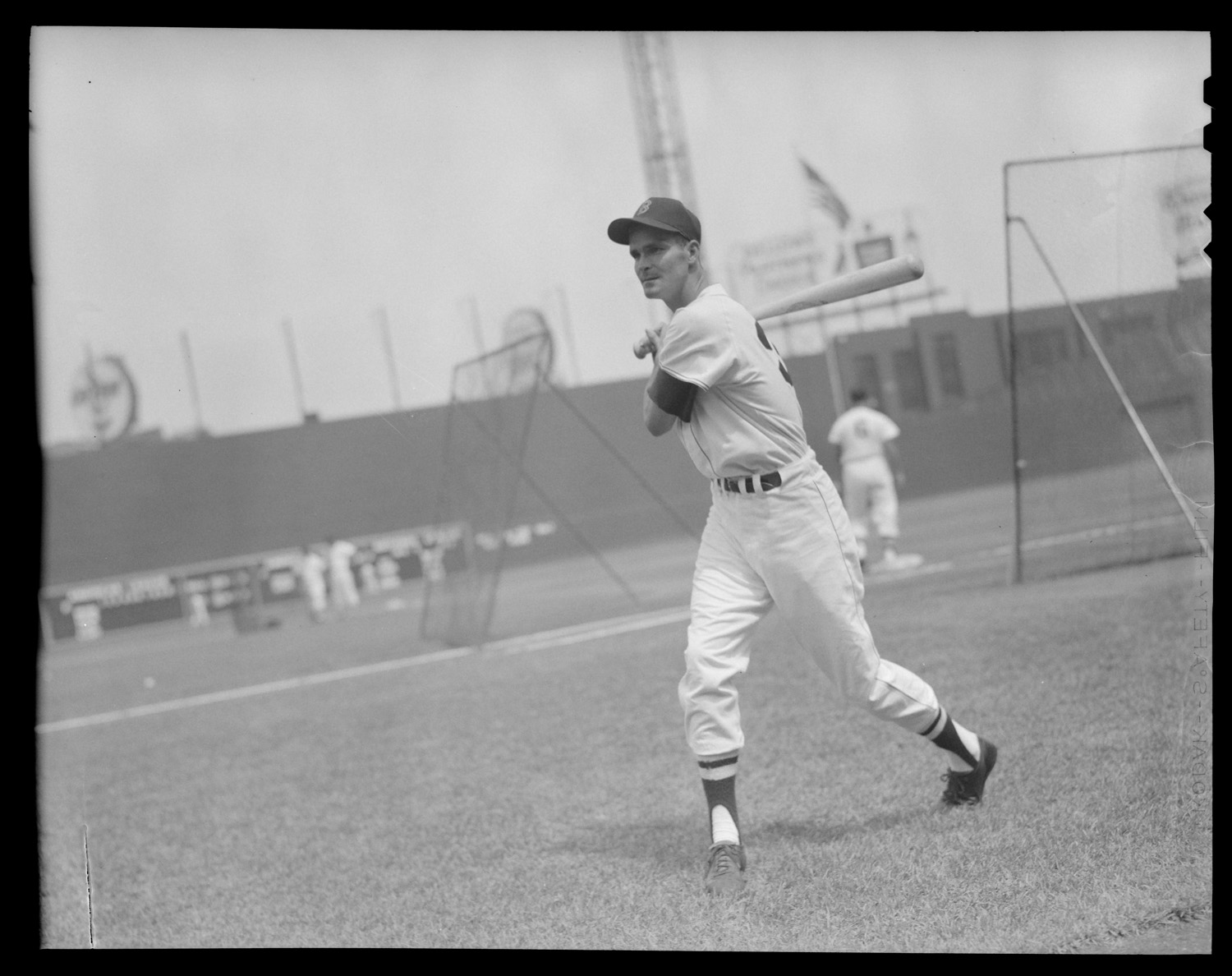
There was that night just a couple of months later when we watched the Red Sox fleet-footed center fielder Gary Geiger hit an inside the park grand slam home run. He scorched one down the right field line and when the ball got by Twins right fielder Bob Allison, Geiger just turned on the jets. In that same game Dad nearly snagged a foul ball, as it deflected off his hand leaving a damaged thumb. http://www.retrosheet.org/boxesetc/1961/B08080BOS1961.htm

Gary Geiger.

 There was that night in June of 1962 when we huddled in front of the black and white Zenith. Earl Wilson was pitching against the Angels and my older brother had gone to the game with a friend. Dad and I watched history unfold as Wilson spun a no-hitter against the Halos and just for good measure knocked one over the screen for a home run along the way. He was the first black pitcher to hurl a no-no in the history of the American League. http://www.retrosheet.org/boxesetc/1962/B06260BOS1962.htm

Earl Wilson.

Then came the summer in 1998, his last. Sitting next to him on his bed at Mass General Hospital watching the Sox lose to the Phillies. It is somehow appropriate that the last game we watched together was a loss, for it was within so many Red Sox losses of the early 1960s that he taught me of loyalty, of perseverance, of fate and enduring.  And a few weeks later on a warm August night Paul and I stood at Pesky’s Pole and scattered a smattering of Dad’s ashes on the consecrated grounds of our beloved Fenway Park.

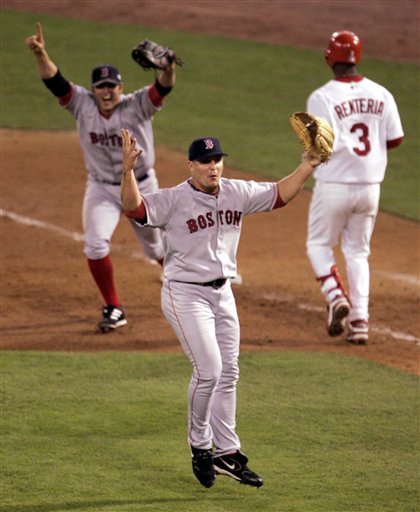
Fourteen springs have given way to fourteen summers and two October’s have brought the Fenway Faithful the World Championships which Dad never tasted; but he was with me as I sat in my chair, my son on the phone, when Keith Folke stabbed Edgar Renteria’s ground ball ending 86 years of anguish. He was with me then as he is with me now, I hear him in the sounds of spring!

Keith Foulke.

So those of you who still can, give Dad a call today and just say hey, and those who can’t, take comfort in the knowledge that those we carry in our hearts, are never gone from us.

        And so it is on this date in Fenway Park history, February 22, 2012.

Posted in Fenway Park Baseball | Tagged , , , , , , , , , | Leave a comment

The Teammates…..

We’ve made our way down Yawkey Way and to the end of Van Ness Street. We’ve viewed the Banners of Championships and the Banners of Glory and as we reach where Van Ness Street melts into Ipswich Street we encounter Red Sox and Fenway Immortality in Bronze.

As you approach the first Immortality in Bronze, the shadows on Fenway’s outside wall hint at the mysticism of the structures as they come into view.

Previous posts detail the story of the Ted Williams Jimmy Fund Statue, which was dedicated in April of 2004.

https://fenwaypark100.wordpress.com/wp-admin/post.php?post=352&action=edit

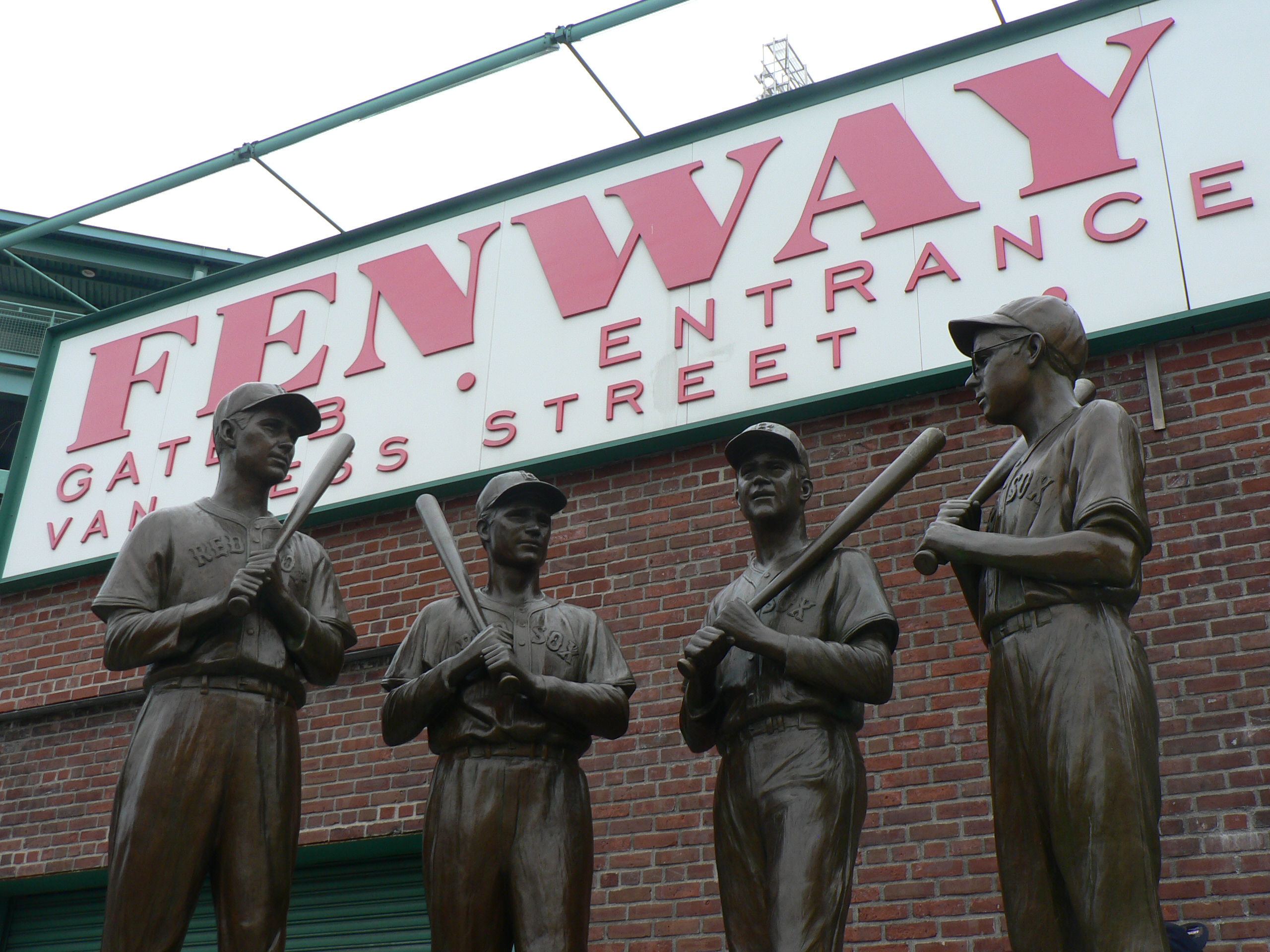
Just beyond that is the statue of The Teammates.

Ted Williams, Bobby Doerr, Johnny Pesky and Dom DiMaggio.

The first member of The Teammates to join the Red Sox was Bobby Doerr. Arriving in Boston in 1937, he ironically wore number 9 in his rookie season before switching to his retired number 1 the following year. He played until 1951, missing the 1945 season due to World War II.

Bobby Doerr, 1938 Goudey baseball card.

Ted Williams came upon the Fenway scene in 1939 and played for the Red Sox in four decades, retiring in 1960. He lost the entire 1943, 44 and 45 seasons to World War II. He came to bat a total of only 101 times in 1952 and 53 while flying combat missions in Korea where John Glenn (he of NASA fame) served for a time as his co-pilot.

Ted Williams 1940 Play Ball baseball card.

In 1940, Dominic DiMaggio arrived to patrol center field at Fenway Park. The younger brother of Yankee legend Joe DiMaggio, Dominic played until he retired early in the 1953 season. He also missed 1943, 44 and 45 to World War II.

Dom DiMaggio 1949 Bowman baseball card. 

The last of the bronzed quartet to arrive at Fenway Park was  John Michael Paveskovich, Johnny Pesky. Joining the Sox in 1942, he played with them until he was traded to the Tigers during the 1952 season. He also missed 1943, 44 and 45 to World War II.

Johnny Pesky 1952 Bowman baseball card.

Collectively, the mates lost 11 baseball seasons to war! Much is often made of the fact that Ted Williams lost five full seasons in the prime of his baseball career and we can only speculate as to the what might have beens had he played those five years. There is no question that if he played and, of course, avoided injuries, he would have challenged the spectacular numbers put up by the Babe. However, there is the possibility that he could have suffered a career ending injury as well. So those speculations, though entertaining and fun to contemplate can never amount to anything but an intellectual exercise.

Oh, but just for the fun of it. Ted averaged 405 at bats a season in 19 years playing. He averaged a home run every 14.7 at bats. So, using those numbers he would have added 138 home runs to his 521 career total for 659 career homers, 55 short of the Babe!

The reality is that even though Williams gave five years to the service of his country in two different wars, it is Pesky and DiMaggio who may have sacrificed the most; for it is not a stretch to say that their missed years may well have cost them the National Baseball Hall of Fame.

Dimaggio and Pesky.

In Pesky’s rookie year, 1942, his 205 hits set a rookie record for hits in a season. When he returned in 1946, he banged out two more consecutive 200 hit seasons, leading the league in hits both years. In seven full seasons with Boston he hit .300 six times and scored 100 runs six times. A lifetime .307 hitter, he fell short of Hall of Fame credentials because he played but 10 seasons.

The same could be said of DiMaggio. A lifetime .298 hitter, he was a seven time all-star and he was a regular among the league leaders in runs scored. A wizard with the glove in center field, he too falls just short of Hall of Fame status due to only playing 10 full seasons!

It is safe to say that not one of these men would have had it any other way. Their friendship forged, lasted a lifetime and their story will live long after they are gone, forever forged in bronze outside the place they called home, America’s Most Beloved Ball Park, Fenway Park.

http://www.amazon.com/Teammates-Portrait-Friendship-David-Halberstam/dp/0786888679/ref=sr_1_1?ie=UTF8&qid=1329817350&sr=8-1

            And so it is on this date in Fenway Park history, February 21, 2012.

tylnf

Posted in Fenway Park Baseball | Tagged , , , , , , , | Leave a comment

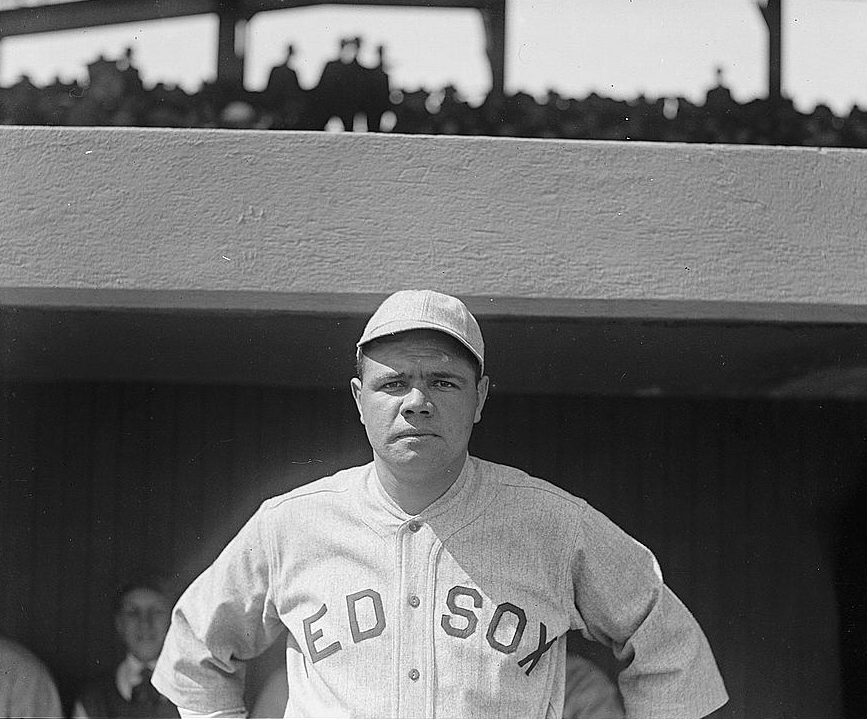
“When Babe Ruth gets tired of twirling on the mound, it looks as if there’s an outfield job waiting for him. The way he has been hitting that pill shows that he is one of the most natural hitters in the game.” Arthur Duffey Boston Post June 13,1916

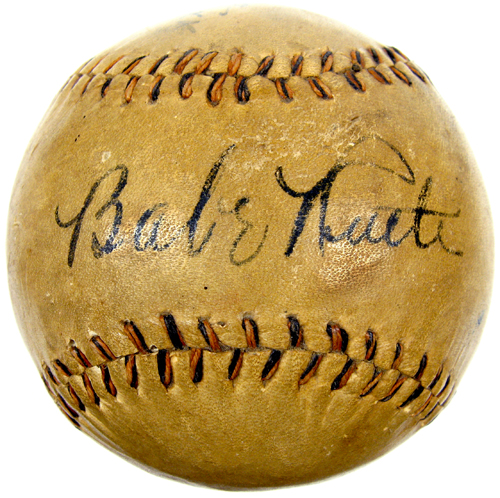
I have written a couple of times about Babe Ruth and I dare say I will write of him more, because you see when it is all said and done, there is nobody better to have played the game. Oh, there are those who will put forth this one or that one was a better “all around” player. All worthy discussions and part of the joy of baseball however the simple reality is that nobody who has ever played in the major leagues has enjoyed as high a level of success both as an everyday player and pitcher than Babe.

 Virtually the entire baseball world knows that Babe Ruth began his career in Boston as a pitcher.

 The sale of Babe to the Yankees has been chronicled ad nauseam.

The nonsense of the curse flourished following the 1986 World Series and it was finally put to bed following the Red Sox 2004 World Championship. The ramifications of all of this was staggering when it came to how the Red Sox perceived themselves and their history. In the mid 1990s when cyberspace was in its infancy, the Boston Red Sox produced a website. In that website was a section on Red Sox legends in which there was no mention of Babe Ruth. Imagine, the man whom the Fenway Faithful elected the franchise best left-handed pitcher in their history just a decade before was left off the original Red Sox legend list.

When it came to Babe Ruth, the Red Sox seemed ashamed that they had sold him, and appeared to ignore his years in Boston.

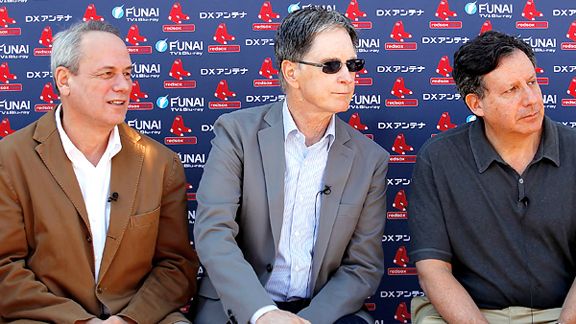
Red Sox owners Lucchino, Henry and Werner.

When the current ownership took the reigns in 2002, their committment to Red Sox history was clear and was exhibited in their decision to renovate, not raze Fenway Park. And they set forth on a course to bring a World Championship back to the city, the ball park that had been the seat of excellence in the nascent days of the American League.

The 2004 World Series liberated the Boston Red Sox and the Fenway Faithful and the culmination of that liberation will take place in 2012, the 100th birthday year of Fenway Park. For the “Banners of Glory” which wave proudly on Van Ness Street, proclaiming the greatness of Red Sox who have gone before will, for the first time, include the name Babe Ruth!

The Boston Red Sox will formally embrace Babe Ruth’s time spent toiling at Fenway Park and it is long overdue. For with all that he achieved in New York wearing the pinstripes of the Yankees, the fact is and will forever be that when Babe Ruth left Boston he did so as the greatest player in the game and that is something for the Boston Red Sox, the Fenway Faithful and indeed all of baseball to celebrate! The banners of Fenway Park will now forever proclaim it so!

           And so it is on this day in Fenway Park history, February 20, 2012.

Posted in Fenway Park Baseball | Tagged , , , , | Leave a comment

Banners of Glory, Long May They Wave (Part II)…..

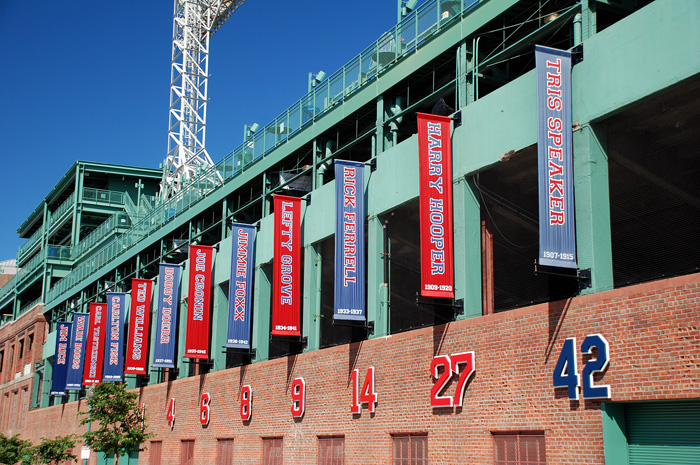
The Van Ness Street Banners of Glory include, the names of all those Red Sox retired  numbers on Fenway’s right field facade who are enshrined in Cooperstown and the five we mentioned Friday. So before we complete the list, let’s have a role call…..Williams, Cronin, Doerr, Yastrzemski, Fisk, Rice, Young, Collins, Speaker, Hooper and Ferrell.

Now the remaining trio pose some interesting thoughts to ponder, so let’s ponder them one at a time.

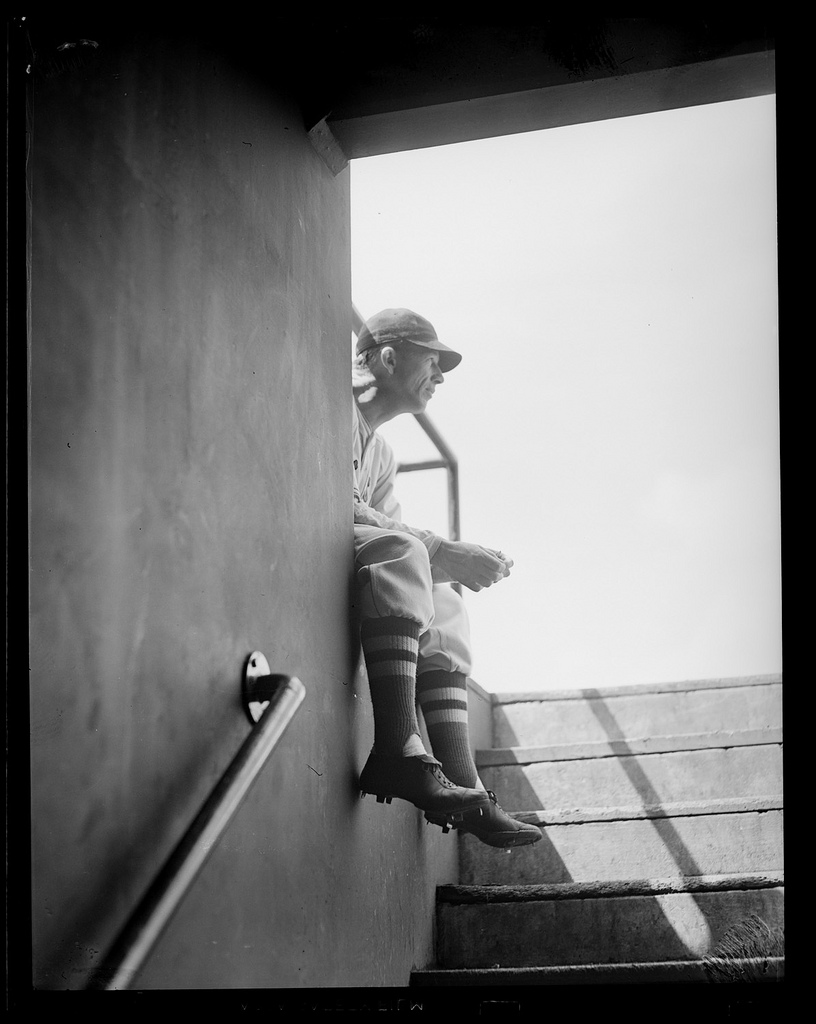
Lefty Grove pitched for the Red Sox for eight seasons, 1934-1941.

When Lefty Grove arrived in the Red Sox clubhouse at Fenway Park for 1934 season, he was the best pitcher in all of baseball and had been for about seven years. Pitching for Connie Mack’s Philadelphia Athletics, he had a lifetime record of 195-79 (.712). He had led the league in: ERA five times, wins four times, strikeouts seven times, shutouts twice and complete games three times. He had pitched in three World Series and was the 1931 American League MVP.

The Red Sox acquiring him in 1934 was equivalent to them today acquiring, let’s see, ahh, maybe Halla, no wait, Linci, no perhaps Verlan…. never mind, there is no comparison. Nobody today has had that level of dominance for that sustained amount of time. In fact maybe about a dozen pitchers in the whole history of the game are in that level of the stratosphere.

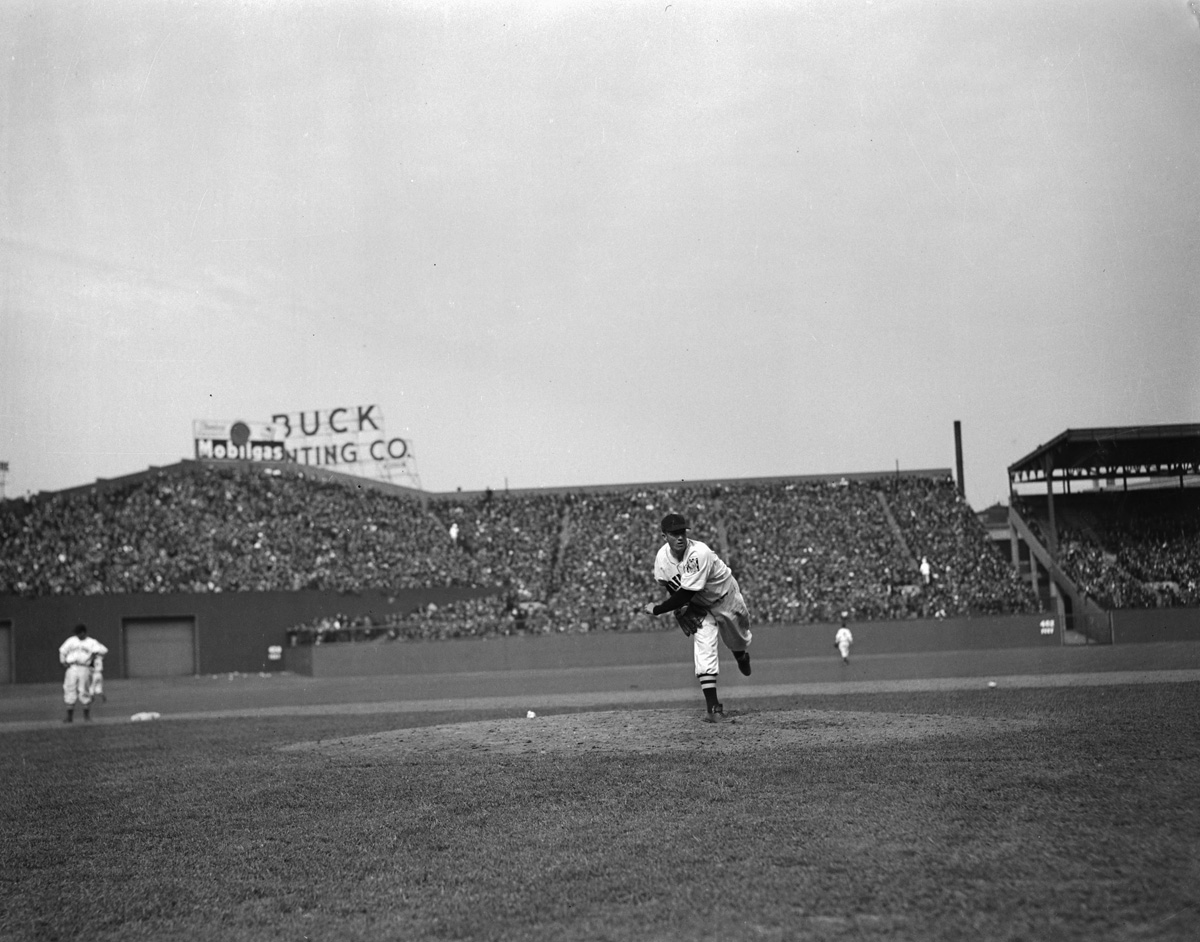
Lefty warms up between innings in a game in 1939.

Grove did not sustain that level of dominance in a Red Sox uniform. He was still very, very good going 105-62 (.629), winning 20 games one season and winning four more ERA titles. With the better part of his Hall of Fame career having been in Philadelphia, his number 10 has not made its way to the Fenway facade, nor should it, but his banner proclaims his place in Fenway and Red Sox history.

Jimmie Foxx (R) and Hal Trotsky share a moment in the Red Sox dugout. 

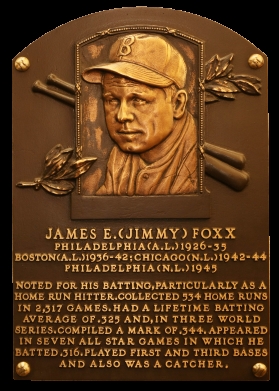
Like Lefty Grove, Jimmie Foxx came to Fenway Park via the Philadelphia Athletics and he arrived with a resume that was equally as impressive. A two-time home run and RBI champ, winner of the triple crown in 1933 and back to back MVP seasons in 1932 and 1933.

When “Double X” arrived in 1936, he took immediately to his new environs, hitting .338 with 41 homers and 143 RBI, both new Red Sox records. He would lead the club in home runs for the next four years and in RBI, save for 1939, as well. He still holds the Red Sox record for RBI in a season with an astonishing 175 in 1938, the year he won his third MVP Award. His 50 home runs that year were a Red Sox record until David Ortiz hit 54 in 2006. Jimmie Foxx held the Red Sox single season home run record for 70 years and he has held the RBI record for 75 years!

The “Beast” played but six plus seasons with the Red Sox, yet in those six short years, his production was monstrous hitting 222 home runs and knocking in 788 runs. All this while hitting .315. And when Cooperstown came a calling in 1951, it was a Boston “B” Jimmie donned for his Hall of Fame plaque!

Many a man has worn the number 3 since Jimmie Foxx peeled off his Red Sox uniform for the last time in 1942, however, maybe it’s time to take a look and consider elevating it to the company of the immortals on Fenway’s right field facade. A few have been as good, and very, very few have been better!

Last, and certainly not least, of the Van Ness Street Banner Brigade is Wade Anthony Boggs.

Wade Boggs played with the Red Sox from 1982-1992, winning five batting titles, four in a row, banging out seven consecutive 200 hit seasons, including a Red Sox record-breaking 240 in 1985.

Boggs was an eight time all-star during his Fenway Park tenure and he was one of baseball’s best hitters for a decade. He led the team in hitting nine of his 10 years as the Red Sox third baseman. A doubles machine, there have been a select few hitters who have used Fenway Park the way Boggs did. He hit .369 lifetime at Fenway!

Elected to the National Baseball Hall of Fame in 2005, his banner waves proudly on Van Ness Street, however,

it now seems the time has come to re-sign Wade Boggs to a 24 hour contract, let him retire as a Red Sox and allow the Fenway Faithful to pay him tribute as number 26 takes its place on the facade.

           And so it is on this day in Fenway Park history, February 19, 2012.

Posted in Fenway Park Baseball | Tagged , , , , , , | 1 Comment

“I never, ever wanted to pitch for another team”…Tim Wakefield

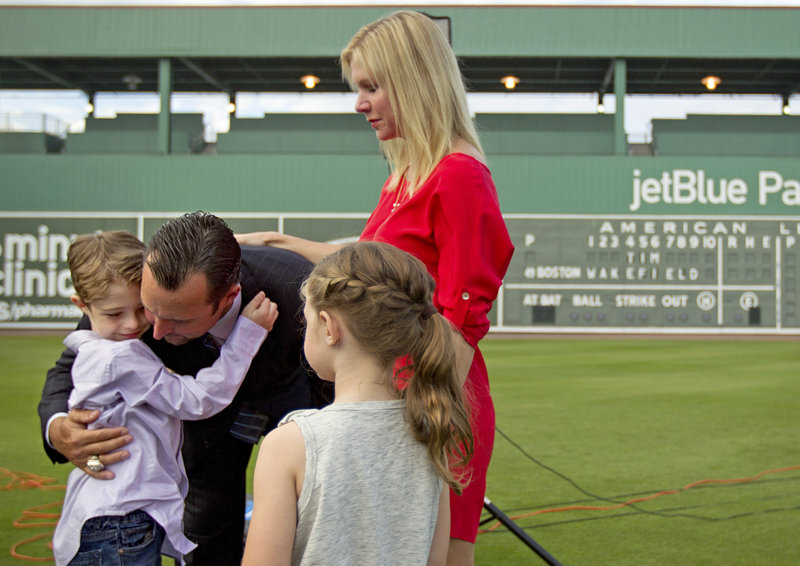
In what was the first official act in Jet Blue Park, the Boston Red Sox new spring facility in Fort Myers Florida, the Fenway Faithful said goodbye to Tim Wakefield.

Before his family, friends, and teammates he fought through tears saying he reached the decision early in the week and it was in the best interest of “me, my family and the Boston Red Sox.”

In the same manner of dignity in which he conducted his baseball career he thanked everyone from former Red Sox General Manager Dan Duquette for “giving me a shot” to the clubhouse attendants.

Tim Wakefield acknowledges the Fenway Faithful following his 200th, and last, win on September 13, 2011.

“Wake’s” story is that baseball story that just loves to be told. A minor league first baseman for the Pittsburgh Pirates in 1988 and 89, his batting average was hovering in the .200 range and he was about to be released. His manager Woody Huyke saw him playing catch and throwing a knuckleball, brought him into the bullpen to throw off the mound and told the Pirate brass that before they released him they should send him to the Instructional League to pitch.

 By 1992 he was in Pittsburgh where he went 8-1 and beat the Braves twice in the playoffs with two complete games. He struggled the following year and the Pirates gave up on him giving him his unconditional release. Thinking his career was over, he received a call from Dan Duquette of the Red Sox and the rest, as they say, is history.

What Tim Wakefield did in 17 years on the field for the Red Sox was everything he was asked. He started, he closed, he threw middle and long relief, he ate innings. His Fenway Park legacy can be measured in the numbers: 186 wins, second to Cy Young and Roger Clemens, first all time in starts (430) and innings pitched (3006), only behind Roger Clemens in strikeouts (2046) and his 590 appearances is second all time in Red Sox history.

Tek and Wake.

He was beloved by his teammates because all he cared about was winning and he would do anything in his power to make his team better. And it was that attitude and committment to his team that played a part in his decision to retire. ” All I ever wanted to do was win…..And in retiring I’m giving them a better chance to do that.”

His legacy away from the field simply cannot be measured.

A tireless champion of charity work and ‘giving back” to his community, Tim was everywhere.

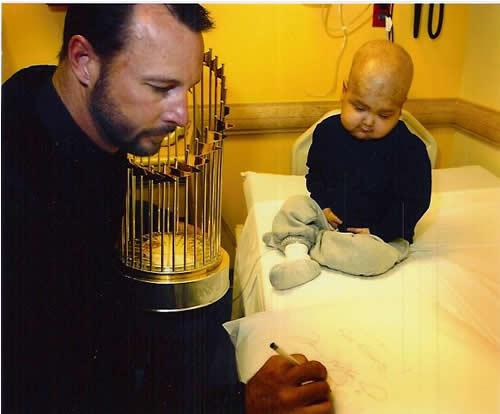
At the bedside of a cancer patient at the Dana Faber Cancer Institute.

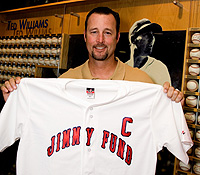
Visiting his alma mater Florida Tech. 

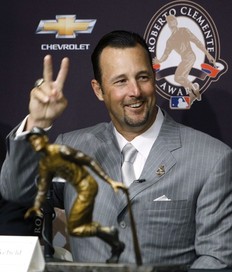
And in 2010 Major League Baseball recognized his efforts and he was named the winner of the Roberto Clemente Humanitarian Award.

 Recognizing the quality of the man, both the Red Sox and the Jimmy Fund have offered him a position with their foundations; a gesture which has Wakefield “honored and humbled.”

So Tim Wakefield will no longer be calling Fenway Park his home. He will forever be etched in its collective memory, his place in its history solidified by his performance. But off the field, he’s just begun for there are more lives to be touched and his most important job remains. Asked by a reporter how he wanted his kids to remember him, he smiled and said, “as a great dad, a good husband, a good man”.

I think he’ll do just fine! So long Wake and thanks, thanks for showing us how it should be done, on and off the field!

         And so it is on this day in Fenway Park history, February 18, 2012.

Posted in Fenway Park Baseball | Tagged , , , , | Leave a comment

Banners of Glory, Long May They Wave…..

The second tier of Red Sox immortals are honored with their banners waving high above Van Ness Street.

Now these players are on the second tier for a couple of different reasons. One is that they did not play their entire career, or close to it, in Boston therefore their impact upon the franchise was not as profound as the top-tier boys. And in the cases of Cy Young, Jimmy Collins, Tris Speaker and Harry Hooper, there were no numbers worn to even be retired. The Fenway crowd did not see numbers on Red Sox jerseys until 1931.

But let us give them their highly deserved due!

Denton True “Cy” Young pitched with the Red Sox for eight seasons from 1901-1908.

One of only two members of the Red Sox upper echelon who never played at Fenway Park. In his eight years in Boston pitching at the old Huntington Avenue Grounds, his numbers were staggering. Winning 192 (still a team record) and losing 112 he authored back to back 30 win seasons in 1901 and 1902. In the Red Sox first pennant year of 1903, he was 28-9 and he won two games in the World Series. Earning his nickname (short for “Cyclone” because of his blinding fastball) he is baseball’s all time leader in wins (511), complete games (750) and innings pitched (7354 2/3). And I’m sure you have heard of that award.

Jimmy Collins was the Red Sox first manager and third baseman playing from 1901 until his trade in 1907.

Lured over to the new Boston Americans from the Boston Beaneaters of the national league, Jimmy Collins was the best third basemen in baseball. He revolutionized the playing of third base by being the first man to play in on the grass to choke off the bunt. Widely recognized as a man of impeccable integrity who earned the respect of teammates and foes alike; he was an astute man of business as well. His salary reached the $10,000 mark with an additional feature of 10% of the Boston Americans profits exceeding $25,000. He was inducted into the Hall of Fame by the Old Timers Committee in 1945.

Tris Speaker played with the Red Sox from 1907-1915, becoming their regular center fielder in 1909. He was Fenway Parks first superstar.

The American League MVP (then known as the Chalmers Award) in Fenway’s inaugural year of 1912, Speaker hit .383 led the league with 10 homers while knocking in 90 runs. His 222 hits that year was a Red Sox record until broken by Wade Boggs in 1985.

https://fenwaypark100.org/2011/12/30/you-can-write-him-down-as-one-of-the-two-models-of-ballplaying-grace-grantland-rice/

Harry Hooper played with the Red Sox from 1909-1920.

Harry Hooper patrolled Fenway Park’s right field for four pennants and World Series Championship seasons. An engineer, he was lured to baseball by Red Sox owner John I. Taylor with a $2800.00 salary and a promise to help with the construction of the new Fenway Park. He fell in love with baseball and never bothered with engineering again.

https://fenwaypark100.org/2012/01/14/the-best-outfield-trio-i-ever-saw-thats-easy-lewis-speaker-and-hooper-and-the-greatest-of-those-was-hooper-bill-carrigan/

Rick Ferrell was the Red Sox catcher for four seasons from 1933-1936.

In three of his four seasons with the Red Sox Rick was an all-star. He caught the entire inaugural all-star game in 1933 at Commisky Park in Chicago. A tremendous defensive catcher with an outstanding arm, he was particularly adept at catching the elusive knuckleball. In his four years as the Red Sox full-time catcher he hit .297, .297, .301 and .312. His acquisition by Tom Yawkey in 1933 was one of Yawkey’s first steps in restoring the Red Sox franchise to respectability. The Veterans Committee enshrined him in Cooperstown in 1984.

Tomorrow the remainder and a special surprise.

to be continued…..

             And so it is on this day in Fenway Park history, February 17, 2012. 


Posted in Fenway Park Baseball | Tagged , , , , , , , | Leave a comment