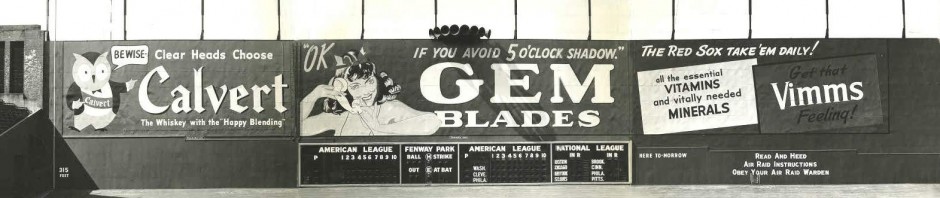
” The best outfield trio I ever saw….That’s easy, Lewis, Speaker and Hooper, and the greatest of those was Hooper.” Bill Carrigan

Nobody in the history of Fenway Park was part of more World Championship Red Sox teams than Harry Bartholomew Hooper!
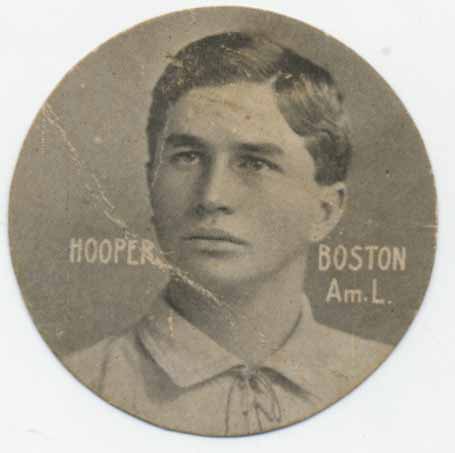
He played 12 seasons with the Red Sox starting in 1909 and for those 12 seasons he was a constant, leading off and playing right field. He was the first Red Sox hitter to bat in the history of Fenway Park and he was the leadoff hitter in every World Series game they played in 1912, ’15’, ’16’ and ’18’.

 Still recognized as one of the best defensive right fielders to ever play the game, “Hoop” was a transitional player. In the early years of the Modern Era, ball players were primarily from the east and were, how should we say, not considered gentlemen. They were, for the most part, uneducated “tuffs” and not someone who dad’s wanted their daughters bringing home. Harry Hooper is one of the players that began to change all that. A college graduate with an engineering degree, Hooper taught himself to hit lefty so he could get to first base quicker. 
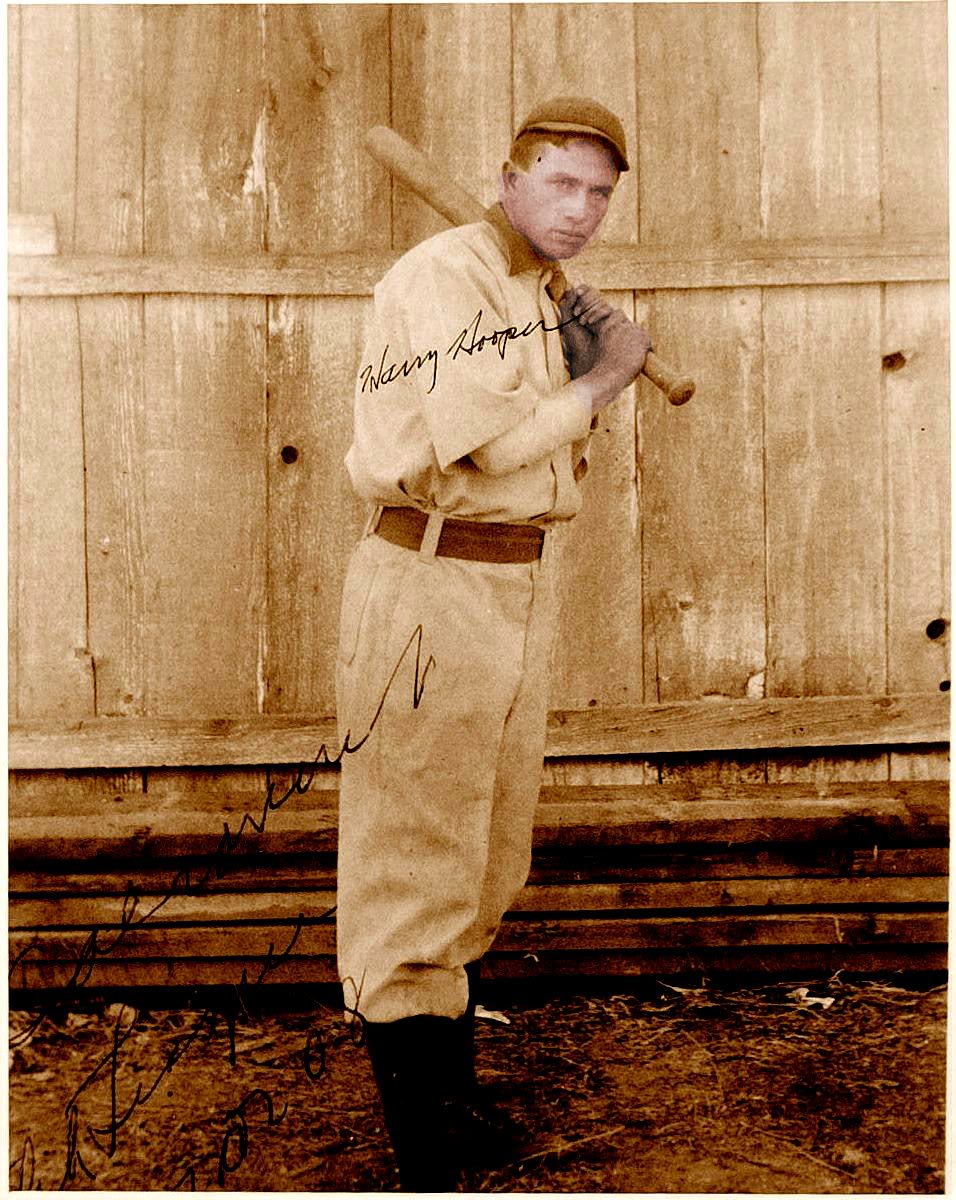
Hooper was part of what many have called the best outfield in the Dead Ball Era. Playing along with Duffy Lewis in left and the incomparable Tris Speaker in center, opposing batters were hard pressed to get a ball, past, over or between them.
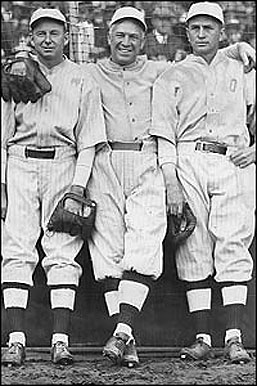
Lewis, Speaker and Hooper.

A solid, consistent offensive performer and a prototypical Dead ball Era leadoff hitter,”Hoop” amassed 20 stolen bases nine times,  scored 80 or more runs 12 times and 92 years after he played his last game in a Red Sox uniform he remains their all time stolen base leader with 300. Inducted into the Major League Baseball Hall of Fame in 1971, he was a charter member of the Red Sox Hall of Fame in 1995.

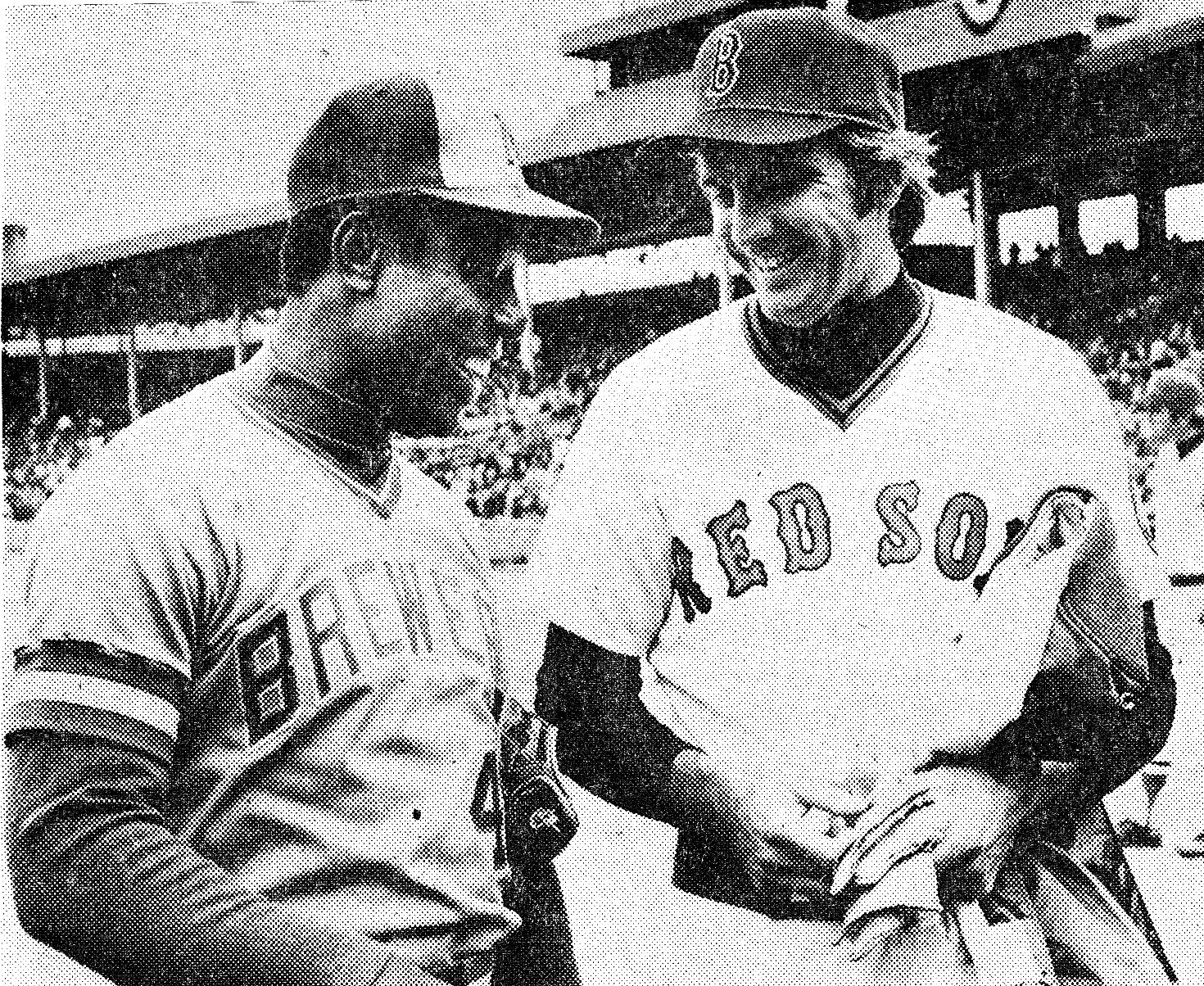
Harry Hooper, Carl Yastrzemski, and Duffy Lewis in 1962 at Fenway Park for the 50th Anniversary of the 1912 World Champion Red Sox.

A Hall of Famer who spent 12 of his 17 seasons with the Red Sox, you might wonder why his number is not retired on Fenway’s right field facade. Well, it’s simple, no numbers were worn while he played and the Red Sox did not put numbers on their backs until the 1931 season. However Harry Hooper has his place of honor as his banner flies outside of Fenway Park on Van Ness Street.

 And so it was at this time in Fenway Park history, January 1912.

Posted in Fenway Park Baseball | Tagged , , , , | Leave a comment

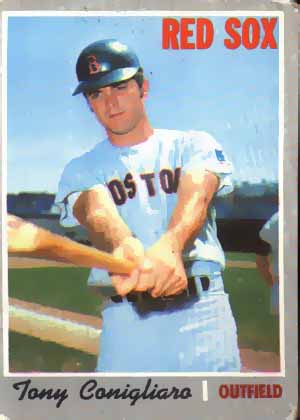
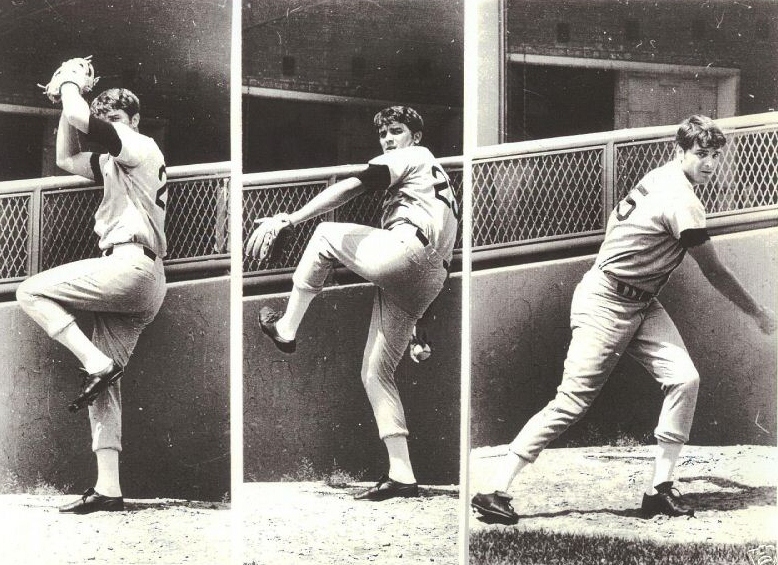
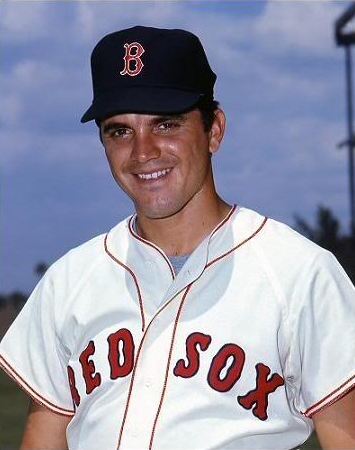
“Now batting number 25, Tony Conigliaro, Conigliaro.” Sherm Feller

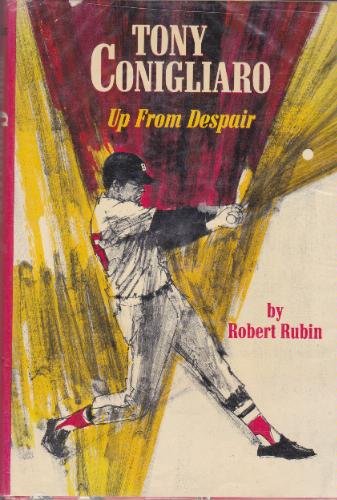
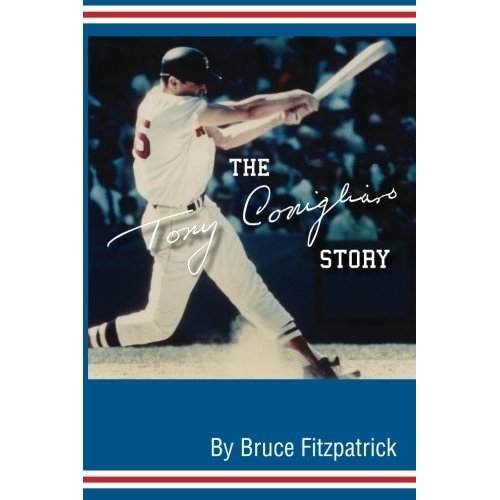
The saga of Tony Conigliaro and his impact upon the Red Sox, Fenway Park and the Fenway Faithful would not be complete without an epilogue, as I wrote in the first story of Conig, he is a classic Shakespearian tragic hero. There are four books written about him, one of them his,

 One written by Robert Rubin http://www.amazon.com/Tony-Conigliaro-Despair-Robert-Rubin/dp/B000NP8V4E/ref=sr_1_sc_3?s=books&ie=UTF8&qid=1326355573&sr=1-3-spell

One written by David Cataneo http://www.amazon.com/Tony-Triumph-Tragedy-Conigliaro/dp/1558536590/ref=sr_1_1?s=books&ie=UTF8&qid=1326319813&sr=1-1

And one recently released by Bruce Fitzpatrick which will soon make its way to the big screen.  http://www.amazon.com/Tony-Conigliaro-Story-1/dp/1468019708/ref=sr_1_1?s=books&ie=UTF8&qid=1326320228&sr=1-1

Tony C still matters!

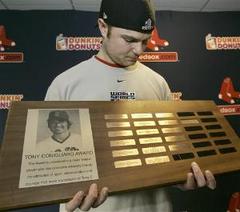
Following Tony’s death in February of 1990, the Red Sox announced the establishment of The Tony Conigliaro Award to forevermore honor his memory.  It is given annually to a major league baseball player “who best overcomes an obstacle and adversity through the attributes of spirit, determination and courage that were trademarks of Conigliaro.” Among its winners has been Red Sox pitcher Jon Lester who overcame non-Hodgkins lymphoma in 2006.

Jon Lester 2007.

Tony C still matters…..

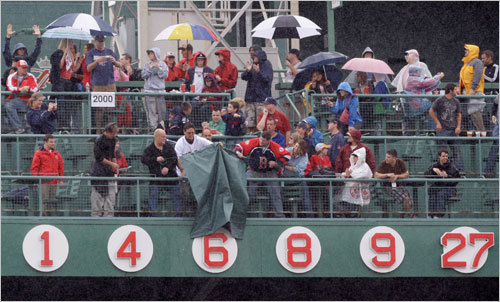
Since his passing, there has been those among the Fenway Faithful who believe his number 25 should be retired to the facade of Red Sox immortals in right field. The Red Sox have been steadfast in their criteria for that honor and it has included election into the Major League Hall of Fame in Cooperstown.

 Carlton Fisk unveils Pesky’s number 6.

However, in September of 2008, the Red Sox made an exception to that criteria and retired the number 6 of the legendary Johnny Pesky. This has increased the number of those who believe Tony C should be so honored, because,

Red Sox manager Bobby Valentine.

Tony C still matters.

New Red Sox manager Bobby Valentine, himself a young player trying to make it while Tony was nearing the end, has chosen to wear Tony’s number 25 in his honor. A gesture that has many a Red Sox fan pleased that the new skipper seems to “get” what Tony means to them, and that’s because,

Tony C still matters.

So when Bobby Valentine’s tenure is through and he peels off the number 25 for the last time, the Red Sox should place it on that right field facade. An ever-present reminder that greatness is eternally worth striving towards but it can also be fleeting and can be stolen away in less than a heartbeat! An ever-present reminder of the urgency of this life and what a precious gift it is and not a moment, not one single instant, should be squandered. 

And if the Red Sox choose to not follow that course, it won’t really matter, but Tony C….. Tony C will still matter…..Tony C will always matter!

          And so it is on this day in Fenway Park history, January 13, 2012.
Posted in Fenway Park Baseball | Tagged , , , , , , , , | Leave a comment

“Now cracks a noble heart. Good-night, sweet prince; And flights of angels sing thee to thy rest.” William Shakespeare

Tony now knew his baseball career was behind him. Resolution came with that as he pursued his future and that future came with a natural match, a TV sportscaster in Providence Rhode Island. And why not, after all he had the looks of a pop idol!

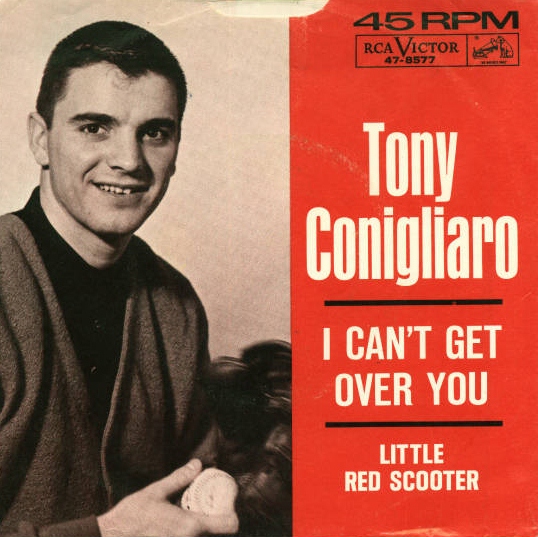
And he had achieved a decent level of success as a recording artist while he was playing.

Sports and TV were a perfect combination for Tony Conigliaro and after a brief stint in Rhode Island, Tony headed back to the west coast, only this time to San Francisco.

Frisco was a much better fit for Conig and he thrived there. Then word came from Boston that Ken Harrelson was leaving his post as a color commentater for the Boston Red Sox. Tony jumped at the chance and flew home for the interview. An interview he aced and with everything set to go, Tony C was heading home, back to the Red Sox and back to Fenway Park. On his way to the airport with his brother Billy, returning to settle things in San Francisco Tony suffered a massive myocardial infarction.

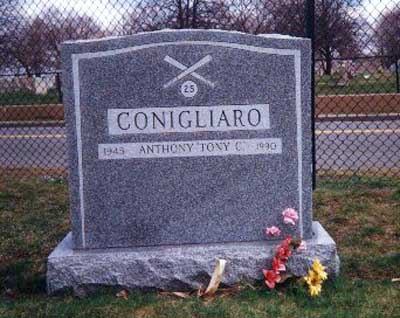
Billy rushed him to Mass General Hospital where they were able to save him, however after four months in a coma Tony Conigliaro was gone. Suffering massive brain damage, he was left needing 24 hour care and he was devotedly looked after by his family until his death in 1990 at the age of 45.

Tony C. steps in for his first Fenway at bat.

On opening day 2004 at Fenway Park I was seated in the lower third base box as the Red Sox kicked off the ’04’ season commemorating the 40th anniversary of Tony C’s Fenway debut. On the field were the 2004 St. Mary’s of Lynn High School baseball team (Tony’s alma mater) Johnny Pesky (Tony’s first manager) Tony’s brothers Billy and Richie and throwing out the first pitch was Tony’s namesake, his four year old nephew, Tony Conigliaro. The jumbo-tron in centerfield played Tony’s first Fenway at bat and once again Curt Gowdys call was heared, “he hit a bomb!” And for an ever so brief moment the energy that was Tony C once again reverberated throughout Fenway Park. It is fitting that the magic that became 2004 would begin with a celebration of the magic that was Tony C.

It is difficult to not wax poetic when it comes to the tale of Tony Conigliaro. For at a time when he should have been putting the finishing touches on a phenomenal baseball career and awaiting the call from Cooperstown, he was gone. He was indeed the meteor that screamed across the sky while we mere mortals paused and watched. He was the rose blooming in such brilliance ones breath shortened in its presence. He was the butterfly floating in its gracefulness, too beautiful to last but for a whisper in time.

Yet as all wonders do, he left an indelible mark and those who love this greatest of games and got to see him play, decades later shake their heads at the magic, the grace, the guile, the tragedy!

Good night Sweet Prince and thank you. Thank you for the wonder of it all.

       And so it was at this time in Fenway Park history 1964-1975, Tony’s time.


Posted in Fenway Park Baseball | Tagged , , , , | 4 Comments

I’m a realist, I believe in miracles.” Wayne Dyer

It snowed in Boston, Monday night April 7, 1975, but that did not keep 34,019 members of the Fenway Faithful from showing up the next afternoon to usher in the 1975 Red Sox season. Tony C’s magical, mystery tour had one more stop!

Hank Aaron and Tony C. share a pre-game moment.

He was back! Having had a terrific spring, he not only made the squad but he was penciled in to DH and bat fourth on opening day at Fenway! History of another sort was also being made as all time home run champ Hank Aaron was making his American League debut as the Milwaukee Brewers DH. The poignancy of this dichotomy was not lost on the Fenway Faithful and they responded in kind with six standing ovations; two for the all time home run king and four for the return of the local kid whose last name ended in a vowel.

 Tony C. acknowledges the crowd after his introduction,Yaz is to his right while Hank Aaron looks on.

When Tony C. stepped to the plate in the first inning, Carl Yastrzemski was on first base and the crowd once again rose to its feet and believe it or  not, the sun broke through the gray April sky over Fenway.

Conig steps in.

Choking back emotion, Conigliaro proceeded to execute a perfect hit and run single to right field. The crowd erupted and for three full minutes stood on their feet cheering. Waiting for Tony at first base was Brewer first baseman and former teammate George “Boomer” Scott. Scott was beaming with his signature wide gold tooth smile and Scott shook his hand, “I knew you could do it, I told these guys in spring you would do it”. Conig and Yaz then executed a double steal to score the Red Sox first run of the season.

Tony Conigliaro went to the plate four times on that chilly, gray April day at Fenway Park. Both Peter Gammons of the Boston Globe and Joe Guilotti of the Boston Herald wrote that the clouds parted each time he stepped to the plate! As if in some harmonic gesture the gods of the diamond allowed Conigliaro, the Fenway Faithful and the baseball world a final glimpse of the light that was Anthony Richard Conigliaro.

 Three days later he hit a home run off Mike Cueller of the Orioles, yet it was but a flash. His average was hovering around .200 and fast balls were getting by him with more and more frequency. In May he took a Vida Blue fastball out of the yard at Fenway. It was his 166th career home run and it was his last.

On June 12th, the Red Sox acquired Denny Doyle and needed a roster spot. Tony accepted an option to Pawtucket but by August he called it quits. This time for good. He said simply, “My body is falling apart.”

The Red Sox were on their way to the American League pennant and a World Series with the Cincinnati Reds that would transform baseball.

Tony C., Conig, the local phenom who made it big, was on his way somewhere else. He was not yet sure where, but finally he knew, it was not on the baseball field. What he didn’t know was that the passion play that was his life had yet more tragedy in store.

to be continued…..

                 And so it was, at this time in Fenway Park history, August 1975.

Posted in Fenway Park Baseball | Tagged , , , , , , | Leave a comment

“He was the best looking young player I ever saw.” Johnny Pesky

Tony Conigliaro was crushed by the trade to California. As strange as it may seem, this young, handsome, single, talented man did not mesh with southern California.

 From the moment he arrived Tony struggled with the Angels. He was having trouble seeing the ball again, his headaches had returned in earnest and he was suffering nagging little “ding” type injuries. All of this was compounded by the fact that his heart, his home, his purpose remained 3000 miles east.


Billy and Tony Conigliaro June 4, 1971 pre-game at Fenway.

In early June, the Angels traveled to Fenway for a three game set. Tony was warmly greeted upon his returned and he went 3-10 for the series but his struggles componded and as his performance dipped, so to do his desire to continue.

Hitting .222 with just four home runs and 15 RBI, on July 9, 1971 he left the Angels and the game and returned home to Boston. His days as an Angel were over.

This had ramifications in the Red Sox clubhouse as well, as younger brother Billy in an emotional tirade accused Carl Yastrzemski of “getting rid of Ken Harrelson and Tony”. This would ultimately lead to his departure the following year.

As for Tony, an eye exam revealed that the “blind spot” had in fact expanded and his eyesight was once again deteriorating. However, his desire to play was not and in October of 1973, he contacted the Angels about trying to come back. They agreed but suggested a stint at AAA Salt Lake City to test the waters. Tony decided to stay on the voluntary retirement list. However his urge to give it one more go was building.

Dick O’Connell

 In late 1974 he wrote to Dick O’Connell the Red Sox GM and the man who had traded him; and asked for an opportunity to tryout for the 1975 squad. O’Connell agreed and Tony paid his own way to Winter Haven Florida and on March 5, 1975 Tony Conigliaro signed a contract with the Pawtucket Red Sox.

He had just turned 30, he’d been out of the game for four years, but he was Tony Conigliaro and there was still some magic left. That magic would unfold a little over a month later in Fenway Park!

to be continued…..

           And so it was at this time in Fenway Park history, winter 1975.

Posted in Fenway Park Baseball | Tagged , , , | 2 Comments

” It was the greatest comeback ever.” Rico Petrocelli

The 1970 season dawned with much promise and a few changes. The Red Sox outfield of Yaz, Reggie Smith and Tony C. once the best young outfield in the game, would see a change.

New Red Sox manager Eddie Kasko began playing gold glove left-fielder Carl Yastrzemski at first base which paved the way for Tony’s younger brother Billy to make an impact as a rookie left-fielder

Billy and Tony C.

You can imagine the excitement in the Conigliaro household with two brothers playing for the home town team. Billy performed admirably, playing the bulk of his games in left field. He saw action in center and right as well; while Tony had the best year of his career.

He had his career highs in home runs and RBI hitting 36 dingers and leading the team with 116 RBI, good enough for second in the American League. Yet things were not quite as they seemed. Tony was still struggling to see the baseball. Later he would say that he couldn’t pick up the spin of the ball until it was almost upon him. When you think about that it adds to the accomplishments of his 1970 season. As a result of the constant strain of simply following the baseball, he was plagued by head aches throughout the year. A fact he kept from anyone and everyone.

 Perhaps sensing things were not quite right or simply capitalizing on Conig’s best year, the Red Sox shocked the baseball world when they traded Tony C. to the California Angels during the 1970 World Series. Conigliaro was stunned and the fans were outraged. However, for Red Sox General Manager Dick O’Connell it proved an adroit baseball move.

As hard as it was to believe, Tony Conigliaro was bound for Southern California to wear the uniform of the Angels!

to be continued…..

 And so it was on this day in Fenway Park history, October 11, 1970.

Posted in Fenway Park Baseball | Tagged , , , , , | Leave a comment

The 1969 Comeback Player of the Year!

When Jack Hamilton’s pitch struck the left cheek of Tony Conigliaro’s face, it left a linear fracture of his cheekbone, dislocated his jaw and caused severe damage to his left retina. It was sometime during the 1968 season that it was revealed that the retina damage created a blind spot in Conig’s eye, and it appeared to be permanent.

Not about to give up, he launched a comeback as a pitcher. And it was during that time that something miraculous occurred!

While taking batting practice one day he discovered that he could actually see and see clearly. And he began stroking the ball. The doctors confirmed the “blind spot” had in fact dissipated and Tony C began working his way back! On April 8, 1969, he was batting fifth and playing right field when the Red Sox opened the season at Memorial Stadium in Baltimore. He had struck out, walked and singled when he stepped to the plate in the top of the 10th inning in a 2-2 tie.


And with Ken Harrelson on first base, he launched a home run to left field.


And put the Red Sox ahead 4-2! But he was not done. The Orioles tied the game in the bottom of the inning and Conig walked to lead off the 12th ultimately scoring the winning run in a 5-4 Red Sox win.

Six days later, the Orioles traveled to Fenway Park for the Red Sox home opener. There were 33,899 members of the Fenway Faithful who welcomed Tony C. back to the place he loved, to the game he loved. He did not disappoint them going 1-4 and knocking in what proved to be the winning run.

In 1969, his batting average slipped to .255 however he did show some of that pop was still present hitting 20 home runs and knocking in 82 runs.

 And he could still run the ball down in right field.

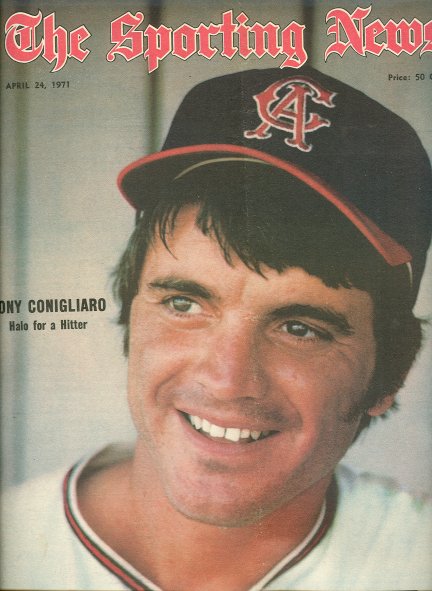
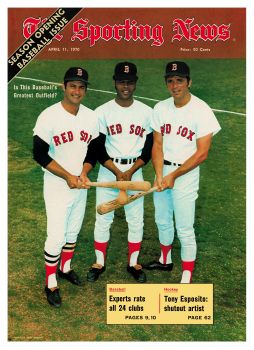
The Sporting News named him the “Comeback Player of the Year”. Tony C. was back! The best and the worst was yet to come.

to be continued…

         And so it was on this time in Fenway Park history, the season of 1969. 

Posted in Fenway Park Baseball | Tagged , , , , | Leave a comment

Happy Birthday Tony…..

If William Shakespeare were to be magically transported to modern times and if he were told of baseball and its rich and glorious history; and after studying it he were asked to choose and write about a classic tragic hero, he would simply say, “Tony C”.

Anthony Richard Conigliaro was born on January 7, 1945 and he had it all! He had it all!

To explain I must first tell you that I was 11 years old when “Tony C” made his major league debut in 1964. My last name is Sinibaldi, catch that vowel at the end? I was born in Boston and my folks lived in East Boston. Now East Boston from the 1920s into the 70s was a community of predominantly Italian and Irish ethnicity. Guess what my Dad was? Well he married a lovely lady with the last name of Kelly but her mom was a Lazzari, catch the vowel? Yea I know, I know what’s all this mean?

Well my dads favorite players were, in no particular order, guys named DiMaggio, Malzone, Petrocelli; get where I’m going? Oh and a kid named Conigliaro! The Conigliaro kid had local roots. Could it get any better than that? A local kid AND a vowel at the end of his name! So Dad and many others had a special affinity for this local who came to be known as “Conig” and “Tony C.”

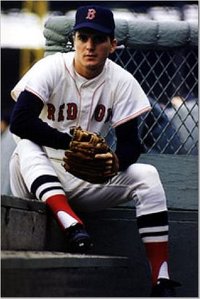
He graduated in June of 1963 from St. Mary’s High School in Lynn Massachusetts (about 10 miles north of Boston). Drafted by the Red Sox he was sent immediately to Wellsville New York to the Red Sox “A” team in the New York Penn League. He hit an astonishing .363 with 24 home runs in just 83 games. On opening day April of 1964 in Yankee Stadium, he was the Red Sox starting center fielder at the age of 19!

Tony C. and Yaz

The next day the Red Sox were at Fenway for their home opener and when “Conig” stepped up to the plate in the second inning, he proceeded to hit what broadcaster Curt Gowdy called “a bomb’. It cleared everything in left and Tony Conigliaros magical mystery tour was underway.

 By the end of the 1965 season, “Tony C” had become the youngest home run champ in baseball history. He was dashing, he was daring, and he was clutch. And did I mention,

He had it all!

In the Impossible Dream summer of 1967, Tony C. became the youngest man in American League history to hit 100 home runs.

And then…………..

 Hit in the left eye with a Jack Hamilton “spitter” which got away from him, Conigliaro was done for the year, done for the following year and then came the reports that his career was probably over.

He was 22 years old…..

to be continued…..

         And so it was on this date in Fenway Park history, January 7, 1945.

Posted in Fenway Park Baseball | Tagged , , , , | Leave a comment

“As soon as I got out there I felt a strange relationship with the pitcher’s mound. It was as if I’d been born out there. Pitching just felt like the most natural thing in the world.” Babe Ruth

When the good citizens of Boston awoke on Friday morning January 6, 1920, this is the news which greeted them. The rumor mill which had been churning for a couple of weeks had become reality. George Herman “Babe” Ruth, was on his way to New York to become, “The Sultan of Swat”!

But before he was “The Sultan” he was known as “The Colossus”, The Burly Batterer”,  “The Caveman” and “The Mauler”. All this because of his adroitness with the bat in his hands, and he did it all while he was the best left-handed pitcher in baseball, and  while calling Fenway Park his home in the uniform of the Boston Red Sox!

The heights achieved by Babe Ruth in the game of baseball are unprecedented! The best evidence to that fact is Barry Bonds. What you saw Bonds do, for a few seasons, when he was all roided up is what Babe did, for more than a decade, on hot dogs and beer! Then throw in the fact that while he was astounding the world with his bat, he was establishing himself as the best left-handed pitcher in the game.

And yet as well as he pitched, what people talked about, what writers wrote about, was his bat. Nobody had ever seen balls hit so far, nobody had ever seen balls hit so high, nobody had ever seen the likes of Babe Ruth with a bat in his hands!

Babe hit only 49 of his 714 home runs in a Red Sox uniform, but the fact is that before he left the Red Sox, he had hit the longest home run in every American League park (including Fenway) and he had already set the single season home run record with 29 in 1919! Not to mention, he also led the American League in home runs in 1918 while playing only 92 games in the field! Oh, and he was so valuable as a pitcher, that manager Ed Barrow inserted him back in the pitching rotation for the stretch run of the abbreviated 1918 season.

All he did was go 7-2 down the stretch and 2-0 in the World Series to lead the Red Sox to the championship over the Cubs! It was during that World Series that he set the record of 29 2/3 consecutive scoreless World Series innings pitched! He held this record until Whitey Ford broke it in the 1961 World Series.

Babe Ruth still holds the following Red Sox records for a left-handed pitcher: games started, 41 in 1916, complete games, 35 in 1917, and he shares the American League record for shutouts by a lefty (with Ron Guidry) 9 in 1916. He still holds the record for the longest complete game victory in World Series history, a 14 inning 2-1 win in game two of the 1916 Fall Classic against Brooklyn. He is the only Red Sox lefty to have back to back 20 win seasons, 23 in 1916, 24 in 1917 and until Jon Lester passed him in 2011, he had the highest winning percentage (with 100 or more decisions) of any Red Sox southpaw in their history. 

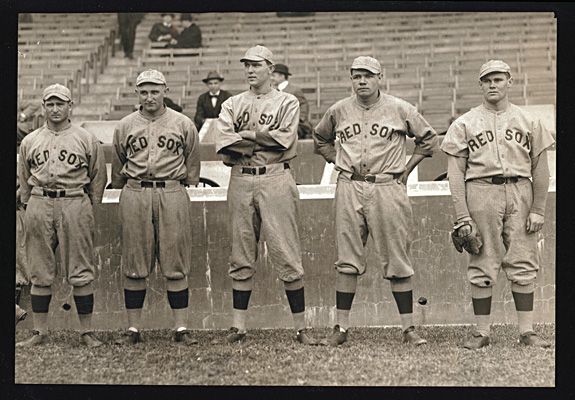
 L to R, Rube Foster, Carl Mays, Ernie Shore, Babe and Dutch Leonard.

When Babe retired following the 1935 season, he held 54 major league records, the one of which he was the most proud was his consecutive inning scoreless World Series pitching streak.

         And so it was on this day in Fenway Park history, January 6, 1920.


Posted in Fenway Park Baseball | Tagged , , | Leave a comment

Zupcic, Zupcic, Bo Bupcic, Bananafana, Fo Fupcic, Fe, Fi, Mo Mupcic….Zupcic!

Many men have had the honor and pleasure of putting on a Red Sox uniform to go to work.

From the top of the alphabet,

David Aardsma to

the bottom, Bob Zupcic

and all points in between, 1511 men (give or take a few) have played for the Boston Red Sox. And the names, oh the rich collection of names. First some inconsequentials; if I asked which letter begins the most amount of names what would you say S, C, M or B? I’ll get back to that. How about what last name appears the most times? Tough one but I bet you say Smith or Jones, Smith is correct, 19 different Smiths have played for the Red Sox. Williams, Wilson and Jones each had ten.

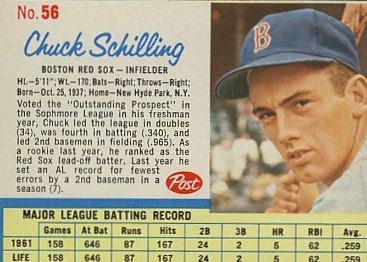
The wheel of color has produced eight Browns, a Black, three Greens and two Grays while finance has contributed a Penny, two Schillings, some Cash and a Fortune.

and Curt.

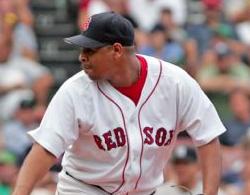
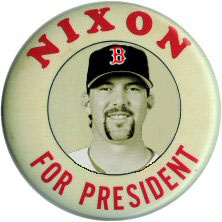
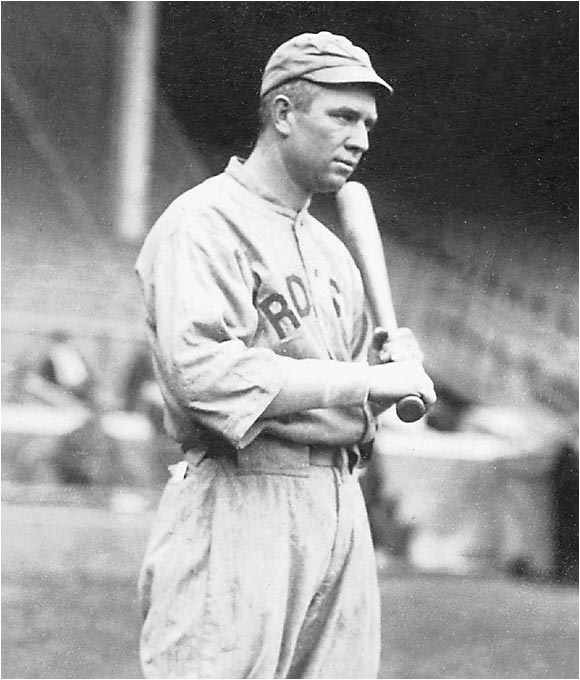
Presidential timber has made its way to Fenway Park in the persons of two Adams’, three Jacksons,  a Van Buren, two Taylors, two Kennedys (including a John)  nine Johnsons (no Lyndons), four Nixons, a Bush and nine Wilsons.  And of course a Speaker for their House. Two Marshals and a Judge stopped by to maintain the balance of power and two Hancocks have kept a revolutionary perspective.

 Jermaine Van Buren 2007.

Trot Nixon

Tris Speaker

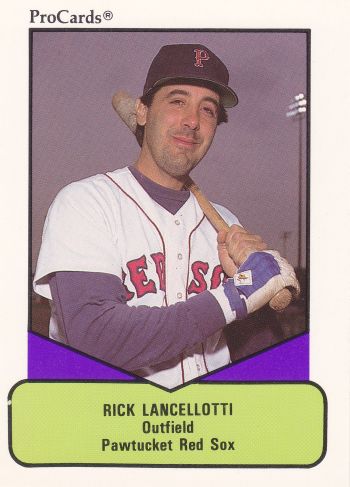
There’s been a Berg and a Berger, three Gardners and a Cooke, a Chaplin and a Bishop. A Hunt, two Hunters and a Skinner, a Knight and even a Sir Lancellotti.

Lancellotti played with the Red Sox in 1982.

They’ve had nine Millers, a Shepherd, a Weaver, a Coffey, a Baker, a Potter, a Porter, a Beck and a Brewer.
Two Rhodes with a Pole on a Hill were seen through the four Woods, winding past the Shore towards the Bay through the Grove, by the Pond (which is big enough to be a Lake) on the way to the Boggs.

 Lefty Grove takes to the hill, 1936.

Jason Bay

A familiar individual with Ernie Shore.

Four Fox(x’s), a Trout and three Birds have visited as well as a Cone, a Rose, a Lazor and a Flair. There’s been four Lewis’ and five Clarks, a Daughters but no sons, a Dodge but no Fords, a Lowe but no high, an Earley but no late, two McHales but no Navys, two Burn’s but no Allens, but they did have an Allenson. Oh, and there was a Guthrie as well.

The seasons have been represented with, a Spring, and a Sommers. Fall was skipped but a Winter and a Snow made up for that and what would New England be without a good Gale?

Rich Gale called Fenway Park home in 1984.

And finally the music. The music of Fenway has been provided by a Horn, a Sax, a Viola accompanied by two Bells.

Sam Horn played from 1987-1989.

And for good measure, there’s a Saltalamacchia, the longest surname in the history of baseball! And the answer is M, 201 players last name begins with M.

    And so it is on this day in Fenway Park history, January 5, 2012.

Posted in Fenway Park Other | Tagged , , , | Leave a comment